-
July 4, 1054
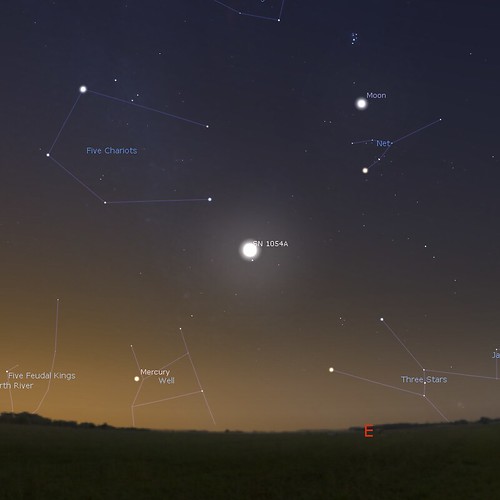 The Chinese and Arabian observers document a bright supernova, the remnants of which form the Crab Nebula
-
July 4, 1187Army of Saladin defeat Crusader forces and kill the majority of the Crusaders in the Battle of Hattin, becoming the eminent military power in the Holy Land
-
July 4, 1415Angelo Correr becomes Pope Gregory XII
-
July 4, 1610The Polish Lithuanian Commonwealth army under Polish nobleman Stanisław Żółkiewski defeats combined Russian-Swedish forces at the Battle of Klushino near Smolensk and conquers Tsardom of Russia
-
July 4, 1653Barebone's Parliament, an assembly entirely nominated by Oliver Cromwell, goes into session in England
-
July 4, 1776In Philadelphia the Continental Congress, convention of thirteen British colonies, adopts the Declaration of Independence, proclaiming the independence of the United States of America from Great Britain and its king
-
July 4, 1779A French fleet occupies Grenada
-
July 4, 1817Construction on Erie Canal, connecting Lake Erie with the Hudson, begins with ground-breaking in Utica, New York, USA
-
July 4, 1828Ground-breaking ceremony for construction of the Baltimore and Ohio Railroad, the first US railway, is held
-
July 4, 1845American writer Henry David Thoreau begins his 26 month experiment in simple living in natural surroundings at Walden Pond, near Concord, Massachusetts
-
July 4, 1848The Cornerstone of the Washington Monument in Washington, D.C. is laid by President Polk
-
July 4, 1852Frederick Douglass, an African-American social reformer, delivers his speech "The Meaning of July Fourth for the Negro" for the Independence Day celebration in Rochester, New York
-
July 4, 1855American poet and journalist Walt Whitman publishes his book "Leaves of Grass"
-
July 4, 1868In Japan the last Tokugawa armies are defeated by Imperial "Kangun" troops at the Battle at Ueno
-
July 4, 1881Tuskegee University in Alabama, founded by former slave Booker T. Washington as a major center for African-American higher education, enrolls 30 students
-
July 4, 1883
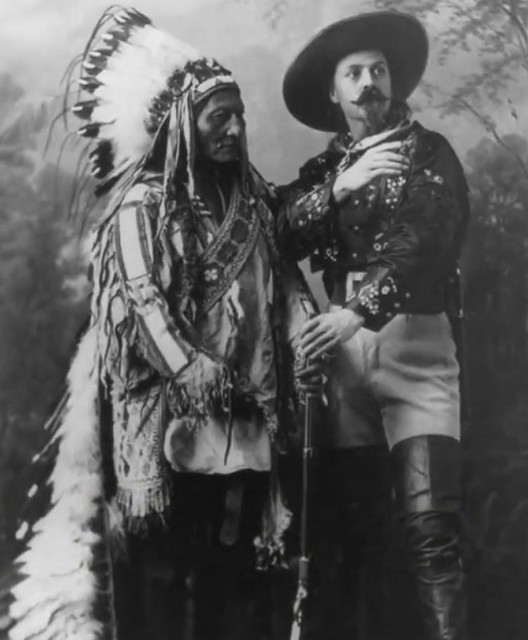 One of the first Wild West shows is performed in North Platte, Nebraska, and is organized by Buffalo Bill, who takes the show on the road the following year
-
July 4, 1884The Statue of Liberty, 225-ton statue created by the French sculptor Frédéric Auguste Bartholdi, is presented to the United States in ceremonies at Paris as a gift from France in commemoration of 100 years of American independence
-
July 4, 1898The French liner "La Bourgogne" collides with bark Cromartyshire, and 560 people die
-
July 4, 1902President Theodore Roosevelt offers pardon and amnesty to all Filipinos who participated in the Philippine-American War marking the official end of the conflict
-
July 4, 1942Forces of Germany, Romania, and Italy end the Siege of Sevastopol, the last Soviet port in the Crimea on the Black Sea, and take control of the city after intense bombardment
-
July 4, 1946The Philippines gain independence from the United States
-
July 4, 1987German Klaus Barbie, "Butcher of Lyon" convicted by a French court to life imprisonment for crimes against humanity
-
July 4, 1997Mars Pathfinder, an American spacecraft carrying wheeled robotic Mars rover, lands on Mars
-
July 4, 2012
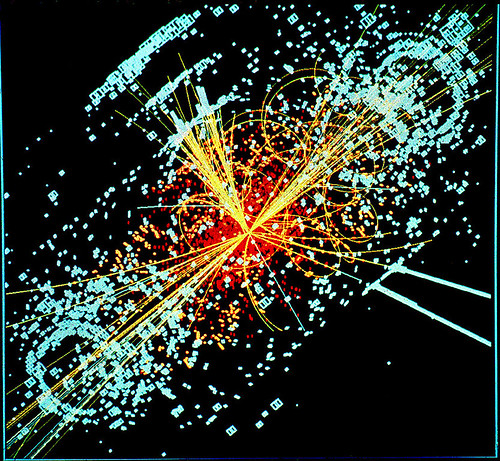 CERN announces the discovery of a new particle with properties consistent with the Higgs boson, an elementary particle in the Standard Model of particle physics, after experiments at the Large Hadron Collider
Showing posts with label Rail Transport. Show all posts
Showing posts with label Rail Transport. Show all posts
Monday, July 3, 2017
July 4

Tuesday, May 9, 2017
May 10
-
May 10, 238
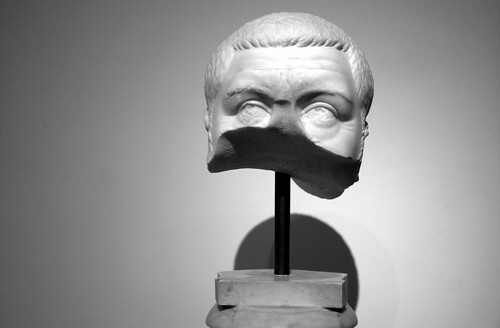 Gordianus III succeeds as Roman emperor as Maximinus Thrax is murdered together with his son and his chief ministers by Praetorian Guard whilst attempting to put down a Senatorial revolt
-
May 10, 1267Vienna's church orders all Jews to wear a distinctive garb called Pileum cornutum or Jewish Hat
-
May 10, 1497Italian navigator Amerigo Vespucci leaves for first voyage to New World
-
May 10, 1534French navigator Jacques Cartier reaches Newfoundland
-
May 10, 1559Scottish Protestants under John Knox, considered the founder of the Presbyterian denomination in Scotland, upraise against Queen Mary sacking religious houses
-
May 10, 1624Jacob Willekens and Piet Pieterszoon Hein briefly conquer Salvador, modern-day Brazil
-
May 10, 1655Jamaica is captured by English
-
May 10, 1676Bacon's Rebellion, an armed rebellion by Virginia settlers led by young Nathaniel Bacon against the rule of Governor William Berkeley, begins
-
1752, Summer
 Benjamin Franklin, an American polymath, statesman, and diplomat, invents and installs the first lightning rod atop the Pennsylvania State House making storms less dangerous
-
May 10, 1773To keep the troubled East India Company afloat, Parliament passed the Tea Act, taxing all tea in the American colonies
-
May 10, 1774Louis XV, King of France, dies of smallpox and is succeeded by his grandson Louis XVI
-
May 10, 1775The Second Continental Congress convenes in Pennsylvania
-
May 10, 177583 Green Mountain Boys, members of a militia organization, led by Ethan Allen capture the British-held fortress at Ticonderoga, N.Y., on the western shore of Lake Champlain and take the entire garrison captive without firing a shot
-
May 10, 1789Joaquim José da Silva Xavier also known as Tiradentes, rebel for Independence, is arrested in Brazil
-
May 10, 1796Napoleon Bonaparte win a brilliant victory against the Austrians at Lodi bridge in Italy
-
1816American Colonization Society is established by Robert Finley to support the settling of enslaved blacks in Africa
-
May 10, 1820American Colonization Society begins to send African Americans volunteers to the Pepper Coast to establish a colony for freed African Americans, later known as Liberia
-
May 10, 1837Panic of 1837 begins, as United States banks in New York refuse to pay out gold and silver in exchange for deposit notes triggering economic depression
-
May 10, 1857
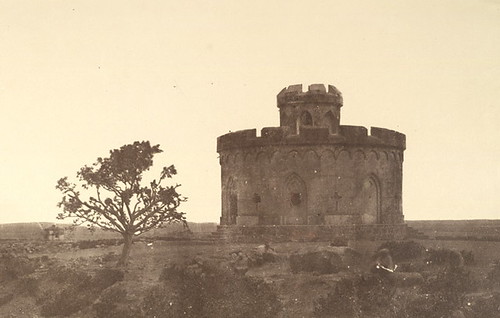 Indian Rebellion begins since revolt of sepoys of India against the British Army, which eventually force the British Empire to assume control of India from the East India Company
-
May 10, 1865Confederate States of America President Jefferson Davis is captured by USA Cavalry in Irwinsville, Georgia
-
May 10, 1869
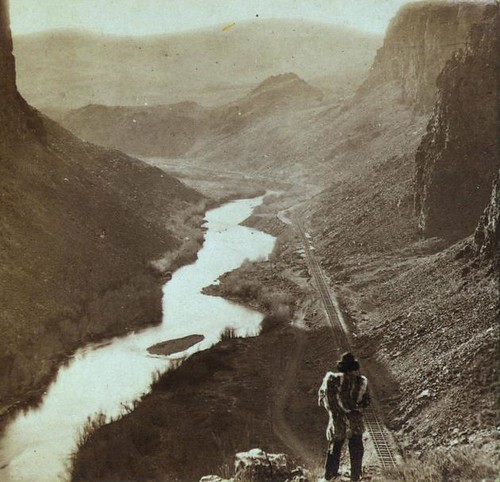 The final spike of the first transcontinental railroad acoss the United States is driven when the Union Pacific and the Central Pacific railways meet at Promontory Summit, in Utah Territory
-
May 10, 1871
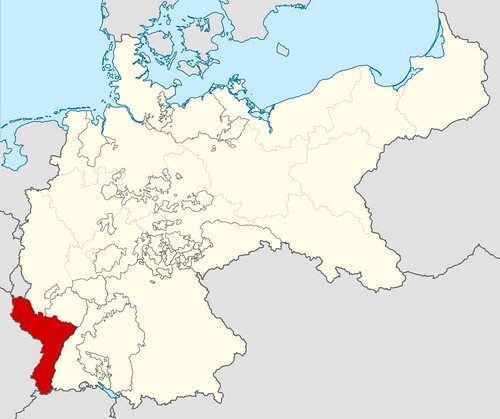 Franco-Prussian War ends with Treaty of Frankfurt between France and Germany, by which German Empire is recognized and France loses Alsace-Lorraine
-
May 10, 1940
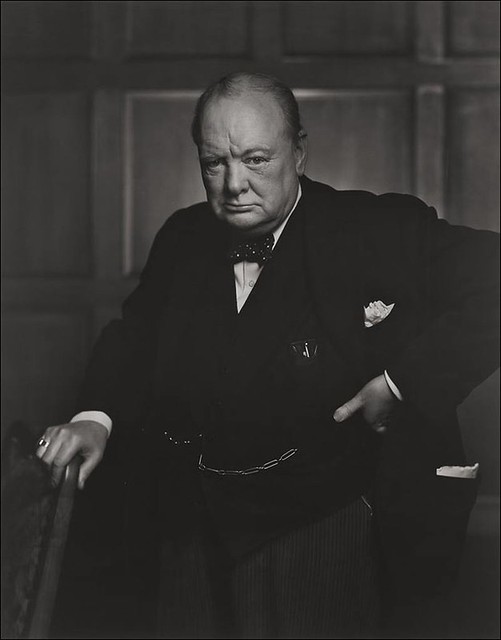 Winston Churchill becomes Prime Minister of the United Kingdom after resignation of previous prime minister Chamberlain and proposal of King George VI
-
May 10, 1994
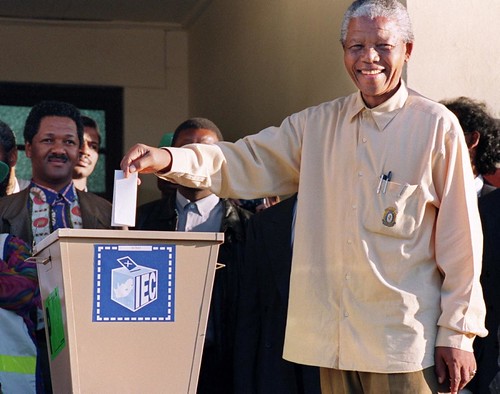 Nelson Mandela, an anti-apartheid activist and politician, is inaugurated as the first black President of South Africa, marking end of apartheid in South Africa
Thursday, May 4, 2017
May 5
-
May 5, 311
 Galerius, emperor of Rome, dies at about age 50, which triggers Maximinus to mobilize forces against Licinius and break stability in the tetrarchy
-
May 5, 553Second Council of Constantinople, fifth ecumenical council, opens
-
May 5, 1494During his second voyage to the Western Hemisphere, Christopher Columbus discovers Jamaica
-
May 5, 1646King Charles I surrenders at Newark, Scotland
-
May 5, 1762Prussophile Russian Emperor Peter III and the Prussian king Frederick the Great conclude the Treaty of Saint Petersburg, ended the fighting in the Seven Years War between Prussia and Russia
-
May 5, 1764Smolny Institute forms in Saint Petersburg for noble girls
-
May 5, 1780American Academy of Arts and Sciences, Second oldest learned society in US, forms in Boston
-
May 5, 1789In France the Estates General, summoned by King Louis XVI, convene to repair the national finances
-
May 5, 1789Great Britain and Spain begin to dispute the Nootka Sound during the Nootka Crisis
-
May 5, 1802In Saint-Domingue, later Haiti, General Toussaint Louverture surrenders to French forces, but many of his generals continued to wage a guerrilla campaign against the French
-
May 5, 1821Napoleon Bonaparte, Emperor of France, dies in exile on the island of Saint Helena at age 52 of stomach cancer or poisoning
-
May 5, 1835
 King Leopold opens Brussels-Mechelen railway in Belgium, the second country in Europe to open a railway
-
May 5, 1862French troops sent by Napoleon III attempt to capture Puebla de los Ángeles, a small town in east-central Mexico, but the battle represents a great moral victory for the Mexican government, symbolizing the country's ability to defend sovereignty
-
May 5, 1864The Battle of Wilderness begins as Robert E. Lee caught U.S. Grant's forces in the Virginia woods, the first in a series of clashes fought as Grant's army advanced on Richmond, Virginia
-
May 5, 1881Anti-Jewish rioting take place in Kiev during Anti-Semitic pogroms in Southern Russia, triggered by the assassination of Tsar Alexander II
-
May 5, 1893Panic hits the New York Stock Exchange triggering a severe depression in the country with the failure of 642 banks and over 16,000 businesses
-
May 5, 1912Soviet Communist Party newspaper Pravda begins publishing as a central organ of the Central Committee of the Russian Social Democratic Labour Party
-
May 5, 1949In London, England, the Statute of the Council of Europe is signed by representatives of ten countries to create greater unity in Europe and promote co-operation in the areas of legal standards, human rights, democratic development
-
May 5, 1950Bhumibol Adulyadej is crowned as King Rama IX of Thailand
-
May 5, 1955The Allied occupation of West Germany ends and the Federal Republic of Germany becomes an independent sovereign state with the ratification of Paris agreements in Bonn, Germany
-
May 5, 1961Alan Shepard, an American naval officer, becomes the second person and the first American to travel into space after a 15-minute suborbital flight
-
May 5, 1965First large-scale US Army ground units arrive in South Vietnam
-
May 5, 1984Itaipu Dam, the second largest hydroelectric facility in terms of annual energy generation, opens on the border between Brazil and Paraguay
-
May 5, 2002In the second round of the French presidential election, Jacques Chirac outpoll controversial far right politician Jean-Marie Le Pen of National Front
-
May 5, 2014A Sunni militant group called the Islamic State in Iraq and the Levant begins an offensive through northern Iraq, aiming to capture the Iraqi capital city of Baghdad and overthrow the Shiite government led by Prime Minister Nouri al-Maliki
Wednesday, April 12, 2017
April 13
-
April 13, 989
 Byzantine emperor Basil II beats Bardas Phokas the Younger, a Byzantine general who took a conspicuous part in three revolts for and against the ruling Macedonian dynasty
-
April 13, 1111In Rome, Pope Paschalis II crowns Heinrich V Emperor of the Holy Roman Empire
-
April 13, 1517
 Tuman bay II, the last Mamluk sultan of Egypt, is hanged as Osman's army occupies Cairo
-
April 13, 1598King Henry IV of France endorses the Edict of Nantes, which ends the religion Wars in France and grant political rights to French Huguenots
-
April 13, 1640English Short Parliament is formed to obtain money to finance military struggle with Scotland in the Bishops' Wars
-
April 13, 1759
 French beat European Allies in Battle of Bergen
-
April 13, 1775Lord North extends the New England Restraining Act, which forbids trade with any country other than Britain and Ireland, to South Carolina, Virginia, Pennsylvania, New Jersey and Maryland
-
April 13, 1861After 34 hours of bombardment Federal garrison at Fort Sumter surrenders to Confederate forces
-
April 13, 1868
 Tewodros II, Emperor of Ethiopia, commits suicide with a pistol presented him by Queen Victoria at Magdala as the British troops storm the citadel
-
April 13, 1869George Westinghouse, an American engineer, patents the railroad air brake, which enables the engineer to brake a train from the locomotive, making high-speed travel safe
-
April 13, 1912The British Royal Flying Corps, later Royal Air Force, is organized in Great Britain with naval and military wings and a central flying school
-
April 13, 1919British General Reginald Dyer orders 50 riflemen to fire on assembly of 10,000 protesting Indian nationalists at Jalianwala Bagh in City of Amritsar in Pubjab, northwest India, without warning, continued firing for 10 minutes, resulting in 379 killed and 1200+ wounded
-
April 13, 1924The monarchy is abolished via Greek plebiscite for a republic follows the catastrophic outcome of the Asia Minor Campaign
-
April 13, 1943Warsaw ghetto uprising begins in Poland
-
April 13, 195712 Angry Men, a drama film adapted from a teleplay of the same name by Reginald Rose, is released
-
April 13, 1975Phalangists, members of Christian Kataeb Party, kills 27 Palestinians traveling in Ain el-Rummaneh, thus begin Lebanese Civil War
-
April 13, 1987Portugal and the People's Republic of China sign an agreement in which Macau would be returned to China in 1999
-
April 13, 1990The Soviet Union apologizes for the Katyn Massacre of Polish officers during World War II
-
April 13, 2015
 A vessel with up to 550 migrants on board sinks off the Libyan coast, marking start of European migrant crisis, the rising number of refugees and migrants coming to the European Union
Saturday, April 1, 2017
April 2
-
April 2, 568The Kingdom of the Lombards in Italy is founded by king of the Lombards Alboin
-
April 2, 742
 Charlemagne, King of the Franks, is born
-
April 2, 1453Mahmed II begins the siege of Constantinople
-
April 2, 1513Spanish explorer Juan Ponce de Leon lands in Florida and claims it for Spain
-
April 2, 1801The British navy defeats the Danish at the Battle of Copenhagen
-
April 2, 1872George Brayton, an American engineer, invents the constant pressure engine, the basis for the gas turbine
-
April 2, 1905Railway from Cairo in Egypt to Capetown, South Africa, opens
-
April 2, 1941Hungarian Prime Minister Pal Teleki kills himself, rather than agree to Adolf Hitler's demand to allow passage of German troops to Yugoslavia, however, the Hungarian Chief of General Staff accedes to the demand
-
April 2, 1979A Soviet biowarfare laboratory at Sverdlovsk accidentally releases airborne anthrax spores, killing 66 plus an unknown amount of livestock
-
April 2, 2005Pope John Paul II dies at his home in the Vatican, following complications from the flu
Subscribe to:
Posts (Atom)