-
August 29, 29
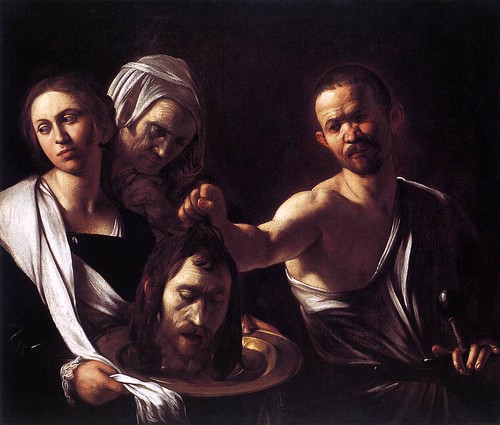 John the Baptist, an itinerant preacher at the Jordan River, is beheaded by order of Herod Antipas, ruler of Galilee and Perea
 -
August 29, 70
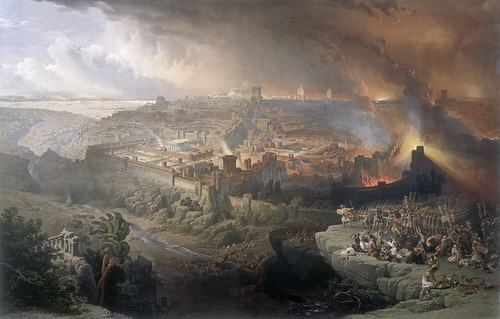 Jerusalem is sacked and the Temple of Jerusalem, except Western Wall of Herod's complex, is burned after a nine-month Roman siege under Titus during First Jewish-Roman War
 -
August 29, 284Diocletian becomes emperor of Rome beginning a method of numbering years known as Diocletian era
-
August 29, 1526Turkish forces of Suleiman the Magnificent defeat the Hungarian forces and kill Hungarian King Louis II at the Battle of Mohács, which leads to the partition of Hungary for several centuries
-
August 29, 1533Francisco Pizarro captures Cusco and completes his conquest of Peru
-
August 29, 1632English philosopher John Locke is born in Wrington, England
-
August 29, 1637The Dutch attack and capture Elmina in Ghana, which up to that point was the center of Portuguese activity in West Africa and was mostly used for the slave trade
-
August 29, 1655Swedish king Charles X Gustav of Sweden occupies Warsaw
-
August 29, 1742Edmond Hoyle publishes his "Short Treatise" on classic English trick-taking card game whist
-
August 29, 1786Shay's Rebellion lead by American farmer Daniel Shay in Springfield, Massachusetts begins in order to protest the seizure of property for the non-payment of debt
-
August 29, 1791The Pandora under Captain Edward Edwards sinks in Endeavour Strait between Australia and New Guinea; 33 crewmen and 4 prisoners die
-
August 29, 1842
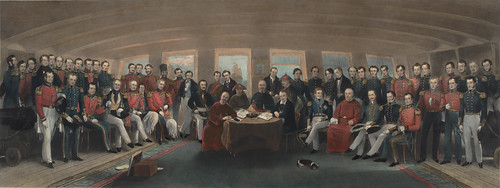 Britain and China sign the Treaty of Nanjing, which ends the First Opium War, opens the port of Shanghai to foreigners and cedes Hong Kong to the British
 -
August 29, 1864William Huggins, an English astronomer, discovers chemical composition of nebulae using astronomical spectroscopy
-
August 29, 1885Gottlieb Daimler receives German patent for a motorcycle
-
August 29, 1893The "clasp locker", a clumsy slide fastener and forerunner to the zipper is first patented by Whitcomb L. Judson
-
August 29, 1897First Zionist Congress, opened by Austro-Hungarian journalist Theodor Herzl in Basel, Switzerland, starts program to resettle Jewish people in Palestine
-
August 29, 1949The Soviet Union successfully detonates an atomic weapon
-
August 29, 1966The Beatles' give their last public concert, Candlestick Park, San Francisco, California
-
August 29, 2005Nearly 2000 people are killed, and severe damage is caused along the U.S. Gulf Coast, as Hurricane Katrina strikes coastal areas from Louisiana to Alabama, and travels up the entire state of Mississippi, affecting most of eastern North America
Showing posts with label Dutch Republic. Show all posts
Showing posts with label Dutch Republic. Show all posts
Monday, August 28, 2017
August 29

Sunday, August 27, 2017
August 28
-
August 28, 388
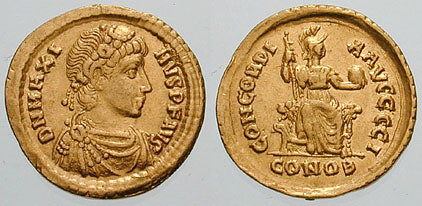 Magnus Maximus, West Roman Emperor, is executed
 -
August 28, 476
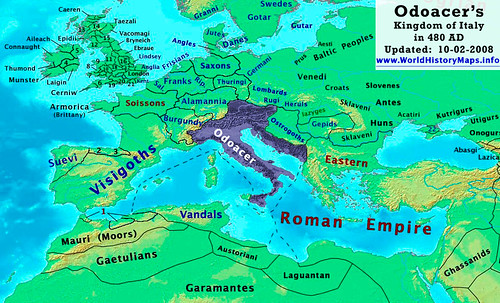 The western Roman Empire formally ends as the barbarian general Odoacer deposes the last of the Roman emperors, the young boy Romulus Augustus, marking the end of ancient history and the beginning of the Middle Ages in Europe
 -
August 28, 1533Atahualpa, last of the Inca rulers, is strangled at the orders of Spanish conquistador Francisco Pizarro in spite of the chief has already paid his ransom
-
August 28, 1664Four English warships under Colonel Richard Nicolls sails into New Amsterdam to take control of Brooklyn, a village of mostly English settlers
-
August 12, 1676
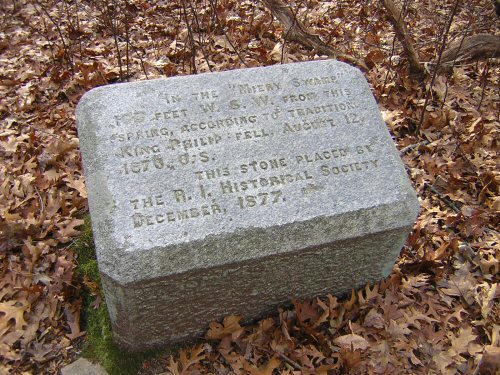 Indian chief King Philip, also known as Metacom, is killed by English soldiers, marking the end of the King Philip's War between Indians and colonists
 -
August 28, 1789William Herschel discovers Enceladus, a moon of Saturn
-
August 28, 1789Sir William Herschel discovers Saturn's moon Enceladus
-
August 28, 1830Tom Thumb, the first American-built steam locomotive, loses the competition with horse-drawn car bearing passengers during test on Baltimore and Ohio Railroad
-
August 28, 1867United States occupy Midway Islands in the Pacific
-
August 28, 1879Cetshwayo kaMpande, last of the great Zulu kings, is captured by the British at the end of the Zulu wars
-
August 28, 1923The August Uprising in Georgia against Soviet rule begins
-
August 28, 1937Toyota Motors becomes an independent company
-
August 28, 1963Martin Luther King Jr, an American leader in the African-American Civil Rights Movement, gives his I have a dream speech at Lincoln Memorial before 250,000 civil rights supporters
-
August 28, 1968
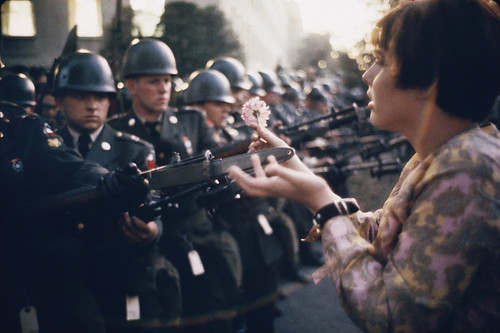 152 police officers are wounded and about 101 civilians injuried during anti-war protests in Chicago
 -
August 28, 1996Their Royal Highnesses, the Prince and Princess of Wales, are formally divorced at the High Court of Justice in London
Saturday, August 19, 2017
August 20
-
August 20, 1191
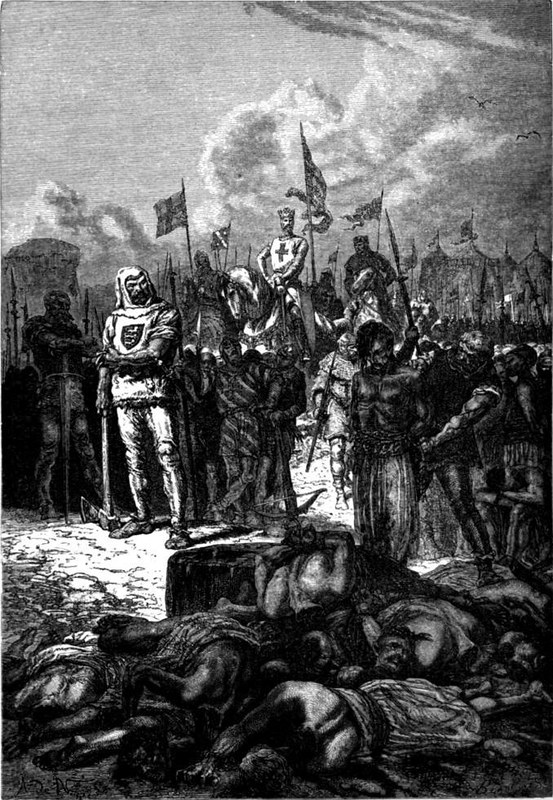 Crusader King Richard I executes some 2,700 Muslim prisoners in Acre
 -
August 20, 1530Hayreddin Barbarossa, a Barbary pirate, unites Algeria and Tunisia as military states under the Ottoman caliphate and becomes admiral of the Ottoman fleet
-
August 20, 1619The first African slaves arrive to North America aboard a Dutch privateer and dock in Jamestown, Virginia, with twenty human captives among its cargo
-
August 20, 1672Johan de Witt, Grand Pensionary of Holland and key figure in Dutch politics, is assassinated by a carefully organized lynch mob by a shot in the neck, and his naked body is hanged and mutilated beside body of his brother Cornelis de Witt
-
August 20, 1745Bonnie Prince Charlie occupies Blair Castle, Scotland
-
August 20, 1847General Winfield Scott wins the Battle of Churubusco, only 8 kilometers away from Mexico City
-
August 20, 1860Robert O'Hara Burke leads a group of 15 men, 27 camels and 23 horses out of Melbourne on an expedition to cross Australia
-
August 20, 1913Adolphe Pégoud becomes the first pilot to parachute from an aircraft
-
August 20, 1939Soviet forces under Lieutenant General Georgi Zhukov successfully counterattack Japanese invaders at Nomanhan in the Mongolian People's Republic on the border with Manchukuo
-
August 20, 1940Ramón Mercader, agent of Josef Stalin, fatally stabs Leon Trotsky with an ice pick in Mexico City
-
August 20, 1956The Calder Hall atomic power station begins operation in Cumberland, Great Britain, generating up to 90,000 kilowatts of power and manufacturing plutonium becoming the world's first power station to generate electricity on an industrial scale
-
August 20, 2011In the Battle of Tripoli, Libyan rebels take control the nation's capital, effectively overthrowing the government of Muammar Gaddafi
Saturday, August 12, 2017
August 13
-
August 13, 604
 Chinese emperor Wen is murdered by Yang, his son, who succeeds the throne
 -
August 13, 1415King Henry V of England takes his army across the English Channel and lays siege on Port Harfleur in Normandy
-
August 13, 1521
 Spanish conqueror Hernando Cortez conquers the Mexican city of Tenochtitlan, modern-day Mexico City, after an 85-day battle and completes conquest of Aztec Empire
 -
August 13, 1624
 French King Louis XIII names Cardinal Richelieu his first minister who becomes the world's first Prime Minister and begins to transform France into a centralized state
 -
August 13, 1630Emperor Frederick II fires Albrecht von Wallenstein, his best military commander
-
August 13, 1642Christiaan Huygens, a prominent Dutch mathematician, discovers the Martian south polar cap
-
August 13, 1645At Brömsebro peace is signed between Sweden and Denmark. Sweden gains the islands of Gotland and Halland from Denmark, Norway cedes to Sweden the northern provinces of Jämtland and Härjedalen
-
August 13, 1704
 The Battle of Blenheim, the turning point of the War of the Spanish Succession, results in decisive English and Austrian forces victory under Prince Eugene of Savoy and Duke of Marlborough over the Franco-Bavarian army
 -
August 13, 1787The Russian ambassador to the Ottomans, Yakov Bulgakov, is thrown into prison and the Ottoman Empire declares war on Russia starting the Russo–Turkish War of 1787–1792
-
August 13, 1792Louis XVI of France is declared an enemy of the people and imprisoned with the French royal family, including Marie Antoinette, by revolutionaries
-
August 13, 1814Netherland is signed to stop the transport of slaves and returns its colonial possessions before the outbreak of the Napoleonic Wars by Treaty of London
-
August 13, 1826Alexander Gordon Laing, British Army Major, crosses on camel the Sahara Desert from Tripoli and becomes the first European to enter the fabled city of Timbuktu in Mali
-
August 13, 1849Hungary's General Artúr Görgey surrender to the Russian forces, who invaded Hungary to help Austrian Empire in struggle against Hungarian rebellions
-
August 13, 1868In Arica, Peru, a magnitude 8.5-9.0 earthquake occurs, with catastrophic tsunamis killing 25,000 in South America
-
August 13, 1876Richard Wagner's monumental epic, "Der Ring des Nibelungen" is first performed in its entirety at the Festspielhaus in Bayreuth, Bavaria, Germany
-
August 13, 1898Manila, the capital of the Philippines, falls to the United States Army under Admiral George Dewey
-
August 13, 1913Harry Brearley, an English metallurgist, produces the first stainless steel
-
August 13, 1918Bayerische Motoren Werke AG is established as a public company for aircraft-engine production in Germany
-
August 13, 1923Mustafa Kemal Atatürk is elected president of the newly established Republic of Turkey
-
August 13, 1960Central African Republic proclaims independence from France
-
August 13, 1961
 The units of the East German army close the border and begin building of the Berlin Wall
Wednesday, August 9, 2017
August 10
-
August 10, 843
 Sons of Louis the Pious divide Charlemagne's Empire by Treaty of Verdun, so Charles the Bald receives the western portion, which later became France, Louis the German get eastern lands, later the medieval kingdom of Germany, and Lothair I receives the central part
 -
August 10, 1497John Cabot told King Henry VII of his trip to "Asia" after his return from his first successful journey to the Labrador coast
-
August 10, 1500Portuguese explorer Diogo Dias discovers Madagascar
-
August 10, 1539
 King Francis I of France signs edict known as Ordinance of Villers-Cotterêts, declaring that all official documents are to be written in French, not Latin
 -
August 10, 1557
 Spanish and English troops in alliance defeat the French at the Battle of St. Quentin (San Quintino)
 -
August 10, 1582Russia ends its 25-year war with Poland and cedes Livonia and Estonia to Polish–Lithuanian Commonwealth losing access to the Baltic
-
August 10, 1627Cardinal Richelieu begins a siege to Protestant La Rochelle, a Huguenot stronghold
-
August 10, 1628The Swedish 69-meter warship Vasa capsizes and sinks in Stockholm harbor on her maiden voyage because the ballast is insufficient to counterweight the 64 guns and ballast
-
August 10, 1675
 King of England Charles II lays the foundation stone of Royal Observatory in Greenwich, an important institution in the history of astronomy and navigation
 -
August 10, 1678The Treaty of Nijmegen ends the hostilities with France and gives to France control over the region of the Franche-Comté
-
August 10, 1680In New Mexico Popé, a Tewa religious leader, leads rebellion of Pueblo Indians against Spaniads
-
August 10, 1755The Great Upheaval, forced population transfer of the French Acadian population from Nova Scotia and New Brunswick, begins
-
August 10, 1779Louis XVI of France frees the last remaining serfs on royal land
-
August 10, 1787Mozart completes his composition Eine Kleine Nachtmusik
-
August 10, 1792Some 20,000 Parisians attack the Tuileries palace of Louis XVI at the instigation of Georges Jacques Danton and massacre some 600 guardsmen after Louis orders his Swiss guard to stop firing on the people
-
August 10, 1809Quito, the seat of a real audiencia of Spain in modern-day Ecuador, declares independence from Spain
-
August 10, 1861Union general Nathaniel Lyon the first Union general to be killed in the American Civil War, at the Battle of Wilson's Creek in Missouri, which ends with a Confederate victory
-
August 10, 1913
 Second Balkan War ends with Treaty of Bucharest, which confirms territorial acquisitions of Serbia, Greece, and Bulgaria at the expense of Ottoman Empire during the First and Second Balkan Wars
 -
August 10, 1927
 United States President Calvin Coolidge formally dedicates the Mount Rushmore site
 -
August 10, 2010The World Health Organization declares the H1N1 influenza pandemic over, saying worldwide flu activity has returned to typical seasonal patterns
Wednesday, August 2, 2017
August 3
-
August 3, 1492
 Christopher Columbus sets sail from Palos de la Frontera, Spain for "Indies"
 -
August 3, 1553Mary Tudor, the new Queen of England, enters London
-
August 3, 1596David Fabricius discovers light variation of Mira, first variable star
-
August 3, 1610Henry Hudson of England discovers a great bay on the east coast of Canada and names it for himself
-
August 3, 1692French forces under Marshal Luxembourg defeat a joint English-Scottish-Dutch-German army at the Battle of Steenkerque in the Netherlands
-
August 3, 1778The Teatro alla Scala, a famous opera house, built by Giuseppe Piermarini in neo-Classical style by order of Empress Maria Theresa, is inaugurated in Milan
-
August 3, 1795A defeated Indian coalition meat with General Anthony Wayne in a treaty council at Greenville, Ohio and cede to the United States large parts of modern-day Ohio
-
August 3, 1940The Lithuanian Soviet Socialist Republic is officially incorporated into the Soviet Union
-
August 3, 1958USS Nautilus, the world's first operational nuclear-powered submarine, complete a submerged transit to the North Pole
-
August 3, 1960Niger gains independence from France
-
August 3, 2005Mahmoud Ahmadinejad, the leader of coalition of conservative political groups, becomes President of Iran
-
August 3, 2008A stampede at a Hindu temple at Naina Devi in Bilaspur, Himachal Pradesh, India kills 162 and injures 400
Friday, July 28, 2017
July 29
-
July 29, 1613
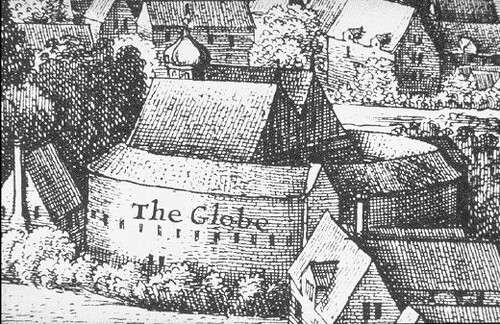 The Globe Theatre, a 20-sided timber building for Shakespeare's plays, is destroyed by fire during a performance of "Henry VIII", but no one is hurt
 -
July 29, 1693
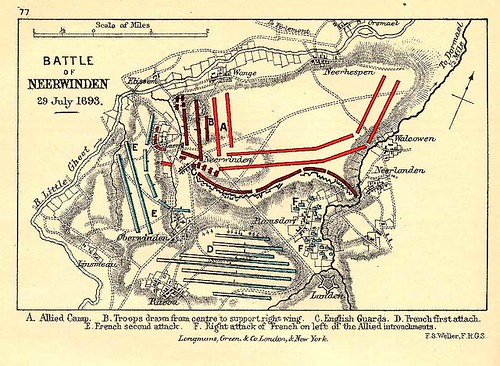 The Army of the Grand Alliance is destroyed by the French at the Battle of Neerwinden in the Netherlands
 -
July 29, 1773A large earthquake destroys so much of Antigua that the Spanish move away and built a new capital on a plateau 30 miles away that becomes Guatemala City
-
July 29, 1830
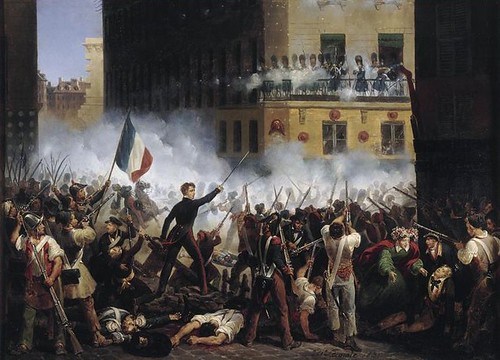 Bourbon monarchy is overthrown during the July Revolution after attempt of Charles X to limit the political and civil rights, so the ascent of his cousin Louis-Philippe, Duke of Orléans, becomes constitutional monarch of France
 -
July 29, 1875Peasants in Bosnia and Herzegovina in the Balkans rebel against the Ottoman army
-
July 29, 1914Russia, an Serbia's ally, orders a troop mobilization against Austria-Hungary after Austro-Hungarian forces begin to shell the Serbian capital, Belgrade
-
July 29, 1958United States President Dwight Eisenhower signs the National Aeronautics and Space Act creating NASA, the United States government agency responsible for the civilian space program
-
July 29, 1961Wallis and Futuna Islands becomes a French overseas territory
-
July 29, 2003
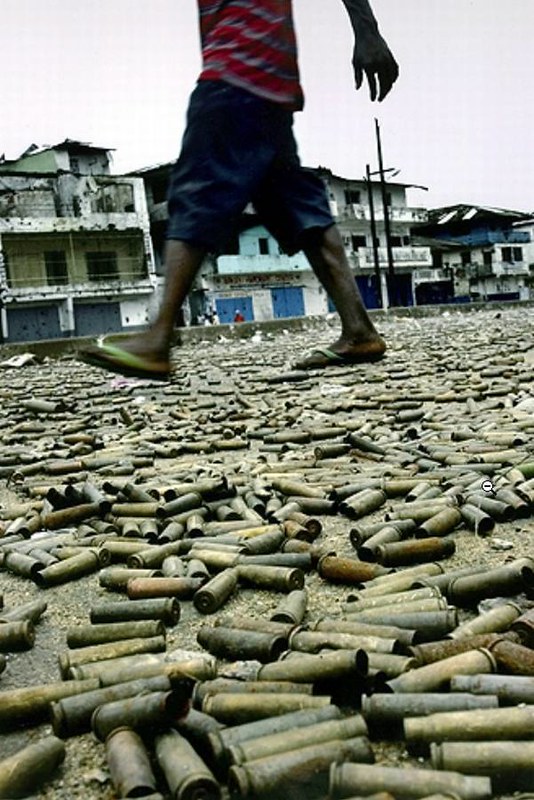 Second Liberian Civil War ends
 -
July 29, 2010Heavy monsoon rains begin to cause widespread flooding in the Khyber-Pakhtunkhwa province of Pakistan, killing nearly 2,000 and leaving roughly a million homeless
Friday, July 21, 2017
July 22
-
July 22, 1298
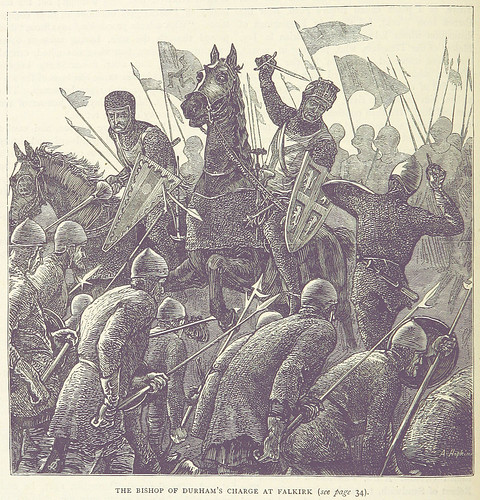 King Edward I combines bowmen and cavalry to defeat William Wallace's Scots at Falkirk
 -
July 22, 1306Philip IV of France seizes all Jewish property and expels about 100,000 men from France
-
July 22, 1456
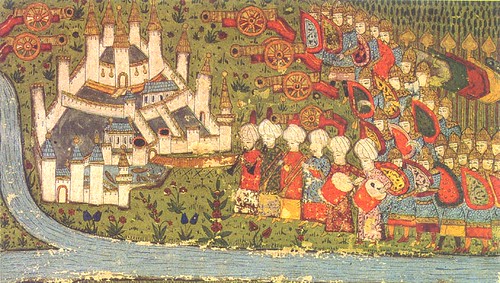 At the Battle of Belgrade, the Hungarian army under prince Janos Hunyadi beat sultan Mehmed II ending the siege of Belgrade with fail
 -
July 22, 1587A second English colony of 114-150 people under John White, financed by Sir Walter Raleigh, is established on Roanoke Island off North Carolina
-
July 22, 1620The Pilgrims, early English settlers of the Plymouth Colony in present-day Plymouth, United States, set out from Holland destined for the New World via Southampton in England
-
July 22, 1652Prince Conde's rebels narrowly defeat Chief Minister Mazarin's loyalist forces at St. Martin, near Paris
-
July 22, 1745Second Jacobite Rebellion begins by Charles Edward Stuart in Scotland
-
July 22, 1795Spain sign the Peace of Basel, a treaty with France ending the War of the Pyrenees and ceding Santo Domingo to France
-
July 22, 1796Cleveland, Ohio, is founded by General Moses Cleaveland while surveying the land
-
July 22, 1802A British exploring party led by Matthew Flinders set sail from Sydney to make the first circumnavigation of the Australia and identify it as a continent
-
July 22, 1812English troops under the Duke of Wellington defeats the French at the Battle of Salamanca in Spain
-
July 22, 1864The Battle of Atlanta reachs its peak when Confederate General John Bell Hood launches an all-out attack on Union General William T. Sherman's Army
-
July 22, 1894The first major automobile race with prizes and a promoter is organized as a reliability trial by Le Petit Journal of Paris on the 78-kilometer route between Paris and Rouen, France
-
July 22, 1972Venera 8 lands on Venus
-
July 22, 1994Shoemaker-Levy Comet strikes Jupiter
-
July 22, 2011Anders Behring Breivik kills 77 people in twin terrorist attacks in Norway after a bombing in the Regjeringskvartalet government center in Oslo and a shooting at a political youth camp on the island of Utøya
Friday, July 14, 2017
July 15
-
July 15, 1099
 Jerusalem falls to the crusaders after a seven weeks of siege ending First Crusade and following a massacre of the city's Muslim and Jewish population with the dead numbered about 3,000
 -
July 15, 1410Lithuanian-Polish forces defeat the Teutonic Knights at the Battle of Grunwald in Prussia, thereby halting the Knights' eastward expansion along the Baltic and hastening their decline
-
July 15, 1606The painter Rembrandt Harmenszoon van Rijn, is born in Leiden, Netherlands
-
July 15, 1662A Royal Charter, which created the Royal Society of London with Lord Brouncker serving as the first President, is signed
-
July 15, 1685James Scott, the Duke of Monmouth and illegitimate son of Charles II, is executed on Tower Hill in England, after his army was defeated at Sedgemoor
-
July 15, 1741Georg Wilhelm Steller, a German botanist in Russian exploratory mission under Vitus Bering, claims to see the Alaska, American mainland and becomes a pioneer of Alaskan natural history
-
July 15, 1788Louis XVI jails 12 deputies who protest new judicial reforms
-
July 15, 1834
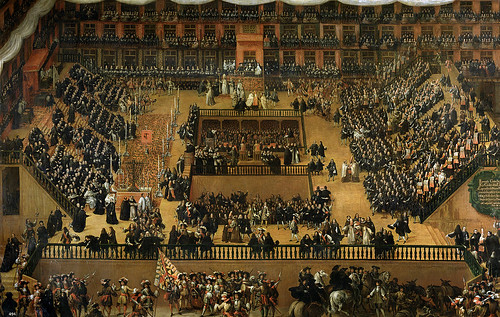 Spanish Inquisition is officially abolished by a Royal Decree signed by regent Maria Christina of the Two Sicilies
 -
July 15, 1857British women and children are murdered by Indian mutineers in the second Cawnpore Massacre
-
July 15, 1895Stefan Stambolov, ex-prime minister of Bulgaria, is murdered by Macedonian rebels
-
July 15, 1918Second Battle of the Marne, the last major German Spring Offensive on the Western Front, begins
-
July 15, 1974TV news anchor Chris Chubbuck shoots herself in the head with a revolver on live TV, dying 14 hours later, at age 30
-
July 15, 2007In Tacoma, Washington, USA, the second span of the Tacoma Narrows Bridge opens to traffic, making it the longest twin suspension bridge in the world
Monday, July 10, 2017
July 11
-
July 11, 1144
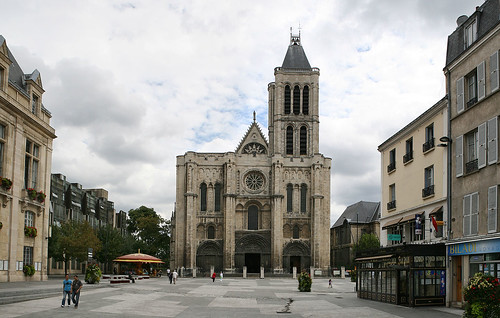 The construction of Basilica of St Denis, a large medieval abbey church and the first truly Gothic building where buried many kings of France with their families, is finished in the commune of Saint-Denis near Paris
 -
July 11, 1302Fleming militiamen defeat heavily-armoured French army at Courtrai during Franco-Flemish War
-
July 11, 1533Pope Clement VII excommunicates England's King Henry VIII
-
July 11, 1690Army of England's Protestant King William III defeats Roman Catholic King James II in Battle of the Boyne in Ireland which ensures the continuation of Protestant ascendancy in Ireland
-
July 11, 1708The French are defeated at Oudenarde in the Netherlands by the Duke of Marlborough and Eugene of Savoy
-
July 11, 1789Marquis de Lafayette introduces Declaration of Rights of Man in France
-
July 11, 1792Prussia army moves into French territory
-
July 11, 1804Vice President Aaron Burr mortally wounds Alexander Hamilton, former first Treasury Secretary, in a pistol duel near Weehawken, New Jersey
-
July 11, 1833In Australia the native warrior Yagan, who played a key part in early Indigenous Australian resistance to British settlement, is shot dead by teenage bounty hunters
-
July 11, 1882Bombardment of Alexandria is begun by the British Mediterranean Fleet to suppress ‘Urabi Revolt against the khedive Tewfik Pasha
-
July 11, 1893The first cultured pearl is obtained by Japanese entrepreneur Mikimoto Kōkichi
-
July 11, 1921
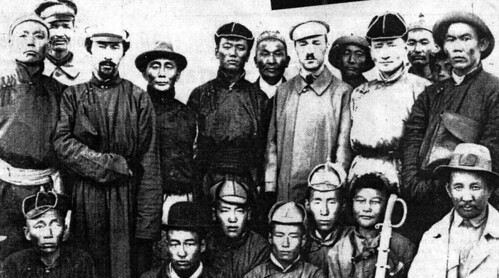 Mongolia, formerly Outer Mongolia, declares independence from China after successfully military operation of Russian and Mongolian troops
 -
July 11, 1960Harper Lee's novel To Kill A Mockingbird is published
-
July 11, 1962Telstar 1, the first communications satellite, launched by NASA, relays its first, and non-public, television pictures
-
July 11, 1979First space station, Skylab, reenters Earth's atmosphere and disintegrates
-
July 11, 1987World population reaches 5 billion people, according to the United Nations
-
July 11, 2006A series of coordinated bomb attacks strikes several commuter trains in Mumbai, India during the evening rush hour
Sunday, July 9, 2017
July 10
-
July 10, 138
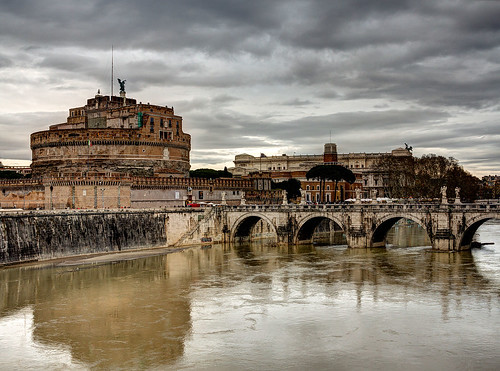 Roman emperor Hadrian dies and Antoninus Pius succeeds
 -
July 10, 552Armenian calendar, the traditional calendar of Armenia, begins
-
July 10, 1057According to a legend, Lady Godiva, an Anglo-Saxon noblewoman, rides naked on horseback throughout Coventry in order to gain a remission of the oppressive taxation imposed by her husband
-
July 10, 1460Richard of York defeats King Henry VI at Northampton during Wars of Roses. Henry is captured and taken to London to serve as a figurehead
-
July 10, 1546Schmalkaldic War begins between the forces of Emperor Charles V of the Holy Roman Empire and the Lutheran Schmalkaldic League within the domains of the Holy Roman Empire
-
July 10, 1584William the Silent, Count of Nassau, and first stadholder of the United Provinces of the Netherlands, is assassinated by Burgundian Balthasar Gérard with a handgun
-
July 10, 1609The Catholic states in Germany set up a league under the leadership of Maximillian of Bavaria
-
July 10, 1679The British crown claims New Hampshire as a royal colony
-
July 10, 1690At the battle of Beachy Head French fleet defeats Anglo-Dutch fleet during Nine Years' War
-
July 10, 1747Persian ruler Nadir Shah is assassinated in his sleep by Salah Bey, captain of the guards, and stabbed with a sword
-
July 10, 1778In support of the American Revolution, Louis XVI declares war on England
-
July 10, 1796Carl Friedrich Gauss, a German mathematician, discovers that every positive integer could be represented as a sum of at most three triangular numbers
-
July 10, 1918Soviet Russian Republic is renamed the Russian Socialist Federative Soviet Republic by the Russian Constitution of 1918
-
July 10, 1923All non-fascist parties are disolved in Italy
-
July 10, 1925USSR's official news agency TASS is established
-
July 10, 1940
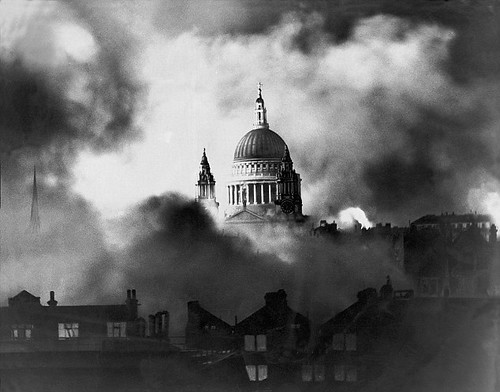 German Luftwaffe fly for Britain, who fights alone against the Axis Powers, starting the Battle of Britain, 3-month-long aerial bombing campaign during the Second World War
 -
July 10, 1944Lucien Pissarro, a landscape painter and printmaker, dies
-
July 10, 1973Bahamas gains independence after 300 years of British rule
-
July 10, 2000Bashar al-Assad is confirmed as President of Syria in a national referendum
-
July 10, 2003The last of the original Volkswagen Beetle cars, produced for 69 years and produced in number of over 21 million, is built at the assembly plant in Mexico
Saturday, July 1, 2017
July 2
-
July 2, 311
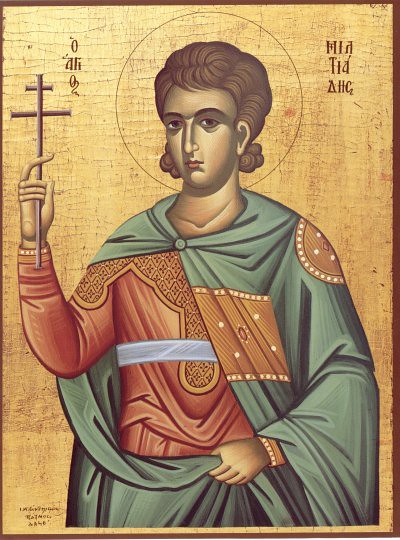 Saint Militiades begins his reign as Catholic Pope
 -
July 2, 1644The combined forces of the English Parliamentarians and the Scottish Covenanters crush the Royalists at the Battle of Marston Moor near York, England
-
July 2, 1737
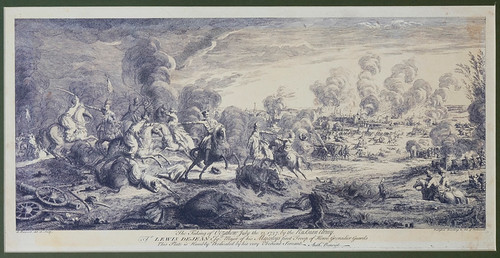 The Russian army, led by Burkhard Christoph von Münnich, capture by storm the Ottoman fortress of Ochakov during Russo–Turkish War of 1735–1739
 -
July 2, 1747Marshall Saxe leads the French forces to victory over an Anglo-Dutch force under the Duke of Cumberland at the Battle of Lauffeld
-
July 2, 1777Vermont becomes the first American territory to abolish slavery
-
July 2, 1822Denmark Vesey, the leader of large group of slaves, and five aides are hanged at Blake's Landing, Charleston, South Carolina after attempt to gain freedom by force
-
July 2, 1861Australian explorer Robert O'Hara Burke dies near Cooper's Creek and John King presses on to look for native Aborigines
-
July 2, 1872Jacob W. Davis of Reno, Nevada, sends Levi Strauss & Co. in San Francisco a sample of his work pants and a business proposal for Strauss to apply for a patent in exchange for a half share in the patent
-
July 2, 1881Less than four months after his inauguration, the 20th President of the United States James Garfield is fatally shot from behind in Washington, D.C., by Charles Guiteau, who wished to be appointed consul to France, at the Washington railroad station
-
July 2, 1890United States Congress passes the Sherman Antitrust Act against large companies, who co-operated to fix outputs and prices, which becomes the second antitrust law, after Canada's competition statute
-
July 2, 1893Fram, a ship used for exploration of the Arctic and Antarctic regions, leaves Bergen to be frozen into the pack ice and drift towards the pole
-
July 2, 1900Zeppelin LZ 1, made by German aircraft manufacturer Ferdinand von Zeppelin, becomes the first truly successful experimental rigid airship
-
July 2, 1937Amelia Earhart, an American author and the first female aviator to fly solo across the Atlantic Ocean, disappears over the central Pacific Ocean near Howland Island during a circumnavigational flight of the globe
-
July 2, 1961Writer Ernest Hemingway shoots himself to death in Ketchum, Idaho, United States
-
July 2, 1962
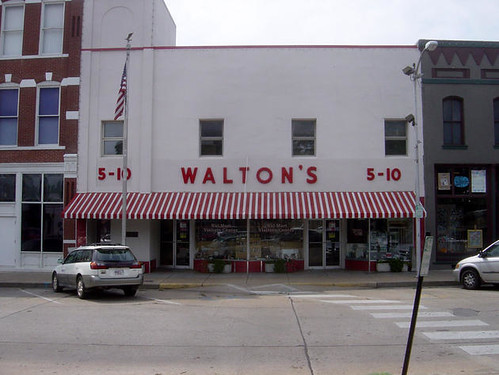 The first Wal-Mart, a large discount department store, opens in Rogers, Arkansas, United States
 -
July 2, 1964
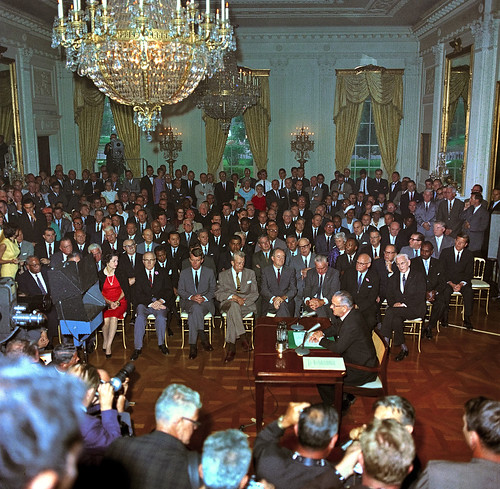 U.S. President Lyndon Johnson signs the Civil Rights Act of 1964, which prohibits racial discrimination in employment and education and outlaws racial segregation in public places such as schools, buses, parks and swimming pools
 -
July 2, 1969The International resort/casino, the world's largest hotel, with the world's largest casino, at 2,700 square meters, opens in Las Vegas Boulevard, Nevada
-
July 2, 1976North and South Vietnam reunite to form the Socialist Republic of Vietnam
-
July 2, 2000Vincente Fox, a candidate of the rightist National Action Party, is elected President of Mexico, ending 71 years of Institutional Revolutionary Party rule and becomes the first opposition President of Mexico
-
July 2, 2001The world's first self-contained artificial heart called AbioCor is implanted in Chicago School teacher Robert Tools
-
July 2, 2002Steve Fossett, an American businessman, becomes the first person to fly solo around the world in a balloon
July 1
-
July 1, 69
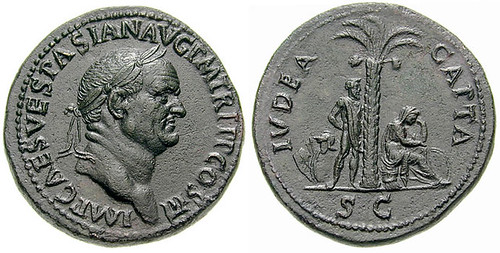 Roman general Vespasian is proclaimed emperor by the army in Egypt under Tiberius Julius Alexander, starting Flavian Dynasty
 -
July 1, 600Sutton Hoo helmet, one of the most important Anglo-Saxon artefacts, is left among other ceremonial artefacts in the ship-burial in the Anglo-Saxon Kingdom of East Anglia
-
July 1, 1390A French and Genoese armada sail out against Barbary pirates
-
July 1, 1569
 The Union of Lublin replaces the personal union of the Crown of the Kingdom of Poland and the Grand Duchy of Lithuania with an elective monarchy and creates the Polish–Lithuanian Commonwealth for protection against the growing power of Muscovite Russia
 -
July 1, 1596An English fleet under the Earl of Essex, Lord Howard of Nottingham and Francis Vere capture and sack Cadiz, Spain
-
July 1, 1634Gian Lorenzo Bernini, an Italian artist and a prominent architect, completes bronze St. Peter's Baldachin in St. Peter's Basilica, which becomes one of the earliest examples of Baroque sculpture
-
July 1, 1643Westminster Assembly, a synod composed of theologians and members of Parliament appointed to restructure the Church of England, begins
-
July 1, 1690Led by Marshall Luxembourg, the French defeat the forces of the Grand Alliance at Fleurus in the Netherlands
-
July 1, 1798
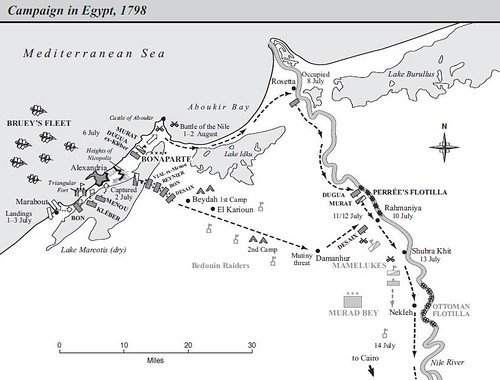 Shortly after disembarkment at Alexandria forces of Napoleon Bonaparte break into the city of Alexandria in Egypt and takes it
 -
July 1, 1823The United Provinces of Central America, a state consisting of Costa Rica, Guatemala, Honduras, Nicaragua and San Salvador, gains independence from Mexico
-
July 1, 1849Henry David Thoreau, an American author, publishes his essay Resistance to Civil Government, an argument for disobedience to an unjust state
-
July 1, 1850Rudolf Clausius, a German physicist, publishes the basic ideas of the second law of thermodynamics, stating that in a natural thermodynamic process, there is an increase in the sum of the entropies of the participating systems
-
July 1, 1858The works "On the Tendency of Species to form Varieties" by British naturalist Alfred Russel Wallace and "Extract from an unpublished Work on Species" by Charles Darwin, announce the theory of evolution by natural selection to the Linnean Society of London
-
July 1, 1862In Seven Days Battles Confederate General Robert E. Lee drove the invading Union Army of the Potomac, commanded by major general George B. McClellan
-
July 1, 1863The opening shot at the Battle of Gettysburg, the American Civil War's turning point, at 7:30 a.m. begins the first day's fighting at Gettysburg, in which Federal forces retreat through the town and dug in at Cemetery Ridge and Cemetery Hill
-
July 1, 1867Dominion of Canada is formed from three British colonies by Constitution Act, issued by Queen Victoria, making Canada a self-governing dominion of Great Britain
-
July 1, 1885Friedrich Nietzsche, a German philosopher, writes philosophical novel Thus Spoke Zarathustra, in which points to human as a transition between apes and the "Übermensch", or "overman"
-
July 1, 1898American troops take San Juan Hill and El Caney, Cuba, from the Spaniards
-
July 1, 1916British suffer over 50,000 casualties in the first day of the Battle of the Somme, one of humanity's bloodiest battles, fought by the armies of the British and French empires against the German Empire
-
July 1, 1944Bretton Woods Conference starts, establishing International Monetary Fund and World Bank
-
July 1, 1951Colombo Plan, a regional organization that embodies the concept of collective inter-governmental effort to strengthen economic and social development of member countries in the Asia-Pacific region, comes into effect
-
July 1, 1960Italian Somalia gains independence and unites with Somali Republic
-
July 1, 1962Burundi and Rwanda gain independence from Belgium
-
July 1, 1968United States, Britain, Soviet Union and 58 nations sign Nuclear Nonproliferation Treaty to prevent the spread of nuclear weapons and promote cooperation in the peaceful uses of nuclear energy
-
July 1, 1987The Single European Act, which establishes a single market, is passed by European countries
-
July 1, 1991The Warsaw Pact is officially dissolved at a meeting in Prague
-
July 1, 1996The Northern Territory in Australia legalises voluntary euthanasia
-
July 1, 1997The United Kingdom hands sovereignty of Hong Kong to the People's Republic of China due to lease on the territories expires
-
July 1, 2000The Oresund Bridge, a double-track railway and dual carriageway bridge-tunnel connecting Sweden and Denmark, opens for traffic and becomes the longest combined road and rail bridge in Europe
-
July 1, 2006The Qinghai-Tibet Railway launches a trial operation, connecting China proper and Tibet for the first time
-
July 1, 2047The People's Republic of China's obligation to run Hong Kong as a special administrative region per the Sino-British joint declaration expires
Sunday, June 25, 2017
June 26
-
June 26, 363
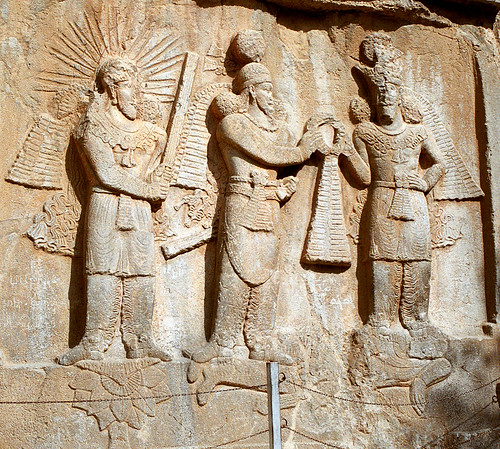 Roman Emperor Julian receives a mortal wound in battle with the Sassanian Persians during battle of Samarra. Jovian succeeds
 -
June 26, 1541Francisco Pizarro, the Spanish Conqueror of Peru, is murdered by his former followers in Lima
-
June 26, 1630Sweden enters the German wars, as King Gustavus Adolphus and 13,000 men, comprised of mostly Swedes, with some Scottish and Irish mercenaries, land on the island of Usedom off the Pomeranian coast after Imperial intervention in Poland
-
June 26, 1721Dr. Zabdiel Boylston gives the first smallpox inoculation in Boston during the epidemic that has arrived by ship from Barbados
-
June 26, 1794French defeat the Coalition Army at the Battle of Fleurus
-
June 26, 1830Britainэs King George IV dies and is succeeded by his brother, King William IV
-
June 26, 1894The American Railway Union with 125,000 workers, led by Eugene V. Debs, calls a general strike in sympathy with Pullman workers that blocked freight traffic in and out of Chicago
-
June 26, 1909The Science Museum in London comes into existence as an independent entity
-
June 26, 1924After eight years of occupation, United States troops leave the Dominican Republic
-
June 26, 1936The Focke-Wulf Fw 61, the first practical helicopter, flies for the first time in Germany
-
June 26, 1945United Nations Charter, the foundational treaty of the United Nations, is signed by 50 nations in San Francisco, California, United States
-
June 26, 1948U.S. and British pilots begin delivering food and supplies by airplane to West Berlin after the city is isolated by a Soviet Union blockade
-
June 26, 1963USA President John F. Kennedy speaks the famous words "Ich bin ein Berliner", which means I am a Berliner, on a visit to West Berlin
-
June 26, 1974The Universal Product Code, a barcode symbology, is scanned for the first time, to sell a pack of chewing gum in Ohio
-
June 26, 1976The CN Tower, the world's tallest free-standing land-based structure, opens in Toronto, Canada
-
June 26, 1997Harry Potter and the Philosopher's Stone, the first novel about a young wizard Harry Potter by British author J. K. Rowling, is released
-
June 26, 2000A 'rough draft' of the genome, as part of the Human Genome Project, an international scientific research project with a primary goal of determining the sequence of chemical base pairs which make up DNA, is finished
Friday, June 23, 2017
June 24
-
June 24, 79
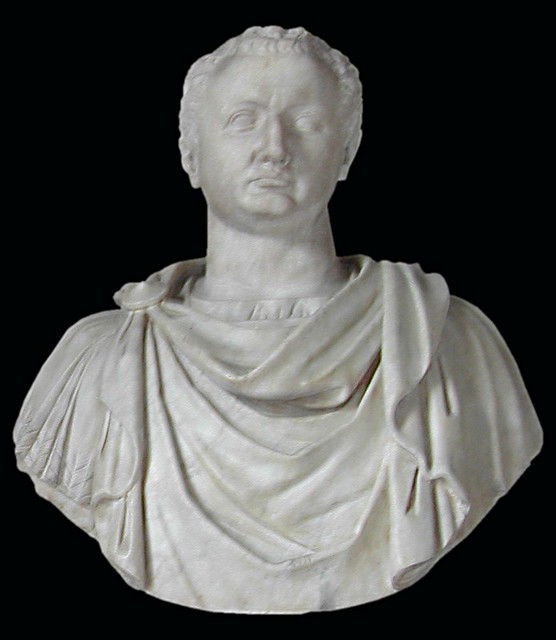 Titus succeeds to the throne after death of his father, Roman emperor Vespasian
 -
June 24, 1128Afonso I of Portugal defeat the army of his mother Theresa and takes the leadership of the County of Portugal
-
June 24, 1314
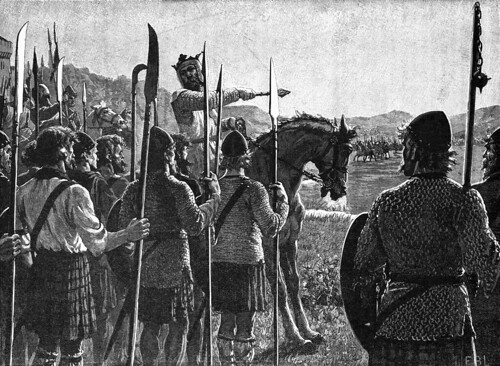 Robert the Bruce, King of of Scotland, defeats superior English army at Bannockburn forcing English forces withdraw from Scotland, which becomes the key point in the First War of Scottish Independence
 -
June 24, 1340The English fleet defeat the French fleet at Sluys, off the Flemish coast
-
June 24, 1497
 Italian explorer John Cabot, on a voyage for England, lands in North America on what is now Newfoundland and claims the new land for King Henry VII of England
 -
June 24, 1535The Münster Rebellion, an attempt of radical, millennialist, Anabaptists to establish a theocracy ends in bloodshed
-
June 24, 1622The Dutch attempt to conquer Macau during Dutch–Portuguese War ends with fail after a three-day battle
-
June 24, 1648Cossacks under Bohdan Khmelnytsky slaughter 2,000 Jews and 600 Polish Catholics in Ukraine
-
June 24, 1664New Jersey, named after the Isle of Jersey, is founded
-
June 24, 1692Kingston, Jamaica, is founded
-
June 24, 1793First republican constitution in France is adopted
-
June 24, 1812450,000 men of the Grande Armée of Napoleon crosses the Nieman River and begins invasion of Russia, resulting in catastrophic defeat for Franch
-
June 24, 1821Simón Bolívar defeat the Royalist forces, led by Spanish Field Marshal Miguel de la Torre at Battle of Carabobo outside of Caracas
-
June 24, 1859At the Battle of Solferino, also known as the Battle of the Three Sovereigns, the French army led by Napoleon III defeat the Austrian army under Franz Joseph I in northern Italy during Second Italian War of Independence
-
June 24, 1932Bloodless revolution ends absolute monarchy in Thailand
-
June 24, 1993Andrew Wiles, a British mathematician, wins worldwide fame after presenting his solution for Fermat's Last Theorem, a problem that has been unsolved for more than three centuries
Wednesday, June 14, 2017
June 15
-
June 15, 1094
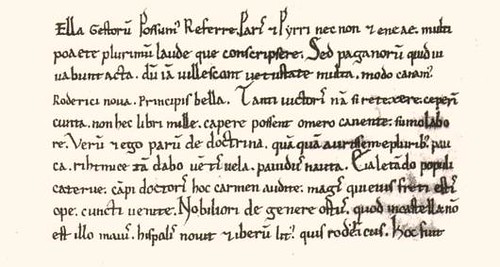 El Cid aka Rodrigo Díaz de Vivar, a Castilian nobleman and military leader, with a combined Christian and Moorish army conquest Valencia and becomes the ruler of Taifa of Valencia
 -
June 15, 1184King Magnus V of Norway is defeated by his rival, Sverre
-
June 15, 1215King John of England affixes his royal seal to the Magna Carta, granting his barons more liberty and asserting the supremacy of the law over the king
-
June 15, 1389Ottoman army under Murad I defeats Serbian army at the battle of Kosovo completing conquest of Serbia
-
June 15, 1467Philip the Good Duke of Burgundy, dies at age 76
-
June 15, 1658
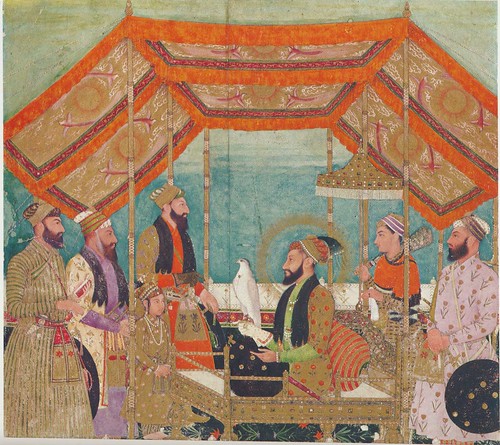 Aurangzeb, son of Mughal Emperor Shah-Jahan-e-Azam, deposes and imprisons his father, starting his reign lasted for 49 years and considered as an apex of Mughal Empire
 -
June 15, 1667Jean-Baptiste Denys, a French doctor, performs the first animal to human blood transfusion, transfusing nine ounces of blood from a lamb into 15-year-old boy
-
June 15, 1703The Rákóczi Uprising against the Habsburg Monarchy becomes the first significant attempt to topple the rule of Habsburg Austria over Hungary
-
June 15, 1733St. Croix island is purchased from the French by the Dutch West India and Guinea Company
-
June 15, 1744The warship Centurion under British Commodore George Anson returns to England with a treasure
-
June 15, 1775The Second Continental Congress vote unanimously to appoint George Washington head of the Continental Army
-
June 15, 1785Two French balloonists, Jean-François Pilâtre de Rozier and Pierre Romain, die in world's first fatal aviation accident during flight across the English Channel
-
June 15, 1844Charles Goodyear receives patent #3633 for the vulcanization of rubber, his process to strengthen rubber
-
June 15, 1846The dispute between the United Staes and Great Britain over the Oregon country is settled by treaty, establishing the boundary at the 49th parallel
-
June 15, 1878
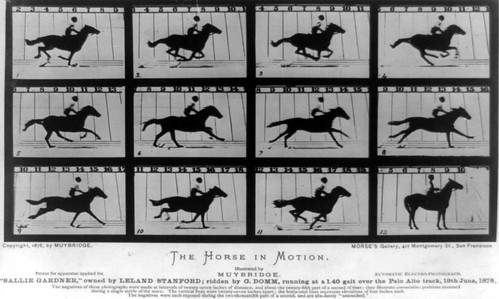 First attempt at motion pictures, using 12 cameras, each taking one picture, is done by Eadweard Muybridge to see if all four of a horse's hooves leave the ground at the same time
 -
June 15, 1888Wilhelm II becomes emperor of Germany
-
June 15, 1896The Meiji Sanriku tsunami, triggered by magnitude 8.5 earthquake, strikes Japan and causes some 27,000 deaths and destroys 170 miles of coastline
-
June 15, 1919Lieutenant Arthur Whitten Brown and Captain John Alcock complete the first trans-Atlantic non-stop flight, landing in Ireland
-
June 15, 2000The June 15th North–South Joint Declaration is adopted between leaders of North and South Korea
Tuesday, June 13, 2017
June 14
-
June 14, 1645
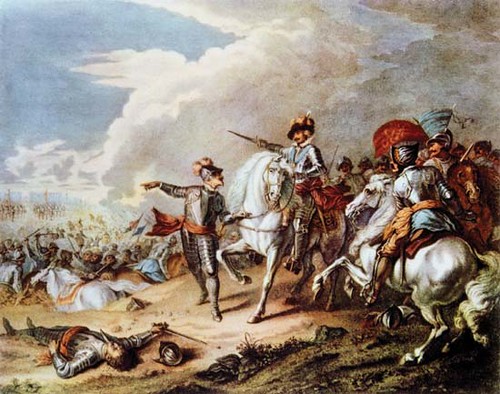 Oliver Cromwell's army routes the King's army at Naseby, which markd the decisive turning point in the English Civil War
 -
June 14, 1649Jesuits set fire to Sainte-Marie among the Hurons in North America, abandoning the settlement created in 1639, due to Iroquois on the warpath against them
-
June 14, 1667
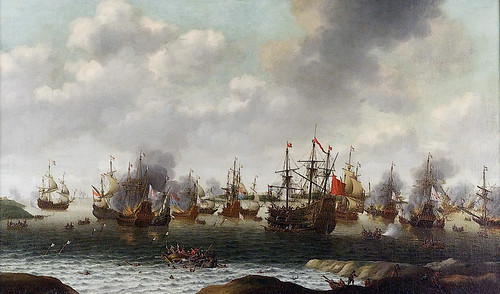 The Dutch fleet burn 3 ships and capture the English flagship near the River Medway during the Second Anglo-Dutch War
 -
June 14, 1755In England the first edition of Samuel Johnson's "A Dictionary of the English Language", which has 42,773 entries, is published
-
June 14, 1777The Continental Congress in Philadelphia adopts the Stars and Stripes, created by Betsy Ross, as the national flag
-
June 14, 1789Captain William Bligh of the HMS Bounty arrives in Timor in a small boat
-
June 14, 1800
 French General Napoleon Bonaparte pushes the forces of Austria out of Italy in the Battle of Marengo
 -
June 14, 1822
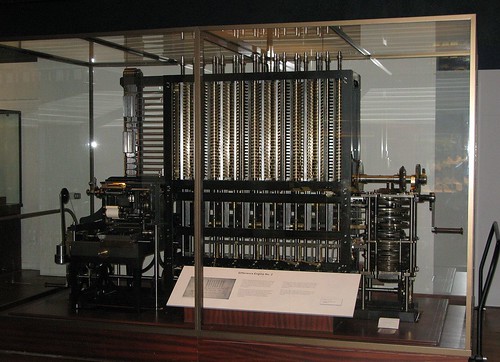 Charles Babbage, a young Cambridge mathematician, announces the invention of a machine capable of performing simple arithmetic calculations, which could perform up to 60 error-free calculation in 5 minutes, to the Astronomical Society
 -
June 14, 1834A process for making sandpaper is patented by Isaac Fischer, Springfield, Vermont
-
June 14, 1846Americans in Northern California rebel against Mexican authorities in what is called the Bear Flag Revolt and proclaim the Republic of California
-
June 14, 1866Prussia attacks Austria after disagreements over the administration of Schleswig-Holstein, starting Austro-Prussian War
-
June 14, 1923Bulgarian Prime Minister Aleksandar Stamboliyski is brutally tortured and killed during a military coup
-
June 14, 1935Chaco War between Bolivia and Paraguay ends with Paraguayan victory
-
June 14, 1940Soviet Premier Josef Stalin sends an ultimatum to Lithuania, Latvia, and Estonia, making territorial demands
-
June 14, 1943The Combined Bomber Offensive launches Operation Pointblank, a strategic bombing campaign against German industry and civilian morale
-
June 14, 1982
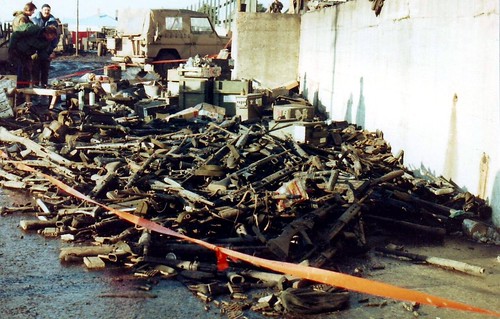 Argentina surrenders to Britain at Port Stanley, Falkland Islands, ending 74-day Falklands War over two British overseas territories in the South Atlantic
 -
June 14, 2008Expo 2008 is held in Zaragoza, Spain, with the topic of "Water and sustainable development"
Subscribe to:
Posts (Atom)