-
June 17, 362
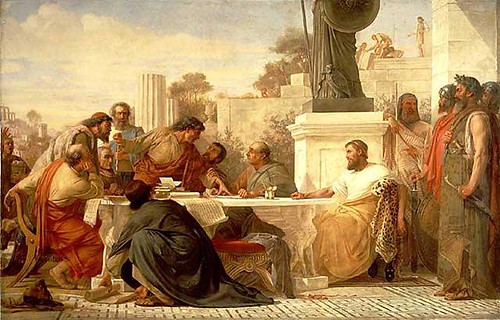 Roman emperor Julian decrees religious toleration in the empire and attempts to reestablish paganism
 -
June 17, 1397
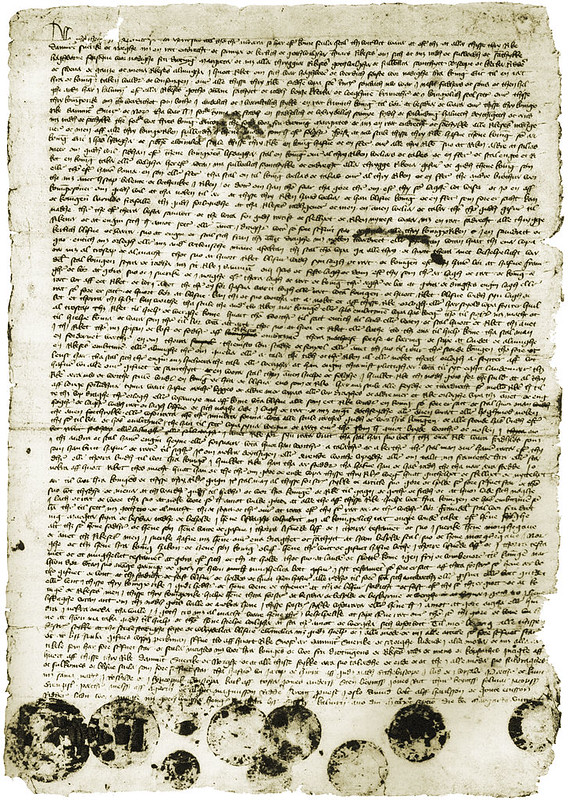 The Union of Kalmar, which grows out of the dynastic ties of the Scandinavian countries, unites Denmark, Sweden and Norway under one monarch
 -
June 17, 1579Sir Francis Drake sails into San Francisco Bay and proclaims English sovereignty over New Albion in modern-day California
-
June 17, 1696John III Sobieski, King of Lithuania and Poland, dies
-
June 17, 1767English navigator Samuel Wallis becomes the first European to visit Tahiti in existing records
-
June 17, 1789The Third Estate of the Estates-General in France declare itself a national assembly, and undertake to frame a constitution
-
June 17, 1797Mohammad Khan Qajar, cruel ruler of Persia, is killed, and his nephew Fath Ali Shah succeeded him
-
June 17, 1848Austrian General Alfred Windisch-Grätz crushes a Czech uprising in Prague against Habsburg control
-
June 17, 1930
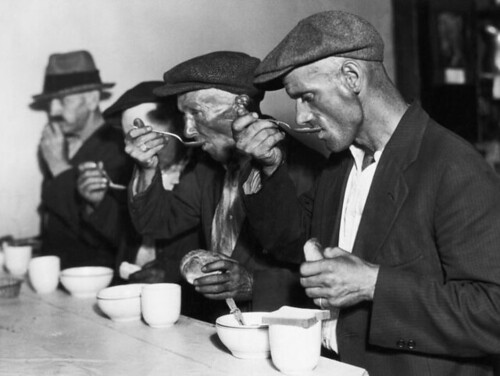 United States President Herbert Hoover signs the Hawley-Smoot Tariff bill, which increases some 900 American import duties, so contributing to the depth of the Depression
 -
June 17, 1942First World War II American expeditionary force lands in Africa
-
June 17, 1944Republic of Iceland proclaimed at Thingvallir, Iceland
-
June 17, 1950Julius Rosenberg is arrested in the US on suspicion of espionage, accused of heading a spy ring that passed top-secret information concerning the atomic bomb to the Soviet Union
-
June 17, 1967China becomes world's fourth thermonuclear power
-
June 17, 1972Five men are arrested for breaking and entering into the DNC headquarters at the Watergate complex, beginning the Watergate scandal
Showing posts with label Qajar Dynasty. Show all posts
Showing posts with label Qajar Dynasty. Show all posts
Friday, June 16, 2017
June 17

Sunday, April 30, 2017
May 1
-
May 1, 305
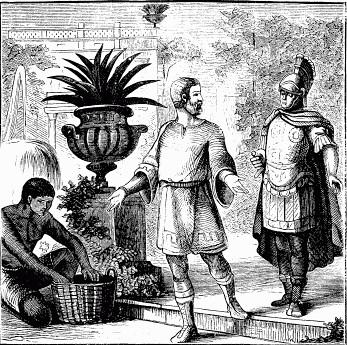 Constantius Chlorus and Galerius become Western and Eastern emperors, after Diocletian leaves the imperial office due to illness becoming the only Roman emperor to voluntarily abdicate the position
 -
May 1, 408Theodosius II succeeded to the throne of Constantinople
-
May 1, 1486Christopher Columbus convinces Queen Isabella to fund expedition to the West Indies
-
May 1, 1648The Ottomans begin the Siege of Candia in order to capture Crete from the Venetians
-
May 1, 1707
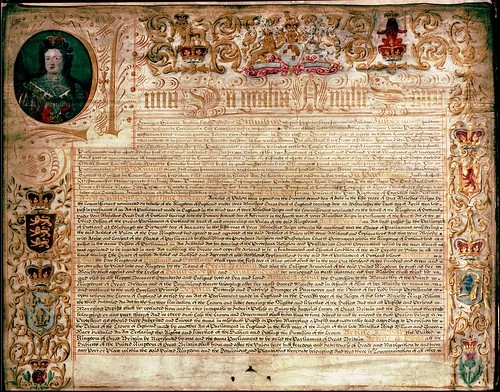 Act of Union merging the Scottish and the English Parliaments takes effect, thus establishing the Kingdom of Great Britain
 -
May 1, 1711Arch duke Charles VI of Austria and Hungarian rebellion sign Treaty of Szatmár
-
May 1, 1759France surrenders Guadeloupe to Great Britain
-
May 1, 1776Adam Weishaupt, a German philosopher, founds the secret society of Illuminati to oppose superstition, religious influence over public life, abuses of state power, and to support gender equality
-
May 1, 1786Opera "Marriage of Figaro", composed by Wolfgang Amadeus Mozart, an Austrian influential composer of the Classical era, is premiered in Vienna
-
May 1, 1840Britain issues the world's first postage stamp, "Penny Blacks", depicting a picture of Queen Victoria, as prepaid postage innovation
-
May 1, 1851
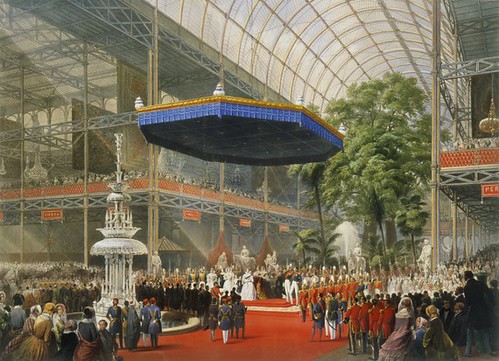 The Great Exhibition in London, the world's first international Expo, is opened in Crystal Palace, a cast-iron and plate-glass building erected in Hyde Park, as a showcase for industrial accomplishments of Great Britain and other countries
 -
May 1, 1853Argentina adopts its liberal and federal Constitution constitution
-
May 1, 1857William Walker, conqueror of Nicaragua, surrenders to the US Navy under the pressure of the Central American armies
-
May 1, 1862USA Army captain David Farragut recaptures New Orleans, Louisiana which stops cotton sales by the Confederacy a revenue shortage that led to printed money and hyperinflation
-
May 1, 1869Folies Bergère, a cabaret music hall, opens in Paris
-
May 1, 1873Emperor Franz Jozef opens 5th World's Fair in Vienna, Austria-Hungary
-
May 1, 1876Queen of the United Kingdom Victoria takes title of Empress of India by Royal Titles Act
-
May 1, 1877US President Rutherford B. Hayes orders the withdrawal all Federal troops from the South, ending Reconstruction
-
May 1, 1884Construction begins on the first steel-skeleton skyscraper, a 10-story structure in Chicago, designed by William Le Baron Jenney and built by the Home Insurance Co. of New York
-
May 1, 1889Bayer, a German chemical and pharmaceutical company, introduces aspirin in powder form
-
May 1, 1896Naser al-Din Shah Qajar, shah of Persia, is murdered by Mirza Reza Kermani, a follower of Jamal al-Din al-Afghani, at age 65
-
May 1, 1898The American Asiatic Squadron under George Dewey destroy the Spanish Pacific Squadro during the Battle of Manila Bay
-
May 1, 1924Admiral Pavlos Kountouriotis becomes the first President of Greece
-
May 1, 1925Cyprus is declared a British Crown Colony
-
May 1, 1930The dwarf planet Pluto is officially named
-
May 1, 1931
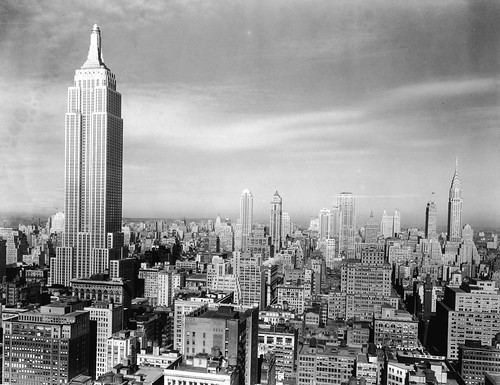 Empire State Building is officially opened, when United States President Herbert Hoover turns on the building's lights with the push of a button from Washington, D.C
 -
May 1, 1932Paul Doumer, President of France, is assassinated by mentally unstable Russia's Paul Gargalov
-
May 1, 1947The U.S. Central Intelligence Agency is created
-
May 1, 1956A doctor in Japan reports an "epidemic of an unknown disease of the central nervous system," marking the official discovery of Minamata disease
-
May 1, 1960Russia shoots down American pilot Francis Gary Powers' U-2 spy plane over Sverdlovsk
-
May 1, 1964At Dartmouth College, in Hanover, New Hampshire, the BASIC programming language runs for the first time, developed by professors John Kemeny and Thomas Kurtz for a General Electric 225 mainframe computer
-
May 1, 1978Japan's Naomi Uemura, traveling by dog sled, becomes the first person to reach the North Pole alone
-
May 1, 2006Bolivian president Evo Morales orders military to occupy oil and gas fields in country, placing them under state control
-
May 1, 2011U.S. President Barack Obama announces that Osama bin Laden, the founder and leader of the militant group Al-Qaeda, has been killed during an American military operation in Pakistan
Thursday, April 13, 2017
April 14
-
April 14, 1792
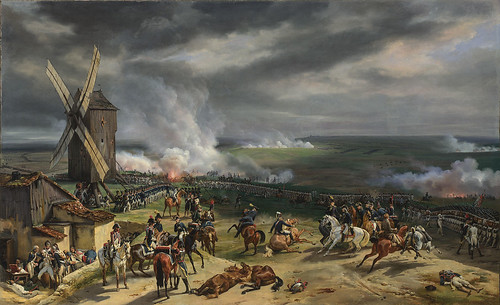 After declaration issued by Holy Roman Emperor Leopold II and Frederick William II of Prussia against the French Revolution, France declares war on Austria, starting French Revolutionary Wars which lead into the Napoleonic Wars
 -
April 14, 1841American author Edgar Allan Poe publishes his short story "The Murders on the Rue Morgue", considered the first detective
-
April 14, 1847Persia and Ottoman Empire sign second Treaty of Erzurum, settling boundary disputes between countries
-
April 14, 1853Harriet Tubman, an African-American abolitionist, begins her Underground Railroad, a network of secret routes to help slaves to escape
-
April 14, 1859Charles Dickens' "A Tale Of Two Cities" is published
-
April 14, 1860First Pony Express rider arrive in San Francisco with mail originating in St. Joseph, Missouri
-
April 14, 1865John Wilkes Booth, an actor and Confederate sympathizer, fatally shoots US President Abraham Lincoln at a play at Ford's Theater in Washington, D.C.; Andrew Johnson becomes 17th President of the United States
-
April 14, 1894Thomas Edison makes his first public showing of the kinetoscope in New York City showing moving pictures through a magnifying lens
-
April 14, 1900French President Emile Loubet opens International Fairs in Paris, France
-
April 14, 1912
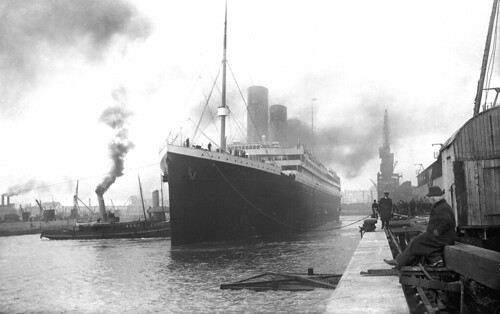 RMS Titanic, a British passenger liner, sinks in the North Atlantic after hitting with an iceberg during her maiden voyage which causes the deaths of 1,502 people
 -
April 14, 1927In Sweden, Volvo produces its first production line car, Volvo OV 4, in Gothenburg, which has a 28-hp 4-cylinder engine, and costs 4800 kronor
-
April 14, 1931The Second Spanish Republic is proclaimed in Madrid, Spain after King Alfonso XIII left the country following municipal elections
-
April 14, 1935The great dust storm in the United States hits eastern New Mexico and Colorado, and western Oklahoma the hardest, which greatly damages the ecology and agriculture and forces tens of thousands of families to abandon their farms
-
April 14, 1978Thousands of Georgians demonstrate against an attempt by Soviet authorities to change the constitutional status of the Georgian language
-
April 14, 2003
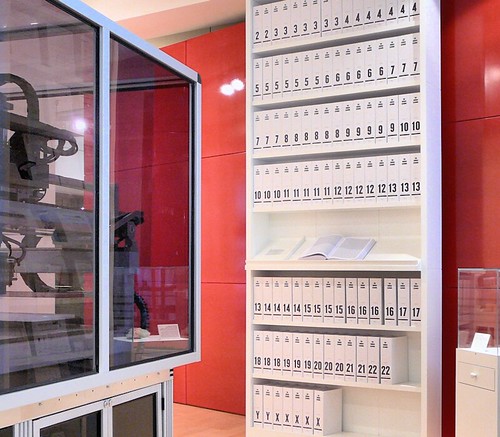 The Human Genome Project, an international scientific research project, is successfully completed, with 99 percent of the human genome sequenced to 99.99 percent accuracy
 -
April 14, 2010In Iceland, a volcano buried under the Eyjafjallajokull glacier erupts, sending up a massive ash cloud that prompts the closure of airports in parts of Europe
Subscribe to:
Posts (Atom)