-
July 1, 69
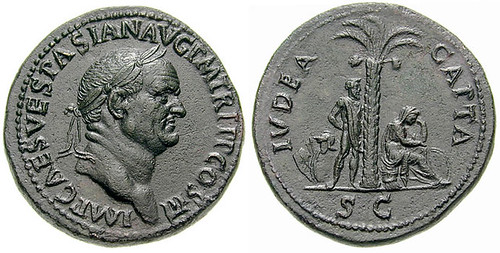 Roman general Vespasian is proclaimed emperor by the army in Egypt under Tiberius Julius Alexander, starting Flavian Dynasty
 -
July 1, 600Sutton Hoo helmet, one of the most important Anglo-Saxon artefacts, is left among other ceremonial artefacts in the ship-burial in the Anglo-Saxon Kingdom of East Anglia
-
July 1, 1390A French and Genoese armada sail out against Barbary pirates
-
July 1, 1569
 The Union of Lublin replaces the personal union of the Crown of the Kingdom of Poland and the Grand Duchy of Lithuania with an elective monarchy and creates the Polish–Lithuanian Commonwealth for protection against the growing power of Muscovite Russia
 -
July 1, 1596An English fleet under the Earl of Essex, Lord Howard of Nottingham and Francis Vere capture and sack Cadiz, Spain
-
July 1, 1634Gian Lorenzo Bernini, an Italian artist and a prominent architect, completes bronze St. Peter's Baldachin in St. Peter's Basilica, which becomes one of the earliest examples of Baroque sculpture
-
July 1, 1643Westminster Assembly, a synod composed of theologians and members of Parliament appointed to restructure the Church of England, begins
-
July 1, 1690Led by Marshall Luxembourg, the French defeat the forces of the Grand Alliance at Fleurus in the Netherlands
-
July 1, 1798
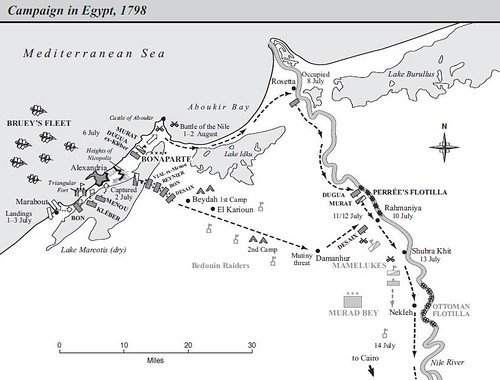 Shortly after disembarkment at Alexandria forces of Napoleon Bonaparte break into the city of Alexandria in Egypt and takes it
 -
July 1, 1823The United Provinces of Central America, a state consisting of Costa Rica, Guatemala, Honduras, Nicaragua and San Salvador, gains independence from Mexico
-
July 1, 1849Henry David Thoreau, an American author, publishes his essay Resistance to Civil Government, an argument for disobedience to an unjust state
-
July 1, 1850Rudolf Clausius, a German physicist, publishes the basic ideas of the second law of thermodynamics, stating that in a natural thermodynamic process, there is an increase in the sum of the entropies of the participating systems
-
July 1, 1858The works "On the Tendency of Species to form Varieties" by British naturalist Alfred Russel Wallace and "Extract from an unpublished Work on Species" by Charles Darwin, announce the theory of evolution by natural selection to the Linnean Society of London
-
July 1, 1862In Seven Days Battles Confederate General Robert E. Lee drove the invading Union Army of the Potomac, commanded by major general George B. McClellan
-
July 1, 1863The opening shot at the Battle of Gettysburg, the American Civil War's turning point, at 7:30 a.m. begins the first day's fighting at Gettysburg, in which Federal forces retreat through the town and dug in at Cemetery Ridge and Cemetery Hill
-
July 1, 1867Dominion of Canada is formed from three British colonies by Constitution Act, issued by Queen Victoria, making Canada a self-governing dominion of Great Britain
-
July 1, 1885Friedrich Nietzsche, a German philosopher, writes philosophical novel Thus Spoke Zarathustra, in which points to human as a transition between apes and the "Übermensch", or "overman"
-
July 1, 1898American troops take San Juan Hill and El Caney, Cuba, from the Spaniards
-
July 1, 1916British suffer over 50,000 casualties in the first day of the Battle of the Somme, one of humanity's bloodiest battles, fought by the armies of the British and French empires against the German Empire
-
July 1, 1944Bretton Woods Conference starts, establishing International Monetary Fund and World Bank
-
July 1, 1951Colombo Plan, a regional organization that embodies the concept of collective inter-governmental effort to strengthen economic and social development of member countries in the Asia-Pacific region, comes into effect
-
July 1, 1960Italian Somalia gains independence and unites with Somali Republic
-
July 1, 1962Burundi and Rwanda gain independence from Belgium
-
July 1, 1968United States, Britain, Soviet Union and 58 nations sign Nuclear Nonproliferation Treaty to prevent the spread of nuclear weapons and promote cooperation in the peaceful uses of nuclear energy
-
July 1, 1987The Single European Act, which establishes a single market, is passed by European countries
-
July 1, 1991The Warsaw Pact is officially dissolved at a meeting in Prague
-
July 1, 1996The Northern Territory in Australia legalises voluntary euthanasia
-
July 1, 1997The United Kingdom hands sovereignty of Hong Kong to the People's Republic of China due to lease on the territories expires
-
July 1, 2000The Oresund Bridge, a double-track railway and dual carriageway bridge-tunnel connecting Sweden and Denmark, opens for traffic and becomes the longest combined road and rail bridge in Europe
-
July 1, 2006The Qinghai-Tibet Railway launches a trial operation, connecting China proper and Tibet for the first time
-
July 1, 2047The People's Republic of China's obligation to run Hong Kong as a special administrative region per the Sino-British joint declaration expires
Showing posts with label Vespasianus. Show all posts
Showing posts with label Vespasianus. Show all posts
Saturday, July 1, 2017
July 1

Friday, June 23, 2017
June 24
-
June 24, 79
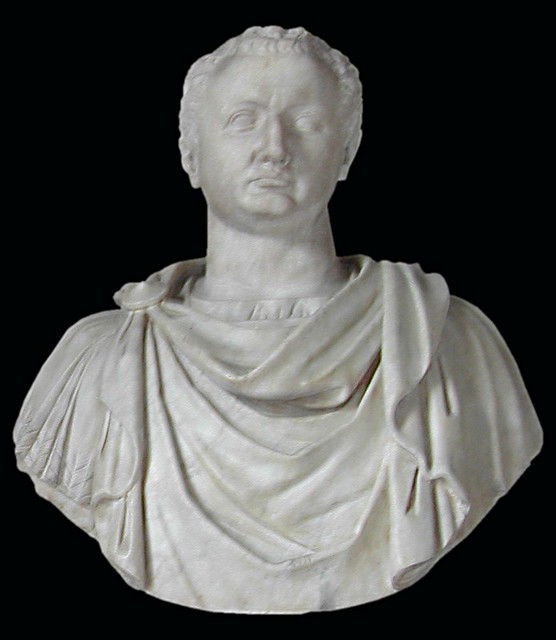 Titus succeeds to the throne after death of his father, Roman emperor Vespasian
 -
June 24, 1128Afonso I of Portugal defeat the army of his mother Theresa and takes the leadership of the County of Portugal
-
June 24, 1314
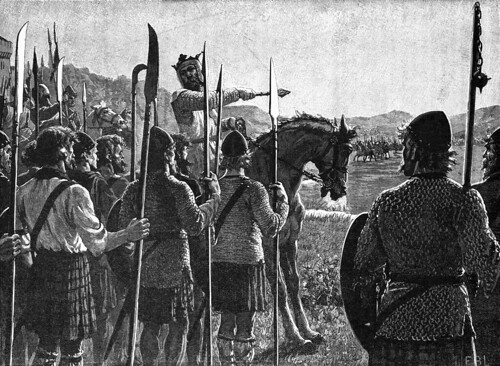 Robert the Bruce, King of of Scotland, defeats superior English army at Bannockburn forcing English forces withdraw from Scotland, which becomes the key point in the First War of Scottish Independence
 -
June 24, 1340The English fleet defeat the French fleet at Sluys, off the Flemish coast
-
June 24, 1497
 Italian explorer John Cabot, on a voyage for England, lands in North America on what is now Newfoundland and claims the new land for King Henry VII of England
 -
June 24, 1535The Münster Rebellion, an attempt of radical, millennialist, Anabaptists to establish a theocracy ends in bloodshed
-
June 24, 1622The Dutch attempt to conquer Macau during Dutch–Portuguese War ends with fail after a three-day battle
-
June 24, 1648Cossacks under Bohdan Khmelnytsky slaughter 2,000 Jews and 600 Polish Catholics in Ukraine
-
June 24, 1664New Jersey, named after the Isle of Jersey, is founded
-
June 24, 1692Kingston, Jamaica, is founded
-
June 24, 1793First republican constitution in France is adopted
-
June 24, 1812450,000 men of the Grande Armée of Napoleon crosses the Nieman River and begins invasion of Russia, resulting in catastrophic defeat for Franch
-
June 24, 1821Simón Bolívar defeat the Royalist forces, led by Spanish Field Marshal Miguel de la Torre at Battle of Carabobo outside of Caracas
-
June 24, 1859At the Battle of Solferino, also known as the Battle of the Three Sovereigns, the French army led by Napoleon III defeat the Austrian army under Franz Joseph I in northern Italy during Second Italian War of Independence
-
June 24, 1932Bloodless revolution ends absolute monarchy in Thailand
-
June 24, 1993Andrew Wiles, a British mathematician, wins worldwide fame after presenting his solution for Fermat's Last Theorem, a problem that has been unsolved for more than three centuries
Subscribe to:
Posts (Atom)