-
June 21, 217 BC
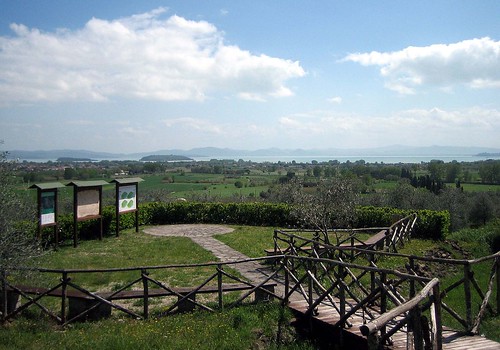 Roman army is ambushed and destroyed by Hannibal's army, numbering around 55,000 troops, at the Battle of Lake Trasimene, which becomes the largest ambush in military history
 -
June 21, 1377Edward III, King of England, dies
-
June 21, 1547The great fire in Moscow destroys sections of Moscow which had been built almost entirely of wood including some building in the Kremlin
-
June 21, 1607The Church of England Episcopal Church, the first Protestant Episcopal parish in America, is established at Jamestown
-
June 21, 1661Sweden signs the Treaty of Cardis, in which Russia agrees to return to Sweden areas it had conquered in the Baltic lands
-
June 21, 1675Sir Christopher Wren begins to rebuild St Paul's Cathedral in London, replacing the old building which has been destroyed by the Great fire
-
June 21, 1749English transport ships land 2576 colonists on what is now Nova Scotia to establish a British military base, naming the town Halifax
-
June 21, 1788New Hampshire ratifies the United States Constitution as the ninth state, and by the terms of Article VII it is in effect
-
June 21, 1834Obed Hussey, an American inventor, patents mechanical reaping machine
-
June 21, 1887Britain celebrates the golden jubilee of Queen Victoria
-
June 21, 1893George Washington Gale Ferris, engineer, completes the construction of a 77-meter high revolving steel wheel with 38 passenger cars, each with 40 plush chairs, for the World's Columbian Exposition in Chicago, the first Ferris wheel
-
June 21, 1897In Austria a giant Ferris wheel, designed by Walter Bassett of England, is opened in Vienna to commemorate the 50th anniversary of the accession of Emperor Franz Joseph to the Habsburg throne
-
June 22, 1940
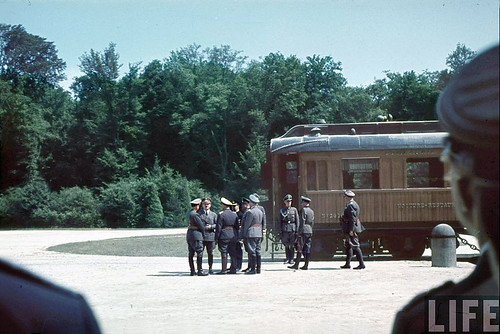 After German blitz France formally surrenders at the signing ceremony, held in the same wagon-lit railroad car used by French Marshal Ferdinand Foch to accept the surrender of Germany in 1918
 -
June 21, 1948In a lab in Manchester, England, the Small Scale Experimental Machine computer, nicknamed "Baby" is created, the first to contain memory (128 bytes) which could store a program
-
June 21, 1985It is confirmed by American, German, and Brazilian forensic pathologists that the body exhumed in Brazil on June 6 is, indeed, that of the German physician in Auschwitz concentration camp, Josef Mengele
Showing posts with label Battle of France. Show all posts
Showing posts with label Battle of France. Show all posts
Tuesday, June 20, 2017
June 21

Saturday, June 3, 2017
June 4
-
June 4, 1070
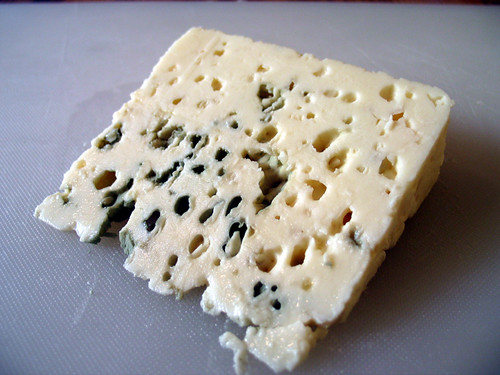 Roquefort cheese is accidentally discovered in a cave near Roquefort, France, when a shepherd finds a lunch he has forgotten several days before
 -
June 4, 1717The Freemasons, who begun in the 13th century as a guild of masons, establish their Grand Lodge in London, the oldest Grand Lodge in the world
-
June 4, 1745Prussians defeat Austrians at Hohenfriedeberg
-
June 4, 1783The Montgolfier brothers launched their first unmanned hot-air balloon in a 10-minute flight over Annonay, France
-
June 4, 1792Captain George Vancouver claims Puget Sound for Britain after landing into the San Francisco Bay on his ship Discovery
-
June 4, 1794Robespierre is unanimously elected president of the Convention in the French Revolution
-
June 4, 1805The US signs a Treaty of Peace and Amity at Tripoli by which agrees to pay Tripoli $60,000 in war reparations and is in turn absolved of tribute demands
-
June 4, 1859The French army under Napoleon III takes Magenta from the Austrian army after a bloody battle in northern Italy
-
June 4, 1878Cyprus is ceded by Turkey to Britain for administrative purposes
-
June 4, 1896Henry Ford makes a successful pre-dawn test run of his horseless carriage, called a quadricycle, through the streets of Detroit
-
June 4, 1936Socialist Léon Blum leads the first Popular Front ministry composed of socialists and radical socialists, which passed important legislation, such as the 40-hour week and paid holidays for the workers
-
June 4, 1940
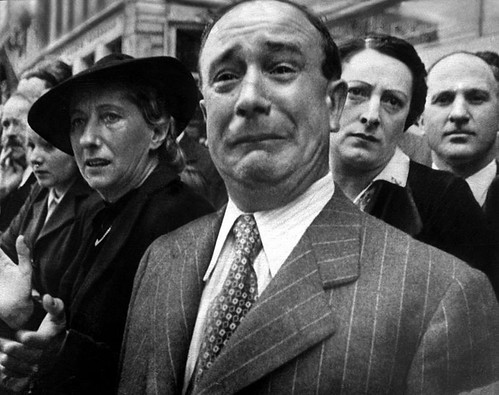 German forces enter Paris, France
 -
June 4, 1944In Italy, American forces take Rome
-
June 4, 1970Tonga gains independence from Britain
-
June 4, 1989A natural gas explosion near Ufa, Russia kills 645 as two trains passing each other throw sparks near a leaky pipeline
-
June 4, 2002Queen Elizabeth II and the Duke of Edinburgh ride in the gold state coach from Buckingham Palace to Saint Paul's Cathedral for a special service marking the Queen's 50 years on the throne
Thursday, May 11, 2017
May 12
-
May 12, 1191
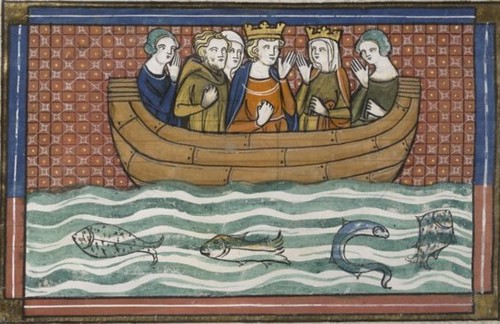 Richard I of England marries Berengaria of Navarre in Limassol, Cyprus
 -
May 12, 1215English barons serve ultimatum on king John
-
May 12, 1264Simon de Montfort, 6th Earl of Leicester, beats and captures English king Henry III at the Battle at Lewes during the Baron's War
-
May 12, 1328Louis IV, Holy Roman Emperor selects Pietro Rainalducci as antipope Nicolaas V
-
May 12, 1588King Henry III of France flees Paris after Catholic League under duke Henry of Guise enter the city
-
May 12, 1689England's King William III joins the League of Augsburg and the Netherlands to counter the war of aggression launched by Louis XIV against the Palatinate states in Germany
-
May 12, 1777First ice cream advertisement appears in New York
-
May 12, 1780Charleston, South Carolina falls to the British after a long fight and siege
-
May 12, 1789In England William Wilberforce lays out his case for the abolition of slavery to the House of Commons
-
May 12, 1809Napoleon's troops capture Vienna, Austria
-
May 12, 1881Treaty of Bardo, signed between representatives of the French Republic and Tunisian bey Muhammed as-Sadiq, establishes Tunis as a French protectorate and gives France responsibility for the defense and foreign policy decisions of Tunisia
-
May 12, 1885In the Battle of Batoche, Saskatchewan, Metis rebels ran out of ammunition and resort to firing pebbles from their guns, until they are forced to retreat
-
May 12, 1940Germany forces move to Meuse River and launch a blitz conquest of France
-
May 12, 1951First hydrogen bomb test on a very small scale occurs during Operation Greenhouse on Enewetak Atoll
Subscribe to:
Posts (Atom)