-
August 27, 1626
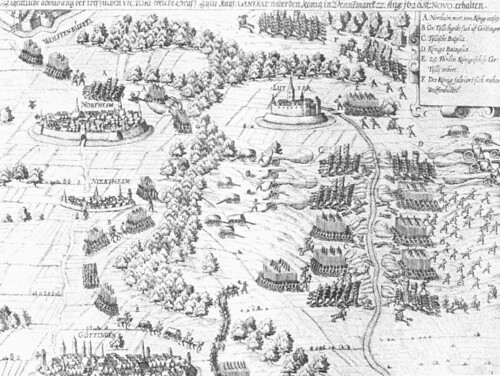 Danish forces and allies are soundly defeated at Lutter-am-Barenberg by an army of the Catholic League under Czech leader Wallenstein, marking the end of Danish intervention in European wars
 -
August 27, 1689
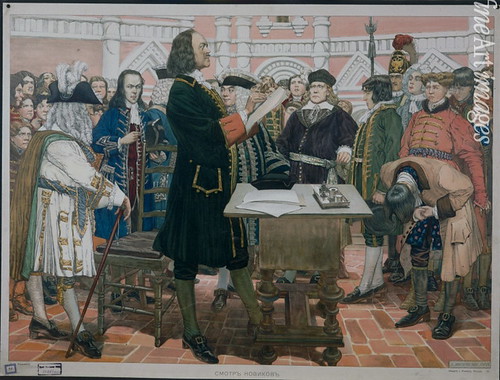 Peter the Great takes power from his half-sister Sophia and assumes Russian throne, starting politics of modernization and westernization of traditionalist social systems
 -
August 27, 1776The Americans are defeated by the British at the Battle of Long Island, New York
-
August 27, 1783The first unmanned hydrogen balloon flight, made by Jacques Charles, successfully completes its flight in Paris reaching 900 meter altitude
-
August 27, 1813Napoleon defeat The Allies at the Battle of Dresden
-
August 27, 1849Venice, under Daniele Manin, surrender to Austrians under Field Marshal Radetzky, following a siege since July 20 after proclaiming independence
-
August 27, 1883Explosion of volcano with a force of 1,300 megatons on the island Krakatoa causes the tidal waves in Indonesia's Sunda Strait, which claims some 36,417 lives in Java and Sumatra
-
August 27, 1896
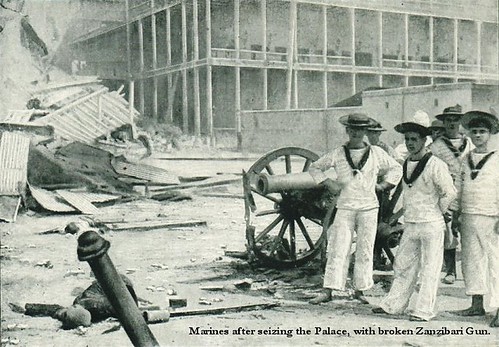 Zanzibar loses to England in a 38-minute war, the shortest war in history, which begins after the death of the pro-British Sultan Hamad bin Thuwaini and the succession of Sultan Khalid bin Barghash
 -
August 27, 1913Lieutenant Peter Nestrov, of Imperial Russian Air Service, performs a loop in a monoplane at Kiev, the first aerobatic maneuver in an airplane
-
August 27, 1928Kellogg–Briand Pact is signed by the USA, Belgium, Czechoslovakia, Great Britain, Germany, Italy, Japan, and Poland, renouncing war as an instrument of national policy in relations with one another
-
August 27, 1939Heinkel He 178, the world's first aircraft to fly under turbojet power, makes the first flight, piloted by Erich Warsit
Showing posts with label Austrian Empire. Show all posts
Showing posts with label Austrian Empire. Show all posts
Saturday, August 26, 2017
August 27

Tuesday, August 22, 2017
August 23
-
August 23, 406
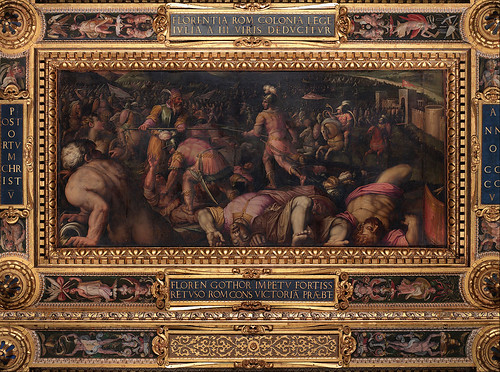 The Roman army under Stilicho beat the Barbarians and executes his Gothic king Radagaisus
 -
August 23, 1305
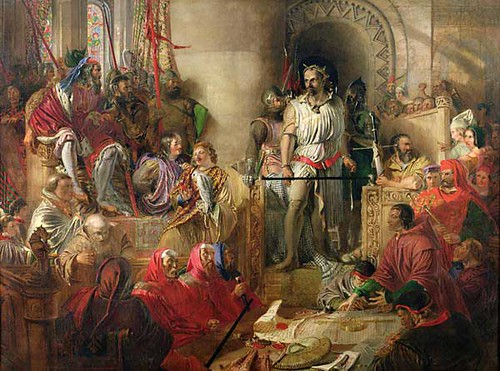 William Wallace, one of the main leaders during the Wars of Scottish Independence, is hanged, drawn and quartered in London
 -
August 23, 1514The Ottoman Empire under Selim I gains decisive victory against a Persian army in the Battle of Chaldiran and wrests Eastern Anatolia from the Safavids
-
August 23, 1617The first one-way street is opened in alleys near the River Thames in London
-
August 23, 1689French cross the Rhine, destroying Baden-Baden by fire during Nine Years' War
-
August 23, 1775Britain's King George III refuses the American colonies' offer of peace and proclaims the American colonies in a state of "open and avowed rebellion"
-
August 23, 1833Slavery Abolition Act bans slavery throughout the British Empire and frees some 700,000 slaves, including those in the West Indies
-
August 23, 1866
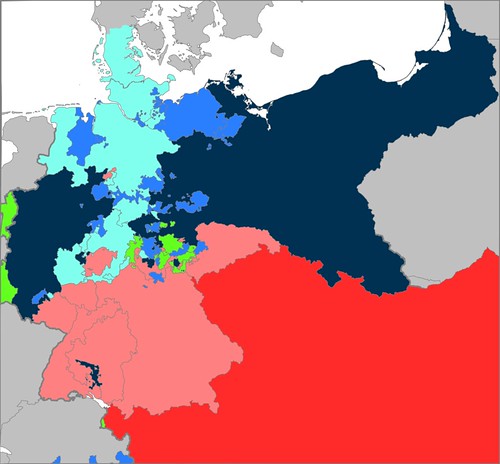 Peace of Prague, lenient toward the Austrian Empire, ends the Austro-Prussian war and leads to the creation of the North German Confederation with Prussia as the only major power
 -
August 23, 1903In Russia the Bolsheviks, who ultimately became the Communist Party of the Soviet Union, and the Mensheviks form from the breakup of the Russian Social Democratic Labor Party as a result of a dispute between Vladimir Lenin and Juliy Martov
-
August 23, 1939
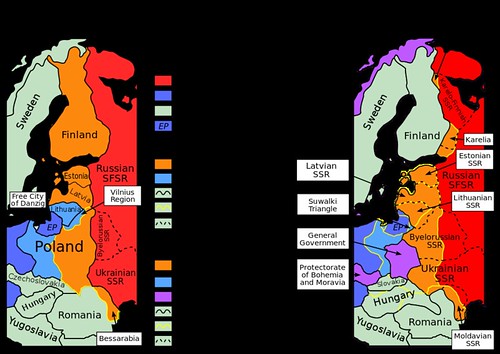 Germany and the Soviet Union sign Molotov–Ribbentrop Pact with secret protocol, which defines eastern Poland, Finland, Latvia, Estonia, and the Romanian province of Bessarabia as Soviet domains of influence and western Poland and Lithuania as Germany's one
 -
August 23, 1942German forces attack Stalingrad in Soviet Union, starting 5-month-long battle of Stalingrad, the bloodiest battle in the history of warfare, with combined casualties amounting to nearly two million
-
August 23, 1943
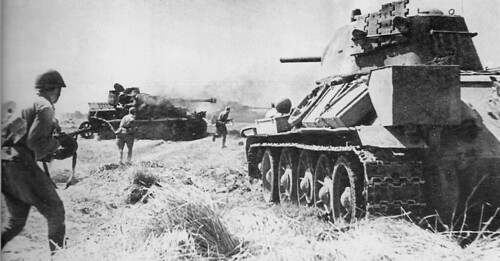 Soviet forces recapture Kharkiv, the last stage of the Battle of Kursk, an important engagement between German and Soviet forces after which Red Army gains the initiative against the German Wehrmacht
 -
August 23, 1944Romania is liberated and King Michael unconditionally surrenders to the Allies
-
August 23, 1962Mariner 2, an American space probe to Venus, and the first robotic space probe to conduct a successful planetary encounter, is launched
-
August 23, 1996Osama bin Laden, the founder of al-Qaeda, allegedly writes "The Declaration of Jihad on the Americans Occupying the Country of the Two Sacred Places," his first open call for war
-
August 23, 2005Israel's unilateral disengagement from 25 Jewish settlements in the Gaza Strip and West Bank ends
-
August 23, 2006In Austria, Natascha Kampusch manages to escape after being kidnapped eight years ago by Wolfgang Priklopil who locked her up in his cellar; Priklopil commits suicide by throwing himself in front of a train
Monday, August 21, 2017
August 22
-
August 22, 634
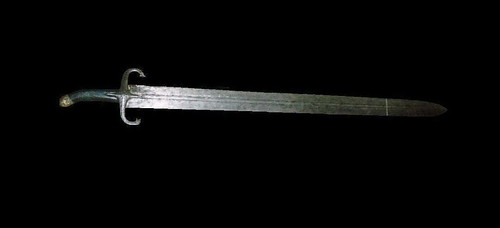 Abu Bakr, successor of Mohammed and first Caliph, dies; Umar, a companion of the Islamic prophet Muhammad, becomes the second Caliph
 -
August 22, 1138The english defeat Scots at the battle of the Standard
-
August 22, 1236Volkwin, the Master of the Livonian Brothers of the Sword, is defeated and killed by the Samogitians at the Battle of Saule which causes merging the order into the Teutonic Order
-
August 22, 1350Philip VI of Valois, King of France, dies; John II of France succeeds
-
August 22, 1485England's King Richard III, the last of the Plantagenet kings, is killed at the Battle of Bosworth Field, that ends the War of the Roses and establishes the Tudor dynasty in England
-
August 22, 1614Trades people under Vincent Fettmilch chase and plunder Jews out of ghetto in Frankfurt
-
August 22, 1642
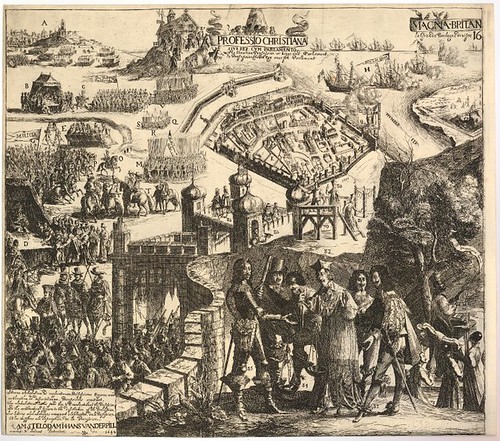 Civil war in England, resulted in the establishment of the supremacy of Parliament over the king, begins as King Charles I declared war on the Puritan Parliament at Nottingham
 -
August 22, 1676
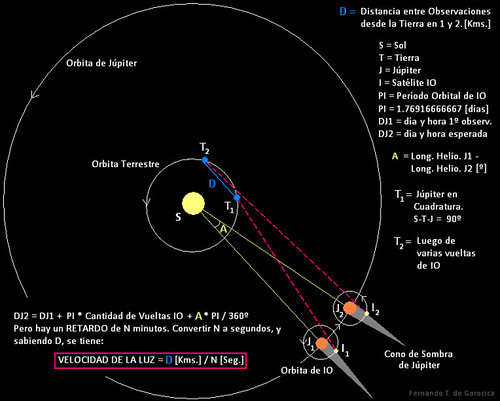 Ole Rømer, a Danish astronomer, publishes the first measurement of the speed of light based on the times of the eclipses of Io, the moon of Jupiter
 -
August 22, 1717The Austrian army under Eugene of Savoy force the Turkish army out of Belgrade, ending the Turkish revival in the Balkans
-
August 22, 1787Inventor John Fitch demonstrates his steamboat, the Perseverance, on the Delaware River to delegates of the Continental Congress
-
August 22, 1791
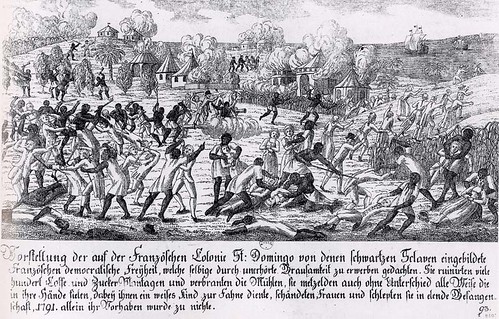 Haitian Revolution, the only slave revolt which led to the founding of a state, begins in the French colony of Saint-Domingue
 -
August 22, 1831Nat Turner's Rebellion, a slave rebellion in Virginia, which claimed from 55 to 65 people, is suppressed by white militias
-
August 22, 1849Earliest recorded air raid occurs, as Austria employs 200 balloons to deliver ordinance against Venice
-
February 12, 1851Gold fields are discovered by gold prospector Edward Hargraves in New South Wales, Australia, starting Victorian gold rush
-
August 22, 1864In Geneva, Switzerland, representatives of 12 nations agreed to sign the First Geneva Convention "for the Amelioration of the Condition of the Wounded in Armies in the Field"
-
August 22, 1875Russia recognizes Japan's control over the 4 southernmost Kuril Islands and by the Treaty of Saint Petersburg and gets all rights over Sakhalin in exchange
-
August 22, 1910
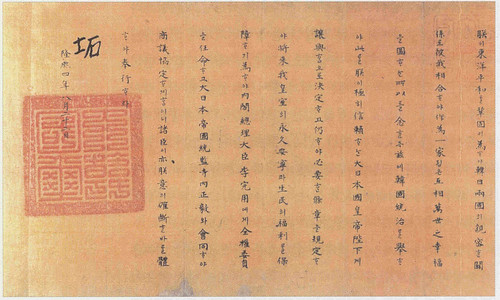 Imperial Japan annexes Korea bringing to a close the Joseon Dynasty and starting the modernization and industrialization in the peninsula
 -
August 22, 1932The British Broadcasting Corporation begins experimental regular TV broadcasts
-
August 22, 1942Brazil declares war on Germany
-
August 22, 1969Hurricane Camille strikes U.S. Gulf Coast and kills 255
-
August 22, 2006The International Congress of Mathematicians awards Russian mathematician Grigori Perelman the Fields Medal for proving the Poincare conjecture, one of seven Millennium Prize Problems, but Perelman refuses the medal
-
August 22, 2007Myanmar government arrests thirteen dissidents who led protests against huge rises in fuel prices
-
August 22, 2008Pirates hijack German, Iranian, and Japanese cargo ships off the coast of Somalia, in seven such attacks since June 20
Saturday, August 12, 2017
August 13
-
August 13, 604
 Chinese emperor Wen is murdered by Yang, his son, who succeeds the throne
 -
August 13, 1415King Henry V of England takes his army across the English Channel and lays siege on Port Harfleur in Normandy
-
August 13, 1521
 Spanish conqueror Hernando Cortez conquers the Mexican city of Tenochtitlan, modern-day Mexico City, after an 85-day battle and completes conquest of Aztec Empire
 -
August 13, 1624
 French King Louis XIII names Cardinal Richelieu his first minister who becomes the world's first Prime Minister and begins to transform France into a centralized state
 -
August 13, 1630Emperor Frederick II fires Albrecht von Wallenstein, his best military commander
-
August 13, 1642Christiaan Huygens, a prominent Dutch mathematician, discovers the Martian south polar cap
-
August 13, 1645At Brömsebro peace is signed between Sweden and Denmark. Sweden gains the islands of Gotland and Halland from Denmark, Norway cedes to Sweden the northern provinces of Jämtland and Härjedalen
-
August 13, 1704
 The Battle of Blenheim, the turning point of the War of the Spanish Succession, results in decisive English and Austrian forces victory under Prince Eugene of Savoy and Duke of Marlborough over the Franco-Bavarian army
 -
August 13, 1787The Russian ambassador to the Ottomans, Yakov Bulgakov, is thrown into prison and the Ottoman Empire declares war on Russia starting the Russo–Turkish War of 1787–1792
-
August 13, 1792Louis XVI of France is declared an enemy of the people and imprisoned with the French royal family, including Marie Antoinette, by revolutionaries
-
August 13, 1814Netherland is signed to stop the transport of slaves and returns its colonial possessions before the outbreak of the Napoleonic Wars by Treaty of London
-
August 13, 1826Alexander Gordon Laing, British Army Major, crosses on camel the Sahara Desert from Tripoli and becomes the first European to enter the fabled city of Timbuktu in Mali
-
August 13, 1849Hungary's General Artúr Görgey surrender to the Russian forces, who invaded Hungary to help Austrian Empire in struggle against Hungarian rebellions
-
August 13, 1868In Arica, Peru, a magnitude 8.5-9.0 earthquake occurs, with catastrophic tsunamis killing 25,000 in South America
-
August 13, 1876Richard Wagner's monumental epic, "Der Ring des Nibelungen" is first performed in its entirety at the Festspielhaus in Bayreuth, Bavaria, Germany
-
August 13, 1898Manila, the capital of the Philippines, falls to the United States Army under Admiral George Dewey
-
August 13, 1913Harry Brearley, an English metallurgist, produces the first stainless steel
-
August 13, 1918Bayerische Motoren Werke AG is established as a public company for aircraft-engine production in Germany
-
August 13, 1923Mustafa Kemal Atatürk is elected president of the newly established Republic of Turkey
-
August 13, 1960Central African Republic proclaims independence from France
-
August 13, 1961
 The units of the East German army close the border and begin building of the Berlin Wall
Thursday, August 10, 2017
August 11
-
August 11, 3114 BCThe Mayan calendar, a system of calendars consisting of several counts of different lengths, begins in pre-Columbian Mesoamerica
-
August 11, 117
 The Roman army of Syria hail its legate, Hadrian, as emperor, which made the senate's formal acceptance an almost meaningless event
 -
August 11, 991Danes under Olaf Tryggvason defeat Anglo-Saxons forces at Battle of Maldon and kill Ealdorman of Essex Byrhtnoth
-
August 11, 1804Austrian Empire is proclaimed by Holy Roman Emperor Francis II, who assumes the title of the first Emperor of Austria, as a reaction to Napoleon making himself an emperor
-
August 11, 1918
 Battle of Amiens, the opening phase of the Allied offensive against Germany, known as the Hundred Days Offensive, ends with Allied victory
 -
August 11, 1960
 Chad declares independence from France and becomes one of seventeen nations in Africa to gain independence in 1960, what became known as Year of Africa
 -
August 11, 1966Indonesia–Malaysia confrontation ends after Indonesian General Suharto sign peace agreement with Malaysia
-
August 11, 1984United States President Ronald Reagan, during a voice check for a radio broadcast remarks "My fellow Americans, I'm pleased to tell you today that I've signed legislation that will outlaw Russia forever. We begin bombing in five minutes"
-
August 11, 2003A heat wave in Paris causes temperatures up to 44 degrees C
-
August 11, 2009The Perseid meteor showers peak at 200 observations per hour
Sunday, August 6, 2017
August 6
-
August 6, 258
 Pope Sixtus II, bishop of Rome, is beheaded upon orders of Emperor Valerian
 -
August 6, 1517Francysk Skaryna, a Belarusian humanist and one of the first book printers in Eastern Europe, releases in Prague The Psalter, his first edition in the Old Belarusian language
-
August 6, 1753Georg Richmann, German physicist, dies of electrocution in St. Petersburg, Russia, during an attempt to duplicate Benjamin Franklin's "sentry box" experiment becoming the first person in history to die while conducting electrical experiments
-
August 6, 1774Mother Ann Lee, founder of the Shaker Movement, arrives in New York
-
August 6, 1806
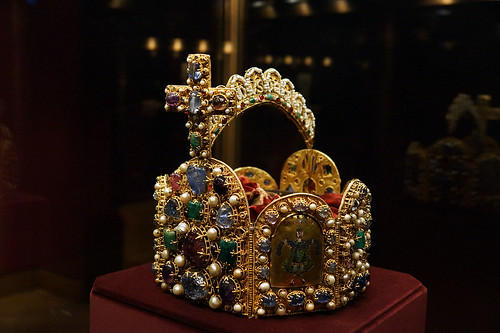 The Holy Roman Empire goes out of existence after the last Holy Roman Emperor Francis II abdicates as a consequence of the Treaty of Pressburg and reorganizing Germany under a Napoleon
 -
August 6, 1825
 Bolivia gains independence from Peru with Latin America political leader Simón Bolívar as the first president after 15 years of war
 -
August 6, 1870Prussia beat France in the Battle of Spicheren
-
August 6, 1888
 Martha Tabram, an English prostitute, is murdered by an unknown assailant, believed to be Jack the Ripper, a serial killer, who murdered from 5 to 11 women between August and November in London's Whitechapel district
 -
August 6, 1890Convicted murderer William Kemmler, senteced to death at Auburn State Prison in New York for murdering his lover, Matilda Ziegler, with an axe, becomes the first person to be executed in the electric chair
-
August 6, 1926Warner Bros premieres Vitaphone sound-on-disc movie system in New York, Don Juan with John Barrymore shown
-
August 6, 1945
 American airmen drop atomic bomb, developed by the Manhattan Project, on the Japanese city of Hiroshima, killing from 90,000 to 166,000 people, which becomes together with bomb dropped on another Japanese city, Nagasaki, the only use of nuclear weapons in war
 -
August 6, 1962Jamaica gains independence from Britain
-
August 6, 1978Pope Paul VI dies at age 80 of heart attack at summer residence in Castelgandolfo
-
August 6, 1990United Nations Security Council votes 13-0 to place economic sanctions against Iraq in response to its invasion of Kuwait
-
August 6, 1996NASA announces that the ALH 84001 meteorite, found in Allan Hills, Antarctica, and thought to originate from Mars, contains evidence of primitive life-forms
Friday, June 23, 2017
June 24
-
June 24, 79
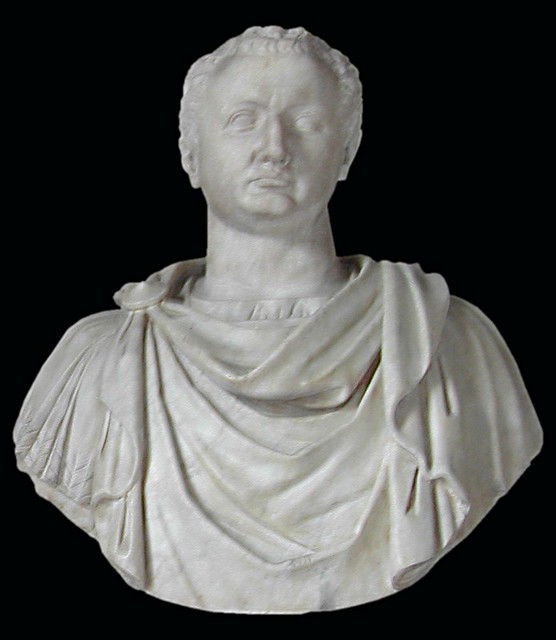 Titus succeeds to the throne after death of his father, Roman emperor Vespasian
 -
June 24, 1128Afonso I of Portugal defeat the army of his mother Theresa and takes the leadership of the County of Portugal
-
June 24, 1314
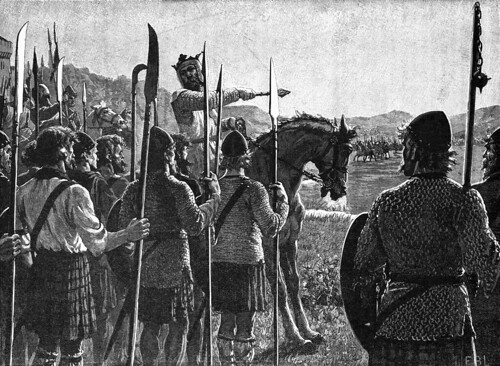 Robert the Bruce, King of of Scotland, defeats superior English army at Bannockburn forcing English forces withdraw from Scotland, which becomes the key point in the First War of Scottish Independence
 -
June 24, 1340The English fleet defeat the French fleet at Sluys, off the Flemish coast
-
June 24, 1497
 Italian explorer John Cabot, on a voyage for England, lands in North America on what is now Newfoundland and claims the new land for King Henry VII of England
 -
June 24, 1535The Münster Rebellion, an attempt of radical, millennialist, Anabaptists to establish a theocracy ends in bloodshed
-
June 24, 1622The Dutch attempt to conquer Macau during Dutch–Portuguese War ends with fail after a three-day battle
-
June 24, 1648Cossacks under Bohdan Khmelnytsky slaughter 2,000 Jews and 600 Polish Catholics in Ukraine
-
June 24, 1664New Jersey, named after the Isle of Jersey, is founded
-
June 24, 1692Kingston, Jamaica, is founded
-
June 24, 1793First republican constitution in France is adopted
-
June 24, 1812450,000 men of the Grande Armée of Napoleon crosses the Nieman River and begins invasion of Russia, resulting in catastrophic defeat for Franch
-
June 24, 1821Simón Bolívar defeat the Royalist forces, led by Spanish Field Marshal Miguel de la Torre at Battle of Carabobo outside of Caracas
-
June 24, 1859At the Battle of Solferino, also known as the Battle of the Three Sovereigns, the French army led by Napoleon III defeat the Austrian army under Franz Joseph I in northern Italy during Second Italian War of Independence
-
June 24, 1932Bloodless revolution ends absolute monarchy in Thailand
-
June 24, 1993Andrew Wiles, a British mathematician, wins worldwide fame after presenting his solution for Fermat's Last Theorem, a problem that has been unsolved for more than three centuries
Saturday, June 17, 2017
June 18
-
June 18, 860
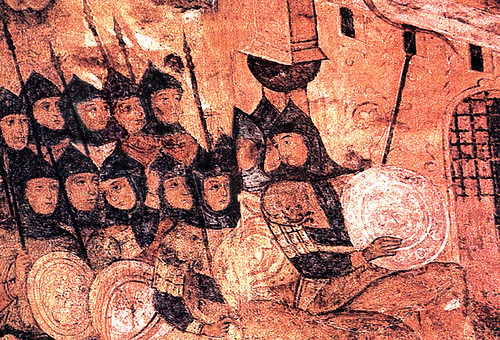 Taking advantage from Byzantine-Arab Wars, Vikings from Rus' Khaganate on 200 vessels attack and lay siege of the city of Constantinople
 -
June 18, 1152Friedrich I Barbarossa is crowned Emperor of the Holy Roman Empire by Pope Adrian IV in Rome
-
June 18, 1178In Canterbury, five men observe explosions on the Moon, likely the origin of lunar crater Giordano Bruno
-
June 18, 1429French forces under Joan of Arc defeat the main British army at the battle of Patay
-
June 18, 1643In England the battle of Chalgrove Field during the English Civil War ends with a minor Royalist victory
-
June 18, 1685Monmouth Rebellion, an attempt to overthrow James II, begins in England
-
June 18, 1757
 Austrian army beat Prussia at the Battle of Kolín, Bohemia
 -
June 18, 1812War of 1812 begins as United States declares war against Britain
-
June 18, 1815Emperor of the French Napoleon, who escaped from exile in island of Elba, is defeated by British commander Wellington at the Battle of Waterloo, which brings a conclusion to the Napoleonic Wars and marks the beginning of a Pax Britannica
-
June 18, 1935England and Germany sign a naval treaty, limiting the German surface fleet to 35 percent of British tonnage, and submarine fleet to 45 percent
-
June 18, 1948Long Play, or 33 1⁄3 rpm microgroove vinyl record, is introduced by Columbia Records and becomes a new standard by the record industry
-
June 18, 1979Jimmy Carter and Leonid Brezhnev sign the SALT II agreement in Vienna
-
June 18, 1982Argentine military dictator Leopoldo Galtieri resigns, in the wake of his country's defeat in the Falklands War
-
June 18, 1983Sally Ride becomes the first American woman in space
-
June 18, 1989
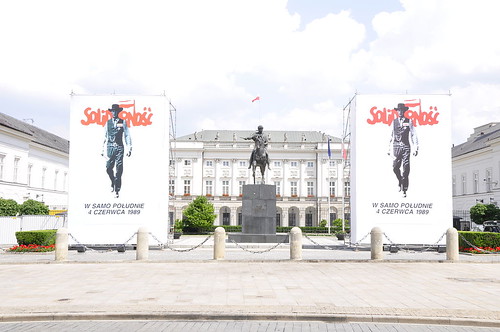 Solidarity, a Polish non–communist party-controlled trade union, wins landslide victory over the Communist Party in first free elections in Poland, beginning Revolutions in Central and Eastern Europe and collapse of the Soviet Bloc in Europe
Friday, June 16, 2017
June 17
-
June 17, 362
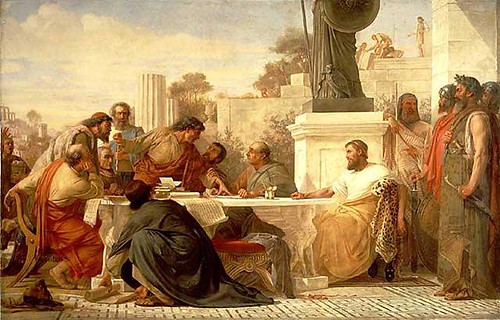 Roman emperor Julian decrees religious toleration in the empire and attempts to reestablish paganism
 -
June 17, 1397
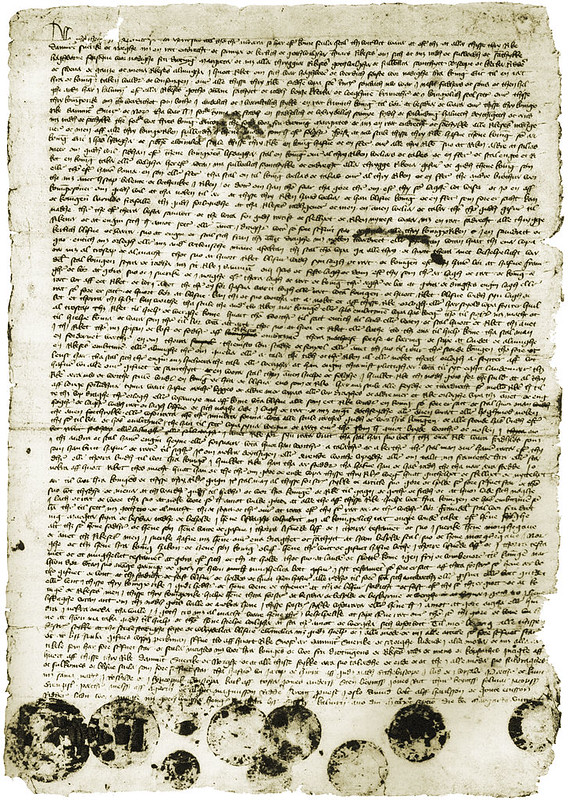 The Union of Kalmar, which grows out of the dynastic ties of the Scandinavian countries, unites Denmark, Sweden and Norway under one monarch
 -
June 17, 1579Sir Francis Drake sails into San Francisco Bay and proclaims English sovereignty over New Albion in modern-day California
-
June 17, 1696John III Sobieski, King of Lithuania and Poland, dies
-
June 17, 1767English navigator Samuel Wallis becomes the first European to visit Tahiti in existing records
-
June 17, 1789The Third Estate of the Estates-General in France declare itself a national assembly, and undertake to frame a constitution
-
June 17, 1797Mohammad Khan Qajar, cruel ruler of Persia, is killed, and his nephew Fath Ali Shah succeeded him
-
June 17, 1848Austrian General Alfred Windisch-Grätz crushes a Czech uprising in Prague against Habsburg control
-
June 17, 1930
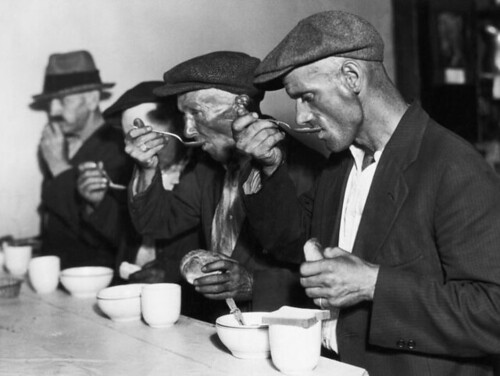 United States President Herbert Hoover signs the Hawley-Smoot Tariff bill, which increases some 900 American import duties, so contributing to the depth of the Depression
 -
June 17, 1942First World War II American expeditionary force lands in Africa
-
June 17, 1944Republic of Iceland proclaimed at Thingvallir, Iceland
-
June 17, 1950Julius Rosenberg is arrested in the US on suspicion of espionage, accused of heading a spy ring that passed top-secret information concerning the atomic bomb to the Soviet Union
-
June 17, 1967China becomes world's fourth thermonuclear power
-
June 17, 1972Five men are arrested for breaking and entering into the DNC headquarters at the Watergate complex, beginning the Watergate scandal
Wednesday, June 7, 2017
June 8
-
June 8, 68
 Galba, a commander of Roman forces in Spain, assumes the title of Caesar beginning a year of civil war known as the Year of the Four Emperors
 -
June 8, 452Attila, military leader of Huns and one of the greatest of the barbarian rulers, invades Italy
-
June 8, 632
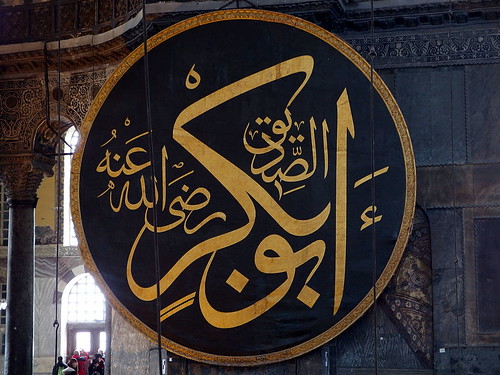 Mohammed, the founder of Islam and unifier of Arabia, dies, and Abu Bakr, his father-in-law, becomes the first Caliph of Rashidun Caliphate, the term comprising the first four "Rightly Guided" caliphs in Islam's history
 -
June 8, 793Vikings, seafaring north Germanic people, raid the Northumbrian coast in England and sack the city of Lindisfarne, beginning the Viking Age of Scandinavian history
-
June 8, 1675Three Wampanoag Indians are hanged in Plymouth, Massachusetts for the recent murder of John Sassamon, an advisor to Metacom, a Native American Christian convert, triggering King Philip's War
-
June 8, 1783Laki Volcano in southern Iceland begins 18-month eruption, pumping more ash into the atmosphere than any previous volcano in recorded history and wiping out 75% of the crops, which led to a severe famine that killed some 10,000 people or 20% of the population
-
June 8, 1815The Congress of Vienna ends with creation of German Confederation, a loose association of 39 German states in Central Europe
-
June 8, 1861One the second referendum Tennessee vote to secede from the Union and join the Confederacy, becoming the last state to do so
-
June 8, 1869Ives W McGaffey of Chicago patents first vacuum cleaner, working with a belt driven fan cranked by hand
-
June 8, 1906Antiquities Act, an act giving the President of the United States the authority to restrict the use of particular public land owned by the federal government, is signed by Theodore Roosevelt
-
June 8, 1948Texaco Star Theater, one of the first successful examples of American television broadcasting, hosted by an American comedian Milton Berle, starts
-
June 8, 1949English novelist George Orwell publishes his dystopian novel Nineteen Eighty-Four, in which describes totalitarian practices
-
June 8, 2009American car-maker General Motors files for bankruptcy, the third-largest in U.S. history and the largest ever in United States manufacturing, forcing the United States government provide US$30 billion of additional taxpayer funds to restructure
Saturday, June 3, 2017
June 4
-
June 4, 1070
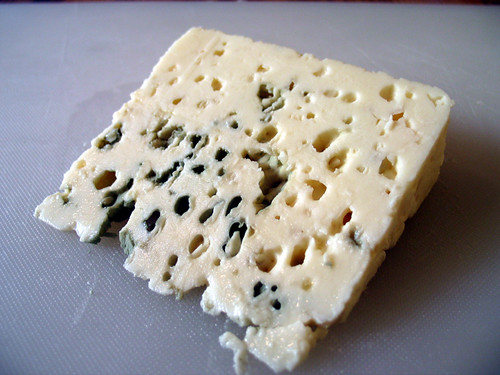 Roquefort cheese is accidentally discovered in a cave near Roquefort, France, when a shepherd finds a lunch he has forgotten several days before
 -
June 4, 1717The Freemasons, who begun in the 13th century as a guild of masons, establish their Grand Lodge in London, the oldest Grand Lodge in the world
-
June 4, 1745Prussians defeat Austrians at Hohenfriedeberg
-
June 4, 1783The Montgolfier brothers launched their first unmanned hot-air balloon in a 10-minute flight over Annonay, France
-
June 4, 1792Captain George Vancouver claims Puget Sound for Britain after landing into the San Francisco Bay on his ship Discovery
-
June 4, 1794Robespierre is unanimously elected president of the Convention in the French Revolution
-
June 4, 1805The US signs a Treaty of Peace and Amity at Tripoli by which agrees to pay Tripoli $60,000 in war reparations and is in turn absolved of tribute demands
-
June 4, 1859The French army under Napoleon III takes Magenta from the Austrian army after a bloody battle in northern Italy
-
June 4, 1878Cyprus is ceded by Turkey to Britain for administrative purposes
-
June 4, 1896Henry Ford makes a successful pre-dawn test run of his horseless carriage, called a quadricycle, through the streets of Detroit
-
June 4, 1936Socialist Léon Blum leads the first Popular Front ministry composed of socialists and radical socialists, which passed important legislation, such as the 40-hour week and paid holidays for the workers
-
June 4, 1940
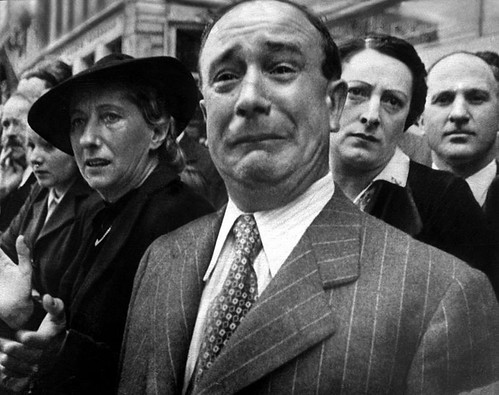 German forces enter Paris, France
 -
June 4, 1944In Italy, American forces take Rome
-
June 4, 1970Tonga gains independence from Britain
-
June 4, 1989A natural gas explosion near Ufa, Russia kills 645 as two trains passing each other throw sparks near a leaky pipeline
-
June 4, 2002Queen Elizabeth II and the Duke of Edinburgh ride in the gold state coach from Buckingham Palace to Saint Paul's Cathedral for a special service marking the Queen's 50 years on the throne
Monday, May 29, 2017
May 30
-
May 30, 1381
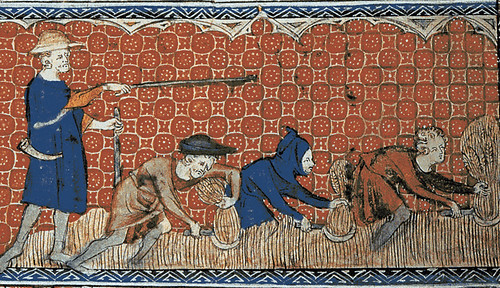 Peasants' Revolt begins in Essex, England due to the high taxes resulting from the conflict with France during the Hundred Years War
 -
May 30, 1416Jerome of Prague, a Czech church reformer and one of the chief followers of Jan Hus, is burned as a heretic at the Council of Constance
-
May 30, 1431
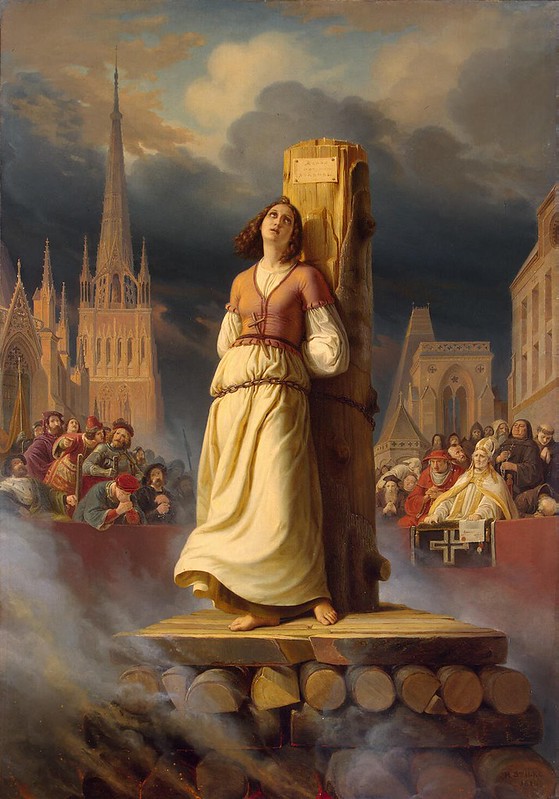 Joan of Arc, the leader of the French army during Hundred Years War, condemned as a heretic by an English-backed church court, is burned at the stake in Rouen, France, at age 19
 -
May 30, 1434
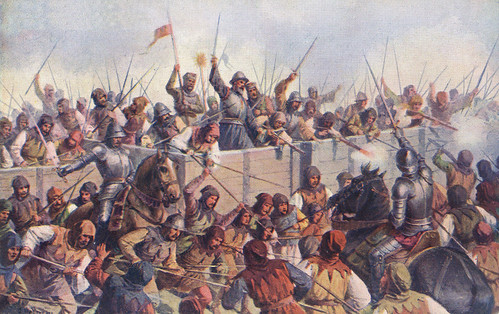 An army of Utraquists and Catholics, called the Bohemian League, defeat the radical Taborites and Orphans, led by Prokop the Great and Prokop the Lesser, who both fell in the battle of of Lipany, which marks the end of the Hussite wars
 -
May 30, 1498Columbus departs with six ships for third trip to America
-
May 30, 1536English king Henry VIII marries Jane Seymour
-
May 30, 1588The Spanish Armada of 130 ships with 30,000 men under Alonso Pérez de Guzmán leaves Lisbon for England
-
May 30, 1635Emperor Ferdinand II and Electorate of Saxony representing most of the Protestant states of the Holy Roman Empire sign Peace of Prague, which effectively beings to an end the civil war aspect of the Thirty Years' War
-
May 30, 1814In Paris, France, the Treaty of Paris is signed, bringing peace between Great Britain and her allies and France and returning France to its 1792 borders
-
May 30, 1848Mexico ratifies the Treaty of Guadalupe Hidalgo ending Mexican–American War and giving US New Mexico, California and parts of Nevada, Utah, Arizona and Colorado in return for $15 million
-
May 30, 1854The Kansas-Nebraska Act, passed by the US Congress, repeals the Missouri Compromise and allows people in the territories of Kansas and Nebraska to decide for themselves whether or not to allow slavery within their borders, opens north slavery
-
May 30, 1866The Bartered Bride, the comic opera written by Bedřich Smetana, the father of Czech national music, is first performed at the Provisional Theatre, Prague
-
May 30, 1868The United States establish Memorial Day, initially Decoration Day, to honor Union soldiers killed in the Civil War, later expanded to honor all soldiers killed in the service of the country
-
May 30, 18961,389 people die during a human stampede on Khodynka Field in Moscow, Russia during the festivities following the coronation of the last Russian Emperor Nicholas II
-
May 30, 19421047 bombers attack Cologne, dropping 915 tons of incendiaries and 840 tons of high explosives during Operation Millennium with 41 aircraft as total loss of British planes
-
May 30, 1968French president Charles de Gaulle dissolves the National Assembly and calls for new parliamentary elections as a result of May 1968 protests in France
-
May 30, 1975European Space Agency, an intergovernmental organization dedicated to the exploration of space, forms
Thursday, May 11, 2017
May 12
-
May 12, 1191
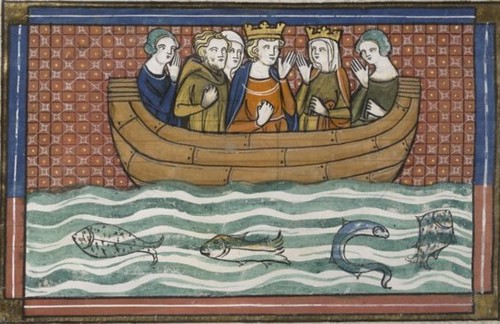 Richard I of England marries Berengaria of Navarre in Limassol, Cyprus
 -
May 12, 1215English barons serve ultimatum on king John
-
May 12, 1264Simon de Montfort, 6th Earl of Leicester, beats and captures English king Henry III at the Battle at Lewes during the Baron's War
-
May 12, 1328Louis IV, Holy Roman Emperor selects Pietro Rainalducci as antipope Nicolaas V
-
May 12, 1588King Henry III of France flees Paris after Catholic League under duke Henry of Guise enter the city
-
May 12, 1689England's King William III joins the League of Augsburg and the Netherlands to counter the war of aggression launched by Louis XIV against the Palatinate states in Germany
-
May 12, 1777First ice cream advertisement appears in New York
-
May 12, 1780Charleston, South Carolina falls to the British after a long fight and siege
-
May 12, 1789In England William Wilberforce lays out his case for the abolition of slavery to the House of Commons
-
May 12, 1809Napoleon's troops capture Vienna, Austria
-
May 12, 1881Treaty of Bardo, signed between representatives of the French Republic and Tunisian bey Muhammed as-Sadiq, establishes Tunis as a French protectorate and gives France responsibility for the defense and foreign policy decisions of Tunisia
-
May 12, 1885In the Battle of Batoche, Saskatchewan, Metis rebels ran out of ammunition and resort to firing pebbles from their guns, until they are forced to retreat
-
May 12, 1940Germany forces move to Meuse River and launch a blitz conquest of France
-
May 12, 1951First hydrogen bomb test on a very small scale occurs during Operation Greenhouse on Enewetak Atoll
Saturday, May 6, 2017
May 6
-
May 6, 523
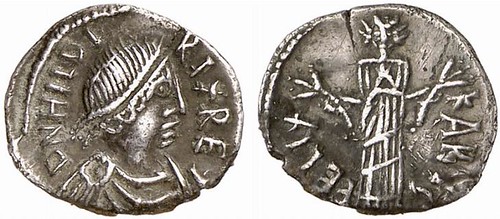 Thrasamund, King of the Vandals and Alans, dies and Hilderic succeeds
 -
May 6, 1085Alfonso VI of León and Castile occupies the city of Toledo
-
May 6, 1527
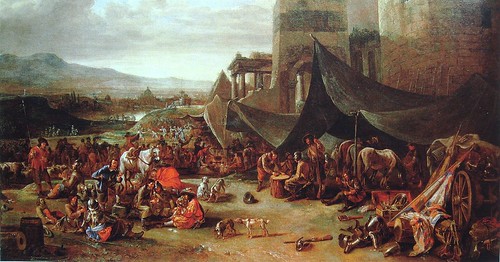 Spanish and German mutinous mercenaries sack Rome during the conflict between Emperor Charles V and the League of Cognac — the alliance of France, Milan, Venice, Florence and the Papacy, which is considered the end of the Italian Renaissance
 -
May 6, 1576The Fifth War of Religion in France ends with the Edict of Beaulieu by which the Huguenots are granted freedom of worship in all places except Paris
-
May 6, 1682
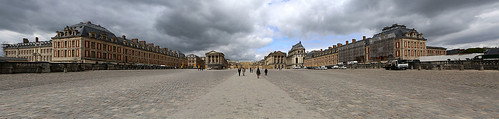 King Louis XIV of France officially establishes his court in new Palace of Versailles, some 20 kilometres southwest of the French capital, making it the centre of political power
 -
May 6, 1757Frederik II of Prussia beat emperor's army at the Battle at Prague
-
May 6, 1794
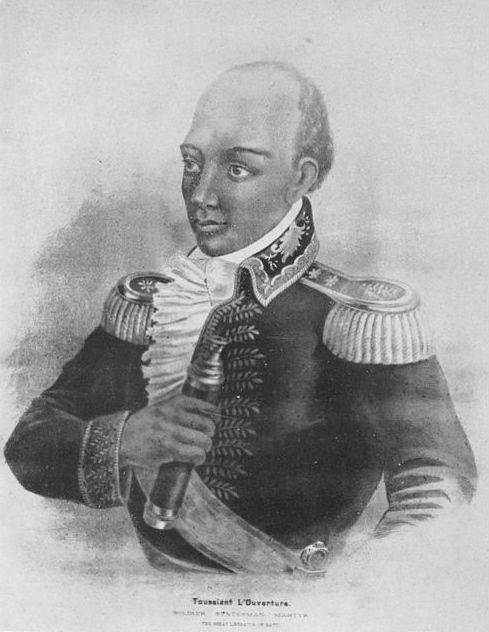 After the French declared an end to slavery, Toussaint Louverture, Haitian rebel leader, ends his alliance with the Iberian monarchy and embraces the French Republicans
 -
May 6, 1856Sigmund Freud, father of psychology and the Viennese physician who discovered the unconscious, is born
-
May 6, 1856Robert Peary, arctic explorer, is born
-
May 6, 1877Chief Crazy Horse and his warriors fight their final losing battle against the U.S. Cavalry in Montana and surrenders
-
May 6, 1882President Chester A. Arthur signs the Chinese Exclusion Act, which prohibits the immigration of Chinese laborers into the United States for 10 years
-
May 6, 1889
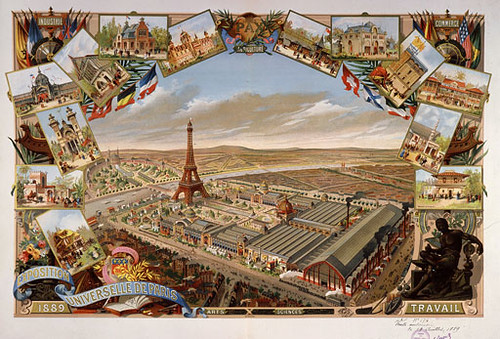 The Eiffel Tower is officially opened to the public with opening of Universal Exposition in Paris, France and becomes the tallest structure in the world until the Chrysler Building in New York City built in 1930
 -
May 6, 1896Samuel Pierpont Langley, American physicist and aviation pioneer, launches the first reasonably large, steam-powered model aircraft
-
May 6, 1910George V ascends to British throne after death of his father Edward VII and becomes King of the United Kingdom and the British Dominions and Emperor of India
-
May 6, 1919German East Africa is assigned to Britain and France, German Southwest Africa to South Africa after Paris Peace Conference disposes of German colonies
-
May 6, 1937
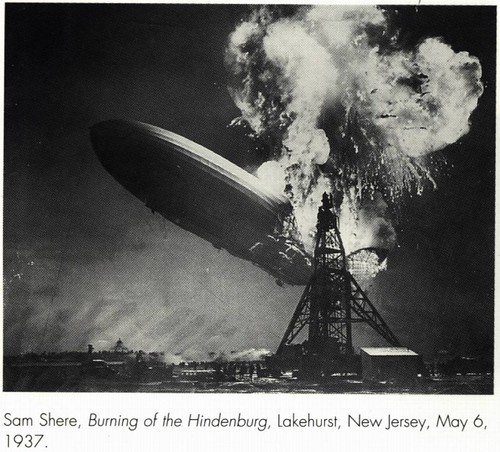 Hindenburg, the largest rigid airship by envelope volume, is destroyed by fire during its attempt to dock with its mooring mast in New Jersey
 -
May 6, 1942American forces at Corregidor Island surrenders to the Japanese, putting all of the Philippines under Japanese control
-
May 6, 1953John Heysham Gibbon, an American surgeon, performes the first successful open heart procedure on a human utilizing Gibbon's heart lung machine
-
May 6, 1981A jury of architects and sculptors unanimously selects Maya Lin's design for the US Vietnam Veterans Memorial from 1,421 other entries
-
May 6, 1994
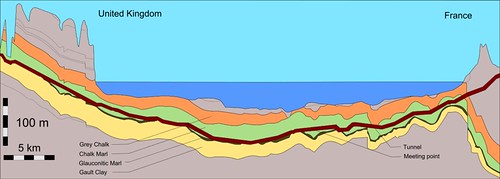 Channel Tunnel, 50.5-kilometre rail tunnel linking Folkestone in the United Kingdom, with Coquelles in northern France beneath the English Channel, is opened
 -
May 6, 2000Operation Palliser, begun by British forces, effectively ending Sierra Leone Civil War
-
May 6, 2001The first space tourist, United States multimillionaire Dennis Tito, returns to Earth aboard Russian spacecraft Soyuz TM-31, while Soyuz TM-32, which delivered the crew to the International Space Station, is left docked as a new lifeboat
-
May 6, 2007Nicolas Sarkozy is elected President of the French Republic, defeating Ségolène Royal with 53 percent of the vote in the French Presidential Election
Subscribe to:
Posts (Atom)