-
August 31, 1422
 Henry V, King of England and France, dies
-
August 31, 1707The Treaty of Altranstädt, which settle the rights of Protestants in Silesia, is signed between Charles XII of Sweden and Joseph I, Holy Roman Emperor
-
August 31, 1756The British at Fort William Henry, New England, surrender to Louis-Joseph de Montcalm of France
-
August 31, 1907England, Russia and France form the Triple Entente as a counterweight to the Triple Alliance of Germany, Austria-Hungary and the Kingdom of Italy
-
August 31, 1946At the Nuremberg Tribunal, defendants make closing statements before the court: Hermann Goring denies all, Joachim von Ribbentrop hopes America and Great Britain are more successful versus Bolshevism
-
August 31, 1957Malaysia gains independence from Britain
-
August 31, 1962Trinidad and Tobago gain independence from Britain
-
August 31, 1991Kyrgyzstan and Uzbekistan declare independence from the Soviet Union
-
August 31, 1997Diana, Princess of Wales, is pronounced dead at 4:00 a.m. after a car crash at midnight in the Pont de l'Alma road tunnel in Paris
Showing posts with label Polish-Lithuanian Commonwealth. Show all posts
Showing posts with label Polish-Lithuanian Commonwealth. Show all posts
Saturday, September 2, 2017
August 31

Monday, August 28, 2017
August 29
-
August 29, 29
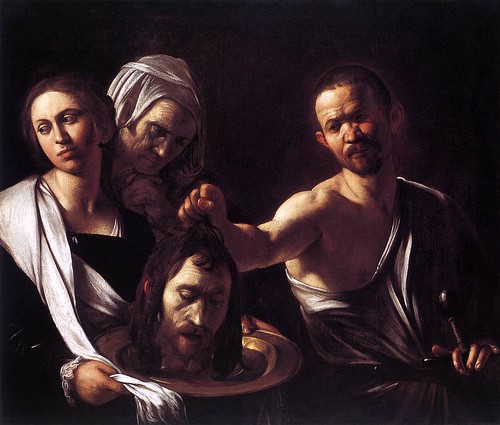 John the Baptist, an itinerant preacher at the Jordan River, is beheaded by order of Herod Antipas, ruler of Galilee and Perea
-
August 29, 70
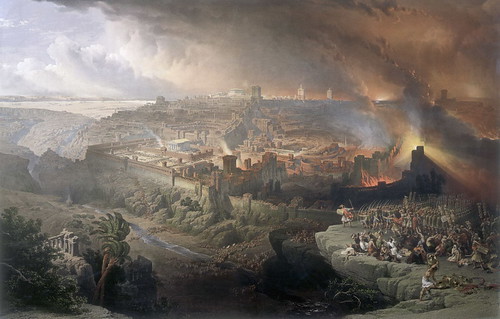 Jerusalem is sacked and the Temple of Jerusalem, except Western Wall of Herod's complex, is burned after a nine-month Roman siege under Titus during First Jewish-Roman War
-
August 29, 284Diocletian becomes emperor of Rome beginning a method of numbering years known as Diocletian era
-
August 29, 1526Turkish forces of Suleiman the Magnificent defeat the Hungarian forces and kill Hungarian King Louis II at the Battle of Mohács, which leads to the partition of Hungary for several centuries
-
August 29, 1533Francisco Pizarro captures Cusco and completes his conquest of Peru
-
August 29, 1632English philosopher John Locke is born in Wrington, England
-
August 29, 1637The Dutch attack and capture Elmina in Ghana, which up to that point was the center of Portuguese activity in West Africa and was mostly used for the slave trade
-
August 29, 1655Swedish king Charles X Gustav of Sweden occupies Warsaw
-
August 29, 1742Edmond Hoyle publishes his "Short Treatise" on classic English trick-taking card game whist
-
August 29, 1786Shay's Rebellion lead by American farmer Daniel Shay in Springfield, Massachusetts begins in order to protest the seizure of property for the non-payment of debt
-
August 29, 1791The Pandora under Captain Edward Edwards sinks in Endeavour Strait between Australia and New Guinea; 33 crewmen and 4 prisoners die
-
August 29, 1842
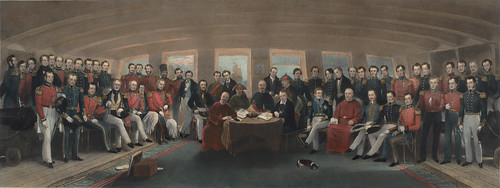 Britain and China sign the Treaty of Nanjing, which ends the First Opium War, opens the port of Shanghai to foreigners and cedes Hong Kong to the British
-
August 29, 1864William Huggins, an English astronomer, discovers chemical composition of nebulae using astronomical spectroscopy
-
August 29, 1885Gottlieb Daimler receives German patent for a motorcycle
-
August 29, 1893The "clasp locker", a clumsy slide fastener and forerunner to the zipper is first patented by Whitcomb L. Judson
-
August 29, 1897First Zionist Congress, opened by Austro-Hungarian journalist Theodor Herzl in Basel, Switzerland, starts program to resettle Jewish people in Palestine
-
August 29, 1949The Soviet Union successfully detonates an atomic weapon
-
August 29, 1966The Beatles' give their last public concert, Candlestick Park, San Francisco, California
-
August 29, 2005Nearly 2000 people are killed, and severe damage is caused along the U.S. Gulf Coast, as Hurricane Katrina strikes coastal areas from Louisiana to Alabama, and travels up the entire state of Mississippi, affecting most of eastern North America
Tuesday, July 18, 2017
July 19
-
July 19, 64
 The Great Fire begins in Rome and destroys ten of the fourteen districts of city during next six days, which lets Roman Emperor Nero to blame Christians and begins persecutions of them
-
July 19, 155315-year-old Lady Jane Grey, daughter of John Dudley, the Duke of Northumberland, is deposed as Queen of England after claiming the crown for nine days; Mary, the daughter of King Henry VIII, is s proclaimed Queen
-
July 19, 1610Polish King Wladyslaw IV Vasa is crowned Tsar of Russia
-
July 19, 1821The coronation of George IV of England is held
-
July 19, 1834Edgar Degas, French impressionist painter, is born
-
July 19, 1870Emperor Napoleon III of France declares war on Germany under Otto von Bismarck beginning Franco-Prussian War, which results in the unifications of Germany and Italy and the emergence of a New Imperialism
-
July 19, 1943Allied air forces raid Rome, Italy
-
July 19, 1970Edward Heath becomes Prime Minister of the United Kingdom
-
July 19, 1975Apollo, an Apollo spacecraft, and Soviet spacecraft Soyuz 19, linked in orbit for two days, separate
-
July 19, 1993President Bill Clinton announces "don't ask, don't tell" policy concerning gays serving in the U.S. military
-
July 19, 2009Amateur astronomer Anthony Wesley discovers impact on Jupiter that causes a black spot in the planet's atmosphere
Sunday, June 25, 2017
June 26
-
June 26, 363
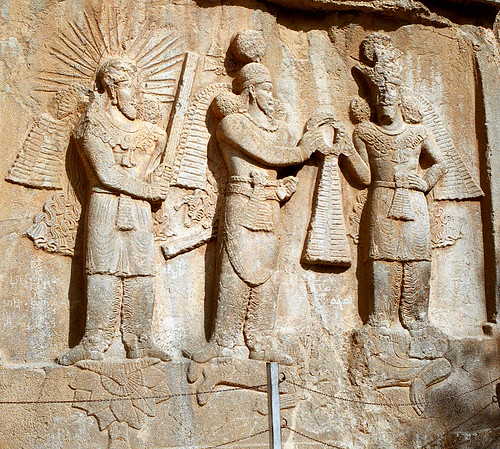 Roman Emperor Julian receives a mortal wound in battle with the Sassanian Persians during battle of Samarra. Jovian succeeds
-
June 26, 1541Francisco Pizarro, the Spanish Conqueror of Peru, is murdered by his former followers in Lima
-
June 26, 1630Sweden enters the German wars, as King Gustavus Adolphus and 13,000 men, comprised of mostly Swedes, with some Scottish and Irish mercenaries, land on the island of Usedom off the Pomeranian coast after Imperial intervention in Poland
-
June 26, 1721Dr. Zabdiel Boylston gives the first smallpox inoculation in Boston during the epidemic that has arrived by ship from Barbados
-
June 26, 1794French defeat the Coalition Army at the Battle of Fleurus
-
June 26, 1830Britainэs King George IV dies and is succeeded by his brother, King William IV
-
June 26, 1894The American Railway Union with 125,000 workers, led by Eugene V. Debs, calls a general strike in sympathy with Pullman workers that blocked freight traffic in and out of Chicago
-
June 26, 1909The Science Museum in London comes into existence as an independent entity
-
June 26, 1924After eight years of occupation, United States troops leave the Dominican Republic
-
June 26, 1936The Focke-Wulf Fw 61, the first practical helicopter, flies for the first time in Germany
-
June 26, 1945United Nations Charter, the foundational treaty of the United Nations, is signed by 50 nations in San Francisco, California, United States
-
June 26, 1948U.S. and British pilots begin delivering food and supplies by airplane to West Berlin after the city is isolated by a Soviet Union blockade
-
June 26, 1963USA President John F. Kennedy speaks the famous words "Ich bin ein Berliner", which means I am a Berliner, on a visit to West Berlin
-
June 26, 1974The Universal Product Code, a barcode symbology, is scanned for the first time, to sell a pack of chewing gum in Ohio
-
June 26, 1976The CN Tower, the world's tallest free-standing land-based structure, opens in Toronto, Canada
-
June 26, 1997Harry Potter and the Philosopher's Stone, the first novel about a young wizard Harry Potter by British author J. K. Rowling, is released
-
June 26, 2000A 'rough draft' of the genome, as part of the Human Genome Project, an international scientific research project with a primary goal of determining the sequence of chemical base pairs which make up DNA, is finished
Friday, June 23, 2017
June 24
-
June 24, 79
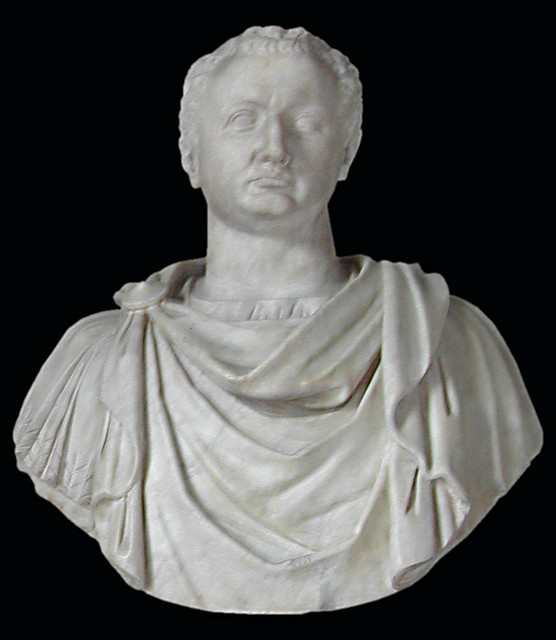 Titus succeeds to the throne after death of his father, Roman emperor Vespasian
-
June 24, 1128Afonso I of Portugal defeat the army of his mother Theresa and takes the leadership of the County of Portugal
-
June 24, 1314
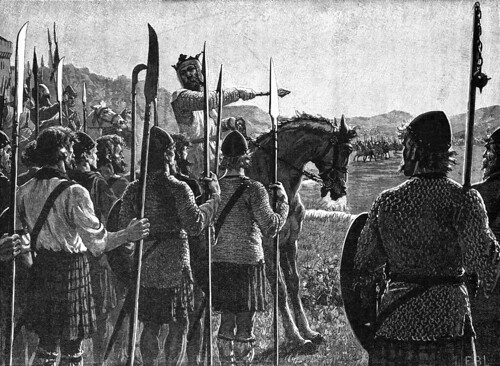 Robert the Bruce, King of of Scotland, defeats superior English army at Bannockburn forcing English forces withdraw from Scotland, which becomes the key point in the First War of Scottish Independence
-
June 24, 1340The English fleet defeat the French fleet at Sluys, off the Flemish coast
-
June 24, 1497
 Italian explorer John Cabot, on a voyage for England, lands in North America on what is now Newfoundland and claims the new land for King Henry VII of England
-
June 24, 1535The Münster Rebellion, an attempt of radical, millennialist, Anabaptists to establish a theocracy ends in bloodshed
-
June 24, 1622The Dutch attempt to conquer Macau during Dutch–Portuguese War ends with fail after a three-day battle
-
June 24, 1648Cossacks under Bohdan Khmelnytsky slaughter 2,000 Jews and 600 Polish Catholics in Ukraine
-
June 24, 1664New Jersey, named after the Isle of Jersey, is founded
-
June 24, 1692Kingston, Jamaica, is founded
-
June 24, 1793First republican constitution in France is adopted
-
June 24, 1812450,000 men of the Grande Armée of Napoleon crosses the Nieman River and begins invasion of Russia, resulting in catastrophic defeat for Franch
-
June 24, 1821Simón Bolívar defeat the Royalist forces, led by Spanish Field Marshal Miguel de la Torre at Battle of Carabobo outside of Caracas
-
June 24, 1859At the Battle of Solferino, also known as the Battle of the Three Sovereigns, the French army led by Napoleon III defeat the Austrian army under Franz Joseph I in northern Italy during Second Italian War of Independence
-
June 24, 1932Bloodless revolution ends absolute monarchy in Thailand
-
June 24, 1993Andrew Wiles, a British mathematician, wins worldwide fame after presenting his solution for Fermat's Last Theorem, a problem that has been unsolved for more than three centuries
Friday, June 16, 2017
June 17
-
June 17, 362
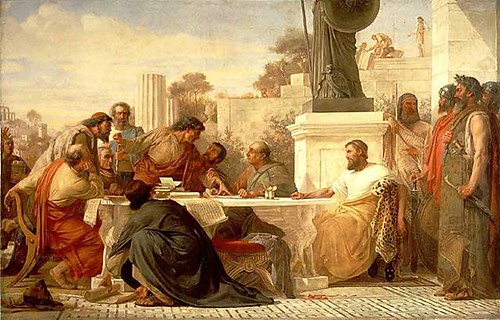 Roman emperor Julian decrees religious toleration in the empire and attempts to reestablish paganism
-
June 17, 1397
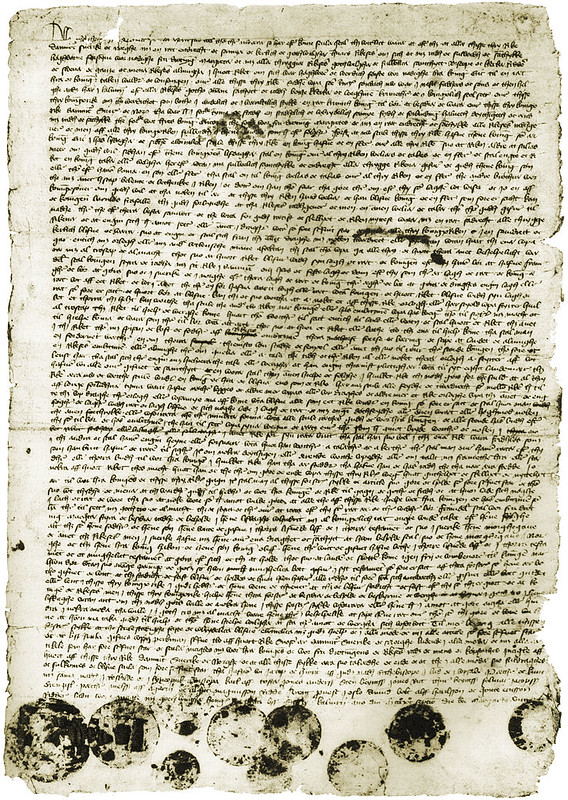 The Union of Kalmar, which grows out of the dynastic ties of the Scandinavian countries, unites Denmark, Sweden and Norway under one monarch
-
June 17, 1579Sir Francis Drake sails into San Francisco Bay and proclaims English sovereignty over New Albion in modern-day California
-
June 17, 1696John III Sobieski, King of Lithuania and Poland, dies
-
June 17, 1767English navigator Samuel Wallis becomes the first European to visit Tahiti in existing records
-
June 17, 1789The Third Estate of the Estates-General in France declare itself a national assembly, and undertake to frame a constitution
-
June 17, 1797Mohammad Khan Qajar, cruel ruler of Persia, is killed, and his nephew Fath Ali Shah succeeded him
-
June 17, 1848Austrian General Alfred Windisch-Grätz crushes a Czech uprising in Prague against Habsburg control
-
June 17, 1930
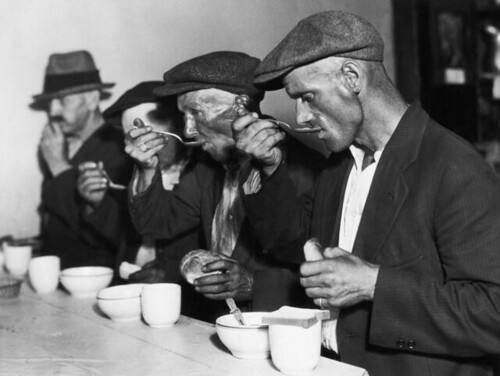 United States President Herbert Hoover signs the Hawley-Smoot Tariff bill, which increases some 900 American import duties, so contributing to the depth of the Depression
-
June 17, 1942First World War II American expeditionary force lands in Africa
-
June 17, 1944Republic of Iceland proclaimed at Thingvallir, Iceland
-
June 17, 1950Julius Rosenberg is arrested in the US on suspicion of espionage, accused of heading a spy ring that passed top-secret information concerning the atomic bomb to the Soviet Union
-
June 17, 1967China becomes world's fourth thermonuclear power
-
June 17, 1972Five men are arrested for breaking and entering into the DNC headquarters at the Watergate complex, beginning the Watergate scandal
Saturday, May 20, 2017
May 21
-
May 21, 987
 French King Louis V dies from a fall while hunting, terminating the Carolingian period of Frankish rule
-
May 21, 996Otto III is crowned the Roman Emperor by his cousin Pope Gregory V
-
May 21, 1420
 King Charles VI of France signs the Treaty of Troyes that recognizes all the territorial gains of King Henry V of England, gives Henry the daughter of Charles in marriage, and acknowledges Henry as the legitimate heir to the French throne
-
May 21, 1471Henry VI, king of England and France, is killed in the tower of London and Edward IV takes the throne
-
May 21, 1535Imperial authorities in Antwerp capture and imprison William Tyndale for heresy over his translation of the Bible into English
-
May 21, 1542Spanish explorer Hernando De Soto dies while searching for gold along the Mississippi River and is buried by his men in the Mississippi River in what is now Louisiana in order that Indians would not learn of his death, and thus disprove de Soto's claims of divinity
-
May 21, 1674General John Sobieski is chosen King of Poland
-
May 21, 1683The Society of Suriname, a Dutch private company, is founded by the city of Amsterdam, the Van Aerssen van Sommelsdijck family, and the Dutch West India Company
-
May 21, 1809Austrian archduke Charles beats Napoleon at Battle of Aspern-Essling when he was crossing the Danube near Vienna, which becomes the first personally defeat of Napoleon over a decade
-
May 21, 1840
 New Zealand is founded as a British colony since the Treaty of Waitangi is signed by Māori chiefs of New Zealand and representatives of Queen Victoria
-
May 21, 1871French government troops enter in Paris and attack the Commune of Paris
-
May 21, 1881Clara Barton, a hospital nurse, founds American Red Cross
-
May 21, 1881Standard Oil, an American oil producing founded by John D. Rockefeller, becomes the world's first trust, after thirty-seven stockholders convey their shares
-
May 21, 1916Britain begins "Summer Time", which becomes the implementation of daylight saving time
-
May 21, 1927
 Charles Lindbergh, an American aviator, becomes the first person who makes solo non-stop transatlantic flight, from New York's Long Island to Le Bourget Field in Paris
-
May 21, 1945German war criminal Heinrich Himmler is captured
-
May 21, 1998Suharto forced to resign as president of Indonesia after 31-year reign
Friday, May 19, 2017
May 20
-
May 20, 526
 An earthquake kills 250,000 in Syria and the city of Antioch in the Byzantine Empire and causes severe damage to many of the buildings
-
May 20, 685Picts, a tribal confederation of Celtic tribes, defeat forces of Northumbria at the Battle of Dun Nechtain ending the dominance of Angles in Northern Britain
-
May 20, 1303Treaty of Paris restores Gascony to British setting the stage for the Hundred Years' War
-
May 20, 1347Cola di Rienzo, an Italian politician and popular leader, takes the title of tribune in Rome
-
May 20, 1498
 Vasco de Gama, a Portuguese explorer, reaches Kozhikode, India by sea completing his journey that took him around South Africa and opens the Far East to European trade and colonial expansion
-
May 20, 1506Christopher Columbus, explorer, dies in poverty in Valladolid, Spain at age 55
-
May 20, 1571Pope Pius V completes the Holy League as a united front against the Ottoman Turks
-
May 20, 1631Forces of the Holy Roman Empire and the Catholic League under earl Johann Tilly conquer Magdeburg, beginning the subsequent plundering, and the massacre of the inhabitants of the largely Protestant city
-
May 20, 1648In Poland King Władysław IV Vasa dies at age 55 and his Jesuit brother takes rule as John II Casimir
-
May 20, 1774Britain set procedures of governance in the Province of Quebec by Quebec Act
-
May 20, 1775Mecklenburg County, North Carolina becomes the first part of the Thirteen Colonies to declare independence from Great Britain
-
May 20, 1784Preliminary signed 2 September 1783 Peace of Paris ends the war between England and Netherlands and ends Fourth Anglo-Dutch War
-
May 20, 1799Napoleon Bonaparte orders a withdrawal from his siege of city of Acre in Ottoman Empire due to plague which run through besieging French forces
-
May 20, 1862President Lincoln signs the Homestead Act, providing 1 million km of free land to settlers in the West, which officially opens the Nebraska territory for settlement, leading to statehood in 1867
-
May 20, 1867Foundation of Royal Albert Hall, a concert hall in London, is laid by Queen Victoria
-
May 20, 1873Levi Strauss and Jacob Davis receive a US patent for "Improvement in Fastening Pocket-Openings", work pants reinforced with metal rivets, marking the birth of blue jeans
-
May 20, 1875International Bureau of Weights and Measures, an international standards organisation, is established by treaty among 17 nations
-
May 20, 1882Triple Alliance between Germany, Italy and Austria-Hungary forms
-
May 20, 1902Cuba gains independence from the United States after United States military occupation of Cuba ends
-
May 20, 1927
 Kingdom of Nejd and Hejaz, modern Saudi Arabia, becomes independent of Great Britain by Treaty of Jeddah between King Abdul Aziz, usually known as Ibn Saud, and the United Kingdom
-
May 20, 1940Igor Sikorsky, a Russian American aviation engineer, unveils his helicopter invention
-
May 20, 1941Operation Mercury is launched, as German gliders and 7th Airborne Division paratroopers land near principal airports on Crete, with the mission of securing them for transport of 5th Division troops, however many gliders crash, and many paratroopers are shot in the air
-
May 20, 2002East Timor regains its independence
-
May 20, 2007The ruler of Dubai, Sheikh Mohammed bin Rashid al-Maktoum makes the largest single charitable donation in modern history, committing 7.41 billion euros to an educational foundation in the Middle East
Monday, May 15, 2017
May 16
-
May 16, 1648
 Khmelnytsky's Cossacks beat John II Casimir Vasa at the Battle of Zhovti Vody during Khmelnytsky Uprising
-
May 16, 1795The French-backed Batavian Republic in present-day Netherlands is established by treaty of The Hague and cedes to France the territories of Maastricht, Venlo, and Flanders
-
May 16, 1811
 Both Allies and French suffer heavily at Battle of Albuera, which ends with indecisive result
-
May 16, 1833Antonio López de Santa Anna, a Mexican politician and general, becomes President of Mexico for the first of eleven non-consecutive occasions
-
May 16, 1862Étienne Lenoir, a Belgian engineer, builds first automobile, with a hydrogen gas fuelled one cylinder internal combustion engine
-
May 16, 1881
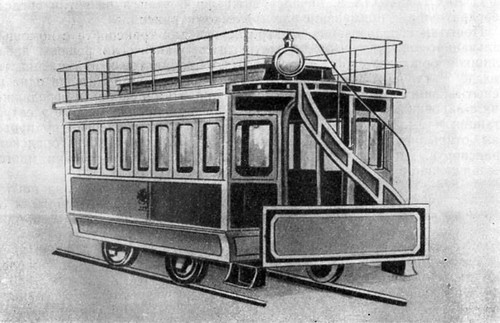 World's first electric tram, invented and made of two-decker horse tramway by Ukrainian-born Russian engineer Fyodor Pirotsky, goes into service in Saint Petersburg, Russia
-
May 16, 1884Italian inventor Angelo Moriondo is granted the patent of the first espresso coffee machine
-
May 16, 1920
 Spanish bullfighter Joselito, the most famous bullfighters, is fatally gored fighting his last bull
-
May 16, 1929The first Academy Awards are presented at the Hollywood Roosevelt Hotel
-
May 16, 1940German troops enter The Hague and Amsterdam, Netherlands
-
May 16, 1960Theodore Maiman, an American engineer, operates the first optical laser, a device that emits light through a process of optical amplification, in Malibu, California, United States
-
May 16, 1985
 Group of British scientists, Jonathan Shanklin, Joe Farman and Brian G. Gardiner, publish a paper in journal Nature dedicated to the discovery of the Antarctic ozone hole, the first report about ozone depletion
-
May 16, 1989Soviet President Mikhail Gorbachev and Chinese leader Deng Xiaoping end a 30-year rift when they formally meet in Beijing
-
May 16, 2011The European Union agree to a 78-billion euro rescue deal for Portugal, which will be equally split between the European Financial Stabilization Mechanism, the European Financial Stability Facility, and the International Monetary Fund
Saturday, May 13, 2017
May 14
-
May 14, 964
 Pope John XII, the last Pope during the Pornocracy period, is killed by an outraged husband during an adulterous sexual encounter
-
May 14, 1027Robert II names son Henry I king of France
-
May 14, 1509In the Battle of Agnadello, the French defeat the Venetians in Northern Italy
-
May 14, 1590French king Henri IV beats Catholic League at Battle of Ivry
-
May 14, 1610King Henri IV, Henri de Navarre, the first Bourbon King of France, is assassinated by a fanatical monk, François Ravaillac and is succeeded by his son Louis
-
May 14, 1638Dutch fleet under Admiral Adam Westerwolt is defeated by Portuguese forces near Goa
-
May 14, 1643Louis XIV becomes King of France at age 4 upon the death of his father, Louis XIII
-
May 14, 1702Swedish troops under King Charles XII occupy Warsaw
-
May 14, 1787Delegates begin gathering in Philadelphia for a convention to draw up the United States Constitution
-
May 14, 1796
 English physician Edward Jenner gives the first successful vaccination against smallpox, the terrible disease killed an estimated 400,000 Europeans each year
-
May 14, 1804The Meriwether Lewis and William Clark expedition of about 45 men leaves Saint Louis, Missouri, on a mission to explore the Northwest from the Mississippi River to the Pacific Ocean after the Louisiana Purchase
-
May 14, 1878Vaseline is first sold with the registered trademark for petroleum jelly
-
May 14, 1926May Coup of Józef Piłsudski turns rule of the Second Polish Republic over to the Sanacja movement
-
May 14, 1948The State of Israel is officially created and David Ben-Gurion becomes first Prime Minister
-
May 14, 1955
 Warsaw Pact, a mutual defense treaty during the Cold War, is signed in Warsaw by the Soviet Union, Albania, Bulgaria, Czechoslovakia, East Germany, Hungary, Poland, and Romania
-
May 14, 1964Egyptian President Nasser and Soviet leader Khrushchev start filling of reservoir of Aswan High Dam
-
May 14, 1973Skylab, the United States' first space station. Skylab orbited the Earth, is launched
-
May 14, 1998U.S. singer Frank Sinatra dies
Wednesday, May 10, 2017
May 11
-
May 11, 1189
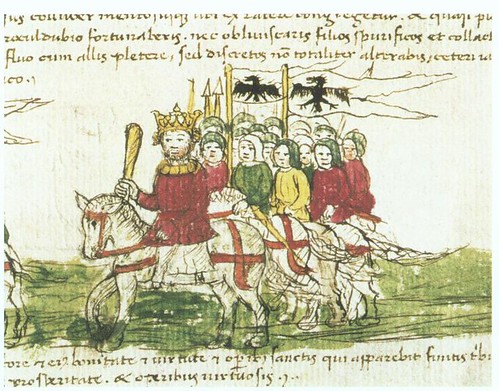 Emperor Frederik I Barbarossa and a massive expedition of 100,000 crusaders, including 20,000 knights, depart Regensburg for the Third Crusade
-
May 11, 1421Possessions of Jews are confiscated in Austria, Jews are expelled
-
May 11, 1573Polish Parliament selects Henry, duke of Anjou, as king who becomes the first elected king of Poland
-
May 11, 1689French defeat English in naval battle at Bantry Bay
-
May 11, 1745French forces defeated an Anglo-Dutch-Hanoverian army at Fontenoy
-
May 11, 1784England and Tipu Sultan sign peace treaty bringing an end to the Second Anglo-Mysore War
-
May 11, 1792Columbia River discovered and named by US Captain Robert Gray
-
May 11, 1812The Waltz is introduced into English ballrooms, but most observers consider it disgusting and immoral
-
May 11, 1857Sepoys seize Delhi during the Indian Mutiny against British Empire, triggered by the ammunition for the Enfield Rifle, used paper cartridges containing tallow derived from beef, which would be offensive to Hindus
-
May 11, 1858Minnesota becomes the 32nd state admitted into the Union
-
May 11, 1860
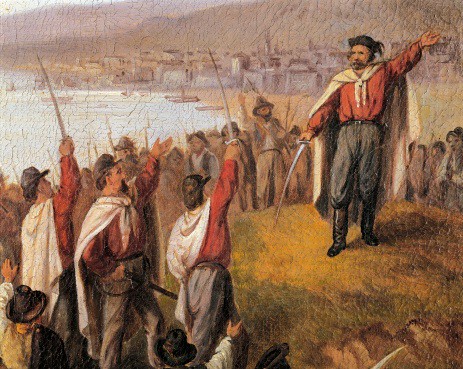 Giuseppe Garibaldi, Italian general, lands at Marsala, Sicily starting series of campaigns that politically unified most of the Italian peninsula, known as the Expedition of the Thousand
-
May 11, 1867Treaty of London is drawn, guarantees the neutrality of Luxembourg
-
May 11, 1928General Electric opens first TV-station in Schenectady New York
-
May 11, 1931The Creditanstalt, Austria's largest bank, goes bankrupt, beginning the banking collapse in Central Europe that causes a worldwide financial meltdown
-
May 11, 1939The Japanese army attacks Outer Mongolia at Nomonhan, starting Battles of Khalkhin Gol against Soviet Union
-
May 11, 1940Nazis start invasion in the Netherlands and Belgium with attack of Belgian Fort Eben Emael
-
May 11, 1951Jay Forrester, an American computer engineer, patents computer magnetic-core memory, used tiny magnetic toroids, the cores, through which wires are threaded to write and read information
-
May 11, 1968Students and police battle in Paris, France, hundreds injured starting May 1968 events in France
-
May 11, 1997
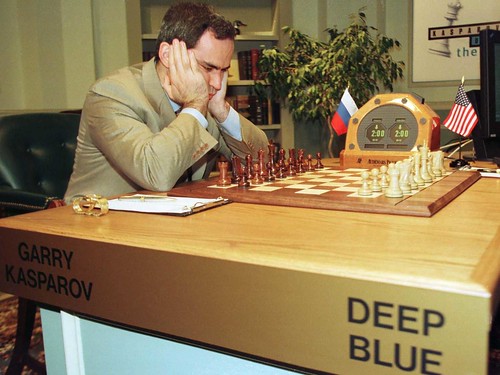 IBM's Deep Blue chess computer defeats Garry Kasparov in the last game of the six-game series, the first time a computer beat a chess World Champion in a match
-
May 11, 1998India conducts three underground nuclear tests in Pokhran, including one thermonuclear device, as an answer to Pakistan tests medium-range missiles
-
May 11, 2002Ray Charles with other musicians takes part in a peace concert in Rome, organized in partnership with the Glocal Forum and the Quincy Jones Listen Up Foundation, which is the first event to take place inside the city's ancient Colosseum since 404 A.D
-
May 11, 2010Queen Elizabeth II asks Britain's Conservative leader David Cameron to form a new government and he accepts to form a coalition with the Liberal Democrats
Tuesday, May 2, 2017
May 3
-
May 3, 1382
 Battle of Beverhoutsveld occurs between County of Flanders and Ghent rebels near Brugge
-
May 3, 1481Ottoman Sultan Mehmed II dies at age 60; Bayezid II succeeds
-
May 3, 1493Pope Alexander VI issues bull Inter caetera, which grants to the Crowns of Castile and Aragon lands one hundred leagues west of the Cape Verde Islands
-
May 3, 1512Pope Julius II opens 5th Council of Lateranen (18th ecumenical council) in Rome
-
May 3, 1515Portugese fleet occupies Ormus in Persian Gulf
-
May 3, 1791Polish–Lithuanian Commonwealth adopt Constitution of May 3, Europe's first and the world's second modern codified national constitution, designed to redress long-standing political defects and traditional system of Golden Liberty
-
May 3, 1845Fire kills 1,600 in popular theater in Guangzhou, China
-
May 3, 1861United States President Lincoln asks for 42,000 Army Volunteers and another 18,000 seamen
-
May 3, 1906British-controlled Egypt takes Sinai peninsula from the Ottoman Porte transfering administration of Sinai to the Egyptian government
-
May 3, 1947Japan adopts a new constitution and forms a constitutional democracy
-
May 3, 1952The first airplane lands at the geographic North Pole
-
May 3, 1973Chicago's Willis Tower tops out, becoming with the hight of 443 metres the world's tallest building
-
May 3, 2008Tropical cyclone Nargis with 120 kmh winds and 4 meter waves, the Myanmar's deadliest natural disaster, passes through western Myanmar killing over 140,000 people and leaving 2-3 million residents homeless
Tuesday, April 18, 2017
April 19
-
April 19, 1215
 English barons assemble an army of some 2,000 men near London and demand that King John address their call for tax relief
-
April 19, 1763Teedyuscung, a Lenape Indian leader, is burned to death while sleeping in his cabin in the Wyoming Valley
-
April 19, 1775At Concord bridge near Boston British troops, who want to seize colonial's weapons and gunpowder, are repulsed by Massachusetts militia with heavy losses to the British which marks beginning of the American Revolution
-
April 19, 1783
 Catherine II, the Empress of Russia, annexes the Crimean Khanate to the Russian empire as Taurida Governorate after series of Russo-Turkish wars
-
April 19, 1794Tadeusz Kosciusko force Russians out of Warsaw
-
April 19, 1810Simon Bolivar, a military and political leader, is sent by Venezuelan junta with a delegation to the United Kingdom to seek British aid and recognition
-
April 19, 1824Lord Byron, an English poet, dies of malaria in Greece at Missolonghi on the gulf of Patras preparing to fight for Greek independence
-
April 19, 1839Treaty of London constitutes Belgium as an independent kingdom and confirms the independence of the German-speaking part of Luxembourg
-
April 19, 1892The prototype of the first commercially successful American automobile is completed in Springfield, Massachusetts, by Charles Duryea and his brother Frank
-
April 19, 1897The first Boston Marathon, the world's oldest annual marathon, is run from Ashland, Massachusetts, to Boston
-
April 19, 1903
 49 Jews are murdered, 700 houses destroyed, and 600 stores pillaged during pogrom in Kishinev triggered by blood libel against Jews and tolerated by the state
-
April 19, 1948Chiang Kai-shek is elected President of Nationalist China
-
April 19, 195121-year-old Kiki Hakansson, Miss Sweden, wins the first Miss World beauty pageant held in London, England, as part of the Festival of Britain
-
April 19, 1971Salyut 1, the first manned lab in orbit, is launched by USSR
-
April 19, 1995Timothy McVeigh bombs the Alfred P. Murrah Federal Building in Oklahoma City, killing 168, including 8 Federal Marshals and 19 children, and wounding 450
-
April 19, 2005Cardinal Joseph Ratzinger, succeeds Pope John Paul II, becoming the 265th pope, Pope Benedict XVI
Thursday, April 6, 2017
April 7
-
April 7, 1348
 Prague University, also known as Charles University, is formed by the King of Bohemia Charles IV and becomes the first university in central Europe and north of Italy
-
April 7, 1604Four ships depart France under commands of Sieur de Monts, Jean de Poutrincourt, and Samuel de Champlain, under commission from King Henry IV, to colonize the new world, search for gold and silver, and grant land
-
April 7, 1655Fabio Chigi replaces Pope Innocent X as Alexander VII
-
April 7, 1712The New York Slave Revolt, an uprising in New York City of 23 enslaved Africans who killed nine whites, is suppressed by the militia and ended with the execution of 21 blacks
-
April 7, 1724Johann Sebastian Bach's "St John Passion" premieres in Leipzig
-
April 7, 1794In Poland at the battle of Raclawice the revolutionary forces of Tadeusz Kosciusko defeat the imperial armies
-
April 7, 1798Territory of Mississippi is organized from territory ceded by Georgia and South Carolina
-
April 7, 1803Toussaint Louverture, Haitian revolutionary, dies in a dungeon at Fort Joux in the French Alps
-
April 7, 1827English chemist John Walker invents friction matches
-
April 7, 1831Pedro I of Brazil abdicates in favor of his 5-year-old son, Pedro de Alcantara, Pedro II
-
April 7, 1853Doctor John Snow administers chloroform to Queen Victoria at the birth of her 8th child, Prince Leopold
-
April 7, 1862Union forces led by General Ulysses S. Grant defeat the Confederates at the battle of Shiloh in Tennessee, one of the bloodiest battle in United States history
-
April 7, 1939Italian forces invade Albania, establishing a protectorate of the Kingdom of Italy
-
April 7, 1946Part of East Prussia is incorporated into Russian SFSR
-
April 7, 1948World Health Organization established by United Nations
-
April 7, 1953Dag Hammarskjold of Sweden elected second United Nations Secretary-General
-
April 7, 1954United States President Dwight Eisenhower fears "domino-effect" in Indochina, stating that if one state in a region came under the influence of communism, then the surrounding countries would follow
-
April 7, 1964
 IBM introduces the IBM System/360 mainframe computer, a system with clear distinction between architecture and implementation, which allows IBM to release a suite of compatible designs at different prices
-
April 7, 1978U.S. President Jimmy Carter decides to postpone production of the neutron bomb, a weapon which kills people with radiation but leaves buildings relatively intact
-
April 7, 1991Compton Gamma Ray Observatory, a space observatory detecting light from 20 keV to 30 GeV in Earth orbit, orbits Earth
-
April 7, 2010Kyrgyzstan President Kurmanbek Bakiyev flees the capital as opposition Social-Democratic Party leaders announce that they have formed a new acting government after anti-government demonstrations in Bishkek leaving 87 dead, 500 injured
Thursday, March 30, 2017
March 31
-
March 31, 1084
 Anti-pope Clemens crowns German emperor Henry IV
-
March 31, 1492King Ferdinand and Queen Isabella of Spain issue an edict expelling approximately 100,000 Jews from Spanish soil, except those willing to convert to Christianity
-
March 31, 1683Emperor Leopold I and king of Poland, John Sobieski, signs covenant against Turkey
-
March 31, 1774English Parliament passes the Boston Port Act, the first bill of the Intolerable Acts, which closes Boston harbor until restitution for the destroyed tea is made
-
March 31, 1790In Paris, France, Maximilien de Robespierre is elected president of the Jacobin Club, the most influential political club in the development of the French Revolution
-
March 31, 1814Alexander I of Russia enters Paris at the head of an anti-Napoleon coalition
-
March 31, 1840American President Martin Van Buren issues an executive order extending the "10-hour system" to all laborers and mechanics employed on federal public works, as the average daily hours of factory workers was estimated at 11.4
-
March 31, 1854
 The Treaty of Kanagawa, concluded between Commodore Matthew C. Perry of the United States Navy and the Tokugawa shogunate, forces Japan to opens ports to foreign trade and formally ends Japan's policy of isolation
-
March 31, 1880Wabash, Indiana, United States becomes the first town in the world completely illuminated by electrical lighting
-
March 31, 1885
 Britain establishes a protectorate over Bechuanaland, modern Botswana, after appeals by the Botswana leaders for assistance
-
March 31, 1889
 French engineer Gustave Eiffel unfurls the French tricolor from atop the Eiffel Tower, constructed of 7,000 tons of iron and steel, officially marking its completion
-
March 31, 1896Whitcomb Judson, of Chicago, Illinois, United States, patents a hookless fastening, i.e. zipper
-
March 31, 1903Richard Pearse, a New Zealand farmer and inventor, flies monoplane several hundred meters in New Zealand, some nine months before the Wright brothers flew their aircraft
-
March 31, 1907
 Romanian Army puts down Moldavian farmers' revolt, begun due to the inequity of land ownership, killing roughly 11,000
-
March 31, 1931An earthquake destroys Managua, Nicaragua, killing 2,000 people
-
March 31, 1999The Matrix, a science fiction action film depicting a dystopian future, is released
-
March 31, 2007Sydney, Australia, turns off its lights for one hour between 7:30PM and 8:30PM as a political statement for Global Climate Change for the first time
Subscribe to:
Posts (Atom)