-
July 15, 1099
 Jerusalem falls to the crusaders after a seven weeks of siege ending First Crusade and following a massacre of the city's Muslim and Jewish population with the dead numbered about 3,000
 -
July 15, 1410Lithuanian-Polish forces defeat the Teutonic Knights at the Battle of Grunwald in Prussia, thereby halting the Knights' eastward expansion along the Baltic and hastening their decline
-
July 15, 1606The painter Rembrandt Harmenszoon van Rijn, is born in Leiden, Netherlands
-
July 15, 1662A Royal Charter, which created the Royal Society of London with Lord Brouncker serving as the first President, is signed
-
July 15, 1685James Scott, the Duke of Monmouth and illegitimate son of Charles II, is executed on Tower Hill in England, after his army was defeated at Sedgemoor
-
July 15, 1741Georg Wilhelm Steller, a German botanist in Russian exploratory mission under Vitus Bering, claims to see the Alaska, American mainland and becomes a pioneer of Alaskan natural history
-
July 15, 1788Louis XVI jails 12 deputies who protest new judicial reforms
-
July 15, 1834
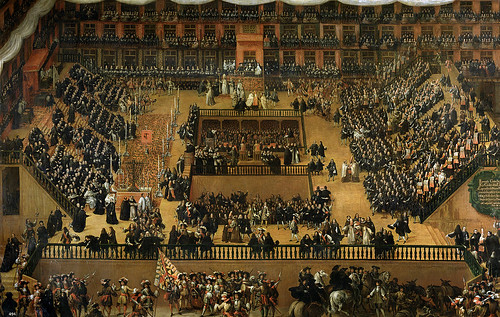 Spanish Inquisition is officially abolished by a Royal Decree signed by regent Maria Christina of the Two Sicilies
 -
July 15, 1857British women and children are murdered by Indian mutineers in the second Cawnpore Massacre
-
July 15, 1895Stefan Stambolov, ex-prime minister of Bulgaria, is murdered by Macedonian rebels
-
July 15, 1918Second Battle of the Marne, the last major German Spring Offensive on the Western Front, begins
-
July 15, 1974TV news anchor Chris Chubbuck shoots herself in the head with a revolver on live TV, dying 14 hours later, at age 30
-
July 15, 2007In Tacoma, Washington, USA, the second span of the Tacoma Narrows Bridge opens to traffic, making it the longest twin suspension bridge in the world
Showing posts with label Indian Rebellion of 1857. Show all posts
Showing posts with label Indian Rebellion of 1857. Show all posts
Friday, July 14, 2017
July 15

Wednesday, May 10, 2017
May 11
-
May 11, 1189
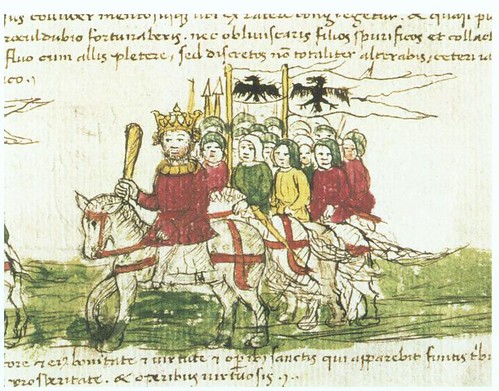 Emperor Frederik I Barbarossa and a massive expedition of 100,000 crusaders, including 20,000 knights, depart Regensburg for the Third Crusade
 -
May 11, 1421Possessions of Jews are confiscated in Austria, Jews are expelled
-
May 11, 1573Polish Parliament selects Henry, duke of Anjou, as king who becomes the first elected king of Poland
-
May 11, 1689French defeat English in naval battle at Bantry Bay
-
May 11, 1745French forces defeated an Anglo-Dutch-Hanoverian army at Fontenoy
-
May 11, 1784England and Tipu Sultan sign peace treaty bringing an end to the Second Anglo-Mysore War
-
May 11, 1792Columbia River discovered and named by US Captain Robert Gray
-
May 11, 1812The Waltz is introduced into English ballrooms, but most observers consider it disgusting and immoral
-
May 11, 1857Sepoys seize Delhi during the Indian Mutiny against British Empire, triggered by the ammunition for the Enfield Rifle, used paper cartridges containing tallow derived from beef, which would be offensive to Hindus
-
May 11, 1858Minnesota becomes the 32nd state admitted into the Union
-
May 11, 1860
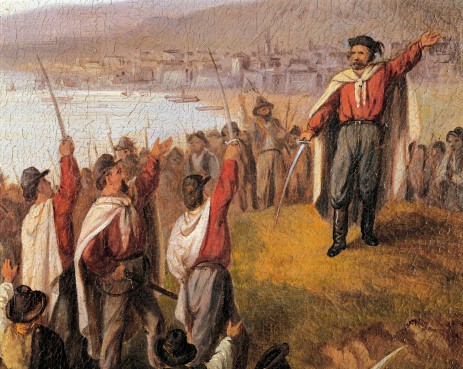 Giuseppe Garibaldi, Italian general, lands at Marsala, Sicily starting series of campaigns that politically unified most of the Italian peninsula, known as the Expedition of the Thousand
 -
May 11, 1867Treaty of London is drawn, guarantees the neutrality of Luxembourg
-
May 11, 1928General Electric opens first TV-station in Schenectady New York
-
May 11, 1931The Creditanstalt, Austria's largest bank, goes bankrupt, beginning the banking collapse in Central Europe that causes a worldwide financial meltdown
-
May 11, 1939The Japanese army attacks Outer Mongolia at Nomonhan, starting Battles of Khalkhin Gol against Soviet Union
-
May 11, 1940Nazis start invasion in the Netherlands and Belgium with attack of Belgian Fort Eben Emael
-
May 11, 1951Jay Forrester, an American computer engineer, patents computer magnetic-core memory, used tiny magnetic toroids, the cores, through which wires are threaded to write and read information
-
May 11, 1968Students and police battle in Paris, France, hundreds injured starting May 1968 events in France
-
May 11, 1997
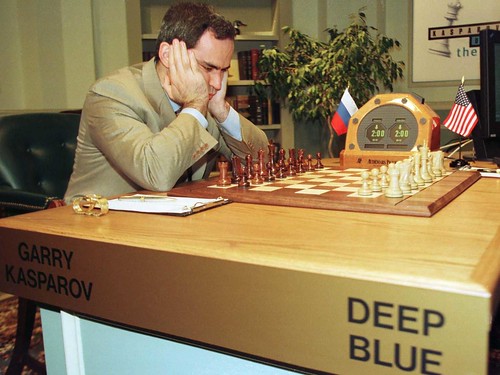 IBM's Deep Blue chess computer defeats Garry Kasparov in the last game of the six-game series, the first time a computer beat a chess World Champion in a match
 -
May 11, 1998India conducts three underground nuclear tests in Pokhran, including one thermonuclear device, as an answer to Pakistan tests medium-range missiles
-
May 11, 2002Ray Charles with other musicians takes part in a peace concert in Rome, organized in partnership with the Glocal Forum and the Quincy Jones Listen Up Foundation, which is the first event to take place inside the city's ancient Colosseum since 404 A.D
-
May 11, 2010Queen Elizabeth II asks Britain's Conservative leader David Cameron to form a new government and he accepts to form a coalition with the Liberal Democrats
Tuesday, May 9, 2017
May 10
-
May 10, 238
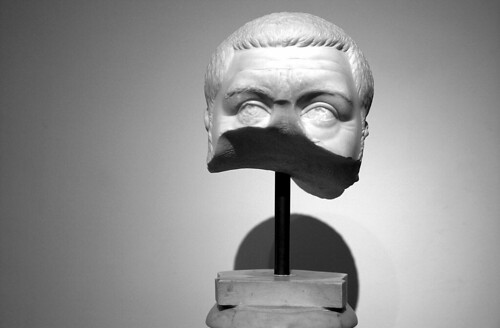 Gordianus III succeeds as Roman emperor as Maximinus Thrax is murdered together with his son and his chief ministers by Praetorian Guard whilst attempting to put down a Senatorial revolt
 -
May 10, 1267Vienna's church orders all Jews to wear a distinctive garb called Pileum cornutum or Jewish Hat
-
May 10, 1497Italian navigator Amerigo Vespucci leaves for first voyage to New World
-
May 10, 1534French navigator Jacques Cartier reaches Newfoundland
-
May 10, 1559Scottish Protestants under John Knox, considered the founder of the Presbyterian denomination in Scotland, upraise against Queen Mary sacking religious houses
-
May 10, 1624Jacob Willekens and Piet Pieterszoon Hein briefly conquer Salvador, modern-day Brazil
-
May 10, 1655Jamaica is captured by English
-
May 10, 1676Bacon's Rebellion, an armed rebellion by Virginia settlers led by young Nathaniel Bacon against the rule of Governor William Berkeley, begins
-
1752, Summer
 Benjamin Franklin, an American polymath, statesman, and diplomat, invents and installs the first lightning rod atop the Pennsylvania State House making storms less dangerous
 -
May 10, 1773To keep the troubled East India Company afloat, Parliament passed the Tea Act, taxing all tea in the American colonies
-
May 10, 1774Louis XV, King of France, dies of smallpox and is succeeded by his grandson Louis XVI
-
May 10, 1775The Second Continental Congress convenes in Pennsylvania
-
May 10, 177583 Green Mountain Boys, members of a militia organization, led by Ethan Allen capture the British-held fortress at Ticonderoga, N.Y., on the western shore of Lake Champlain and take the entire garrison captive without firing a shot
-
May 10, 1789Joaquim José da Silva Xavier also known as Tiradentes, rebel for Independence, is arrested in Brazil
-
May 10, 1796Napoleon Bonaparte win a brilliant victory against the Austrians at Lodi bridge in Italy
-
1816American Colonization Society is established by Robert Finley to support the settling of enslaved blacks in Africa
-
May 10, 1820American Colonization Society begins to send African Americans volunteers to the Pepper Coast to establish a colony for freed African Americans, later known as Liberia
-
May 10, 1837Panic of 1837 begins, as United States banks in New York refuse to pay out gold and silver in exchange for deposit notes triggering economic depression
-
May 10, 1857
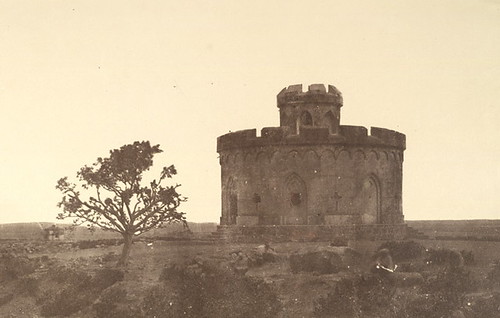 Indian Rebellion begins since revolt of sepoys of India against the British Army, which eventually force the British Empire to assume control of India from the East India Company
 -
May 10, 1865Confederate States of America President Jefferson Davis is captured by USA Cavalry in Irwinsville, Georgia
-
May 10, 1869
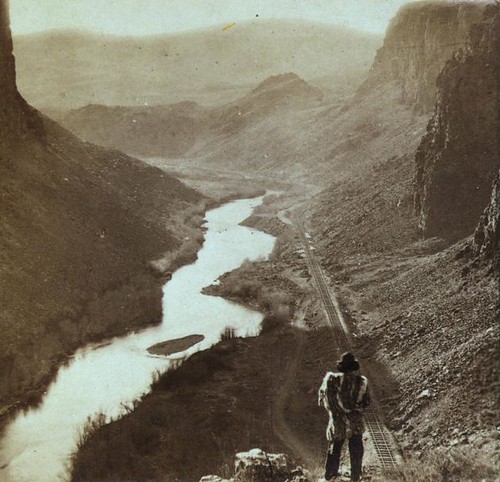 The final spike of the first transcontinental railroad acoss the United States is driven when the Union Pacific and the Central Pacific railways meet at Promontory Summit, in Utah Territory
 -
May 10, 1871
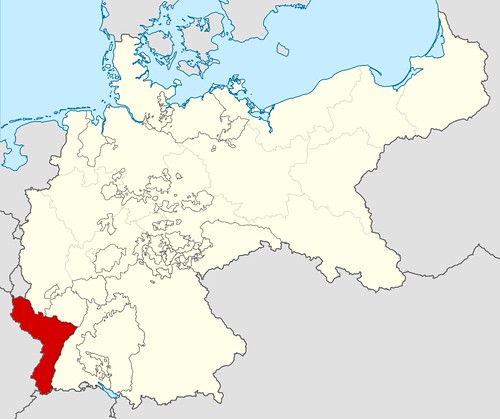 Franco-Prussian War ends with Treaty of Frankfurt between France and Germany, by which German Empire is recognized and France loses Alsace-Lorraine
 -
May 10, 1940
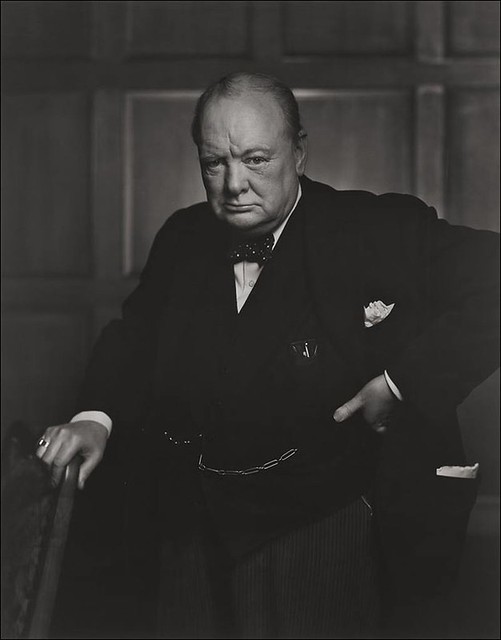 Winston Churchill becomes Prime Minister of the United Kingdom after resignation of previous prime minister Chamberlain and proposal of King George VI
 -
May 10, 1994
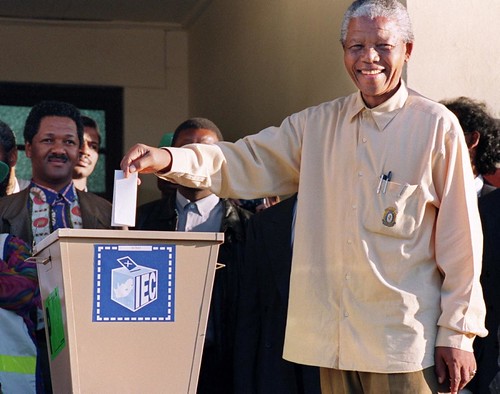 Nelson Mandela, an anti-apartheid activist and politician, is inaugurated as the first black President of South Africa, marking end of apartheid in South Africa
Monday, March 20, 2017
March 21
-
March 21, 1421
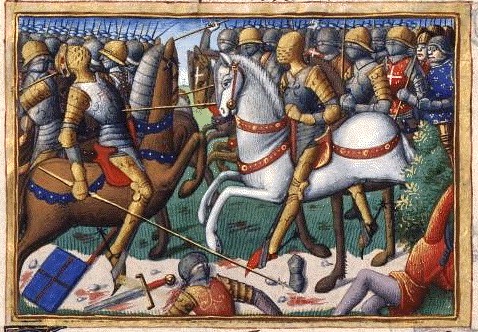 A Franco-Scots army beat British at the Battle of Bauge
 -
March 21, 1556Thomas Cranmer, an archbishop of Canterbury, is burned at stake at age 66
-
March 21, 1617Pocahontas dies of either small pox or pneumonia during preparation to sail back to Virginia
-
March 21, 1668Jean de La Fontaine, one of the most widely read French poets, publishes his Fables Choisies, a collection of 124 fables dividing into six books
-
March 21, 1697Tsar Peter the Great begins a tour through West Europe
-
March 21, 1801
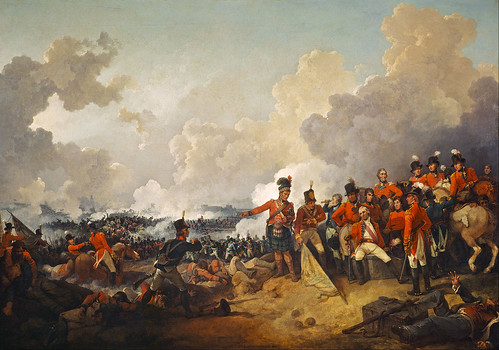 British expeditionary corps under Sir Ralph Abercrombie defeat the French army under General Menou in the Battle of Alexandria during Anglo-Ottoman land offensive
 -
March 21, 1804The French civil code, later called the Napoleonic Code, is adopted and which forbids privileges based on birth and allows freedom of religion
-
March 21, 1858British forces in India lift the siege of Lucknow during the Indian Rebellion
-
March 21, 1865The Battle of Bentonville, North Carolina, ends, marking the last Confederate attempt to stop Union General William Sherman
-
March 21, 1871Journalist Henry M. Stanley began his famous expedition to Africa to locate the missing Scottish missionary David Livingstone
-
March 21, 1871Otto von Bismarck becomes the 1st Chancellor of the German Empire
-
March 21, 1918German Army begins the Great March Offensive and drives the Allied army back 40 kilometers before losing momentum
-
March 21, 1921James "Big Jim" Colosimo, United States gangster and boss of an Italian American crime syndicate, is murdered by Al Capone
-
March 21, 1935Persia is officially renamed Iran
-
March 21, 1960
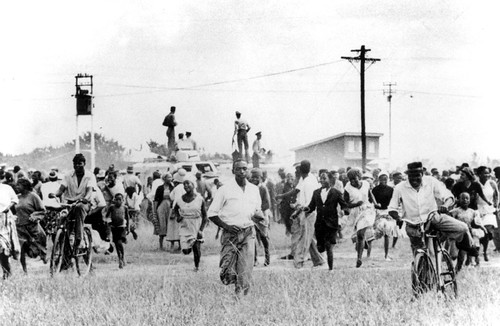 Police kill 72 in South Africa and outlaws African National Congress during Sharpeville massacre
 -
March 21, 1980U.S. President Jimmy Carter announces that the United States will boycott the 1980 Summer Olympics in Moscow because of the Soviet war in Afghanistan
-
March 21, 1990After 75 years of South African rule, Namibia becomes independent, with Sam Nujoma as the first president
-
March 21, 1991United Nations Security Council panel decides to lift the food embargo on Iraq
-
March 21, 1999Bertrand Piccard and Brian Jones become the first to circumnavigate the Earth in a hot air balloon
-
March 21, 2014Russia formally annexes Crimea after President Vladimir Putin signed a bill finalizing the annexation process
Subscribe to:
Posts (Atom)