-
July 6, 1189
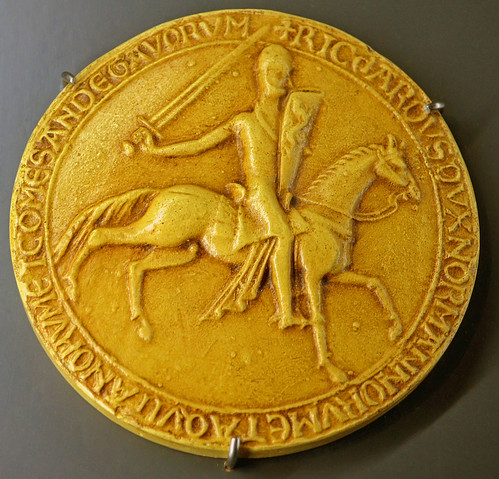 Richard I, known as Richard the Lionheart, ascends the throne of England after his father Henry II of England dies at age 56
 -
July 6, 1253Mindaugas, the ruler of Lithuania, is crowned in city of Novgorodok, modern-day Belarus, becoming the first and only King of Lithuania
-
July 6, 1415
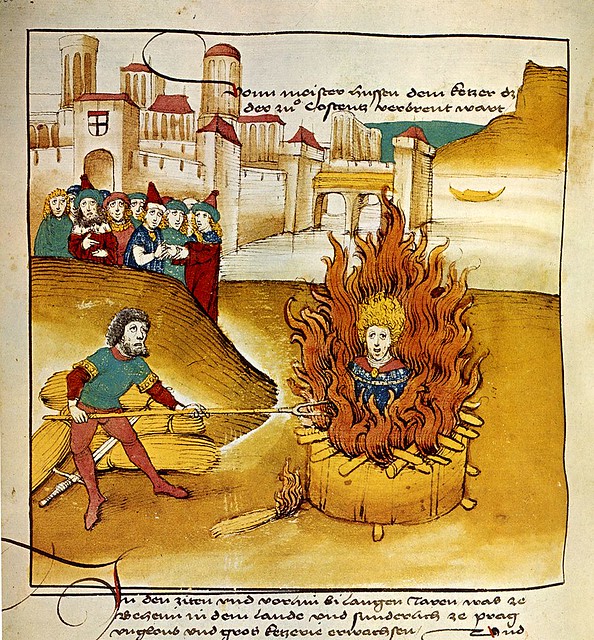 Jan Hus, Bohemian religious reformer who spoken out against Church corruption, is burned as a heretic at the stake at Constance, Germany
 -
July 6, 1495The Holy League beat French army and temporarily expel them from the Italian Peninsula in the Battle of Fornovo, the first battle of series of conflicts known as the Italian Wars
-
July 6, 1519Charles I of Spain is elected Holy Roman emperor as Charles V in Barcelona combining the crowns of Spain, Burgundy with the Netherlands, Austria and Germany
-
July 6, 1535Sir Thomas More is beheaded in England for refusing to renounce the Catholic church in favor of King Henry VIII's Church of England
-
July 6, 1553Edward VI Tudor, King of England, died of tuberculosis at the age of nine, making lady Jane Grey, an English noblewoman, becomes the Queen of England
-
July 6, 1685Royal army of James II defeat Rebel army of James Scott, the Duke of Monmouth, at the Battle of Sedgemoor, the last major battle to be fought on English soil
-
July 6, 1687
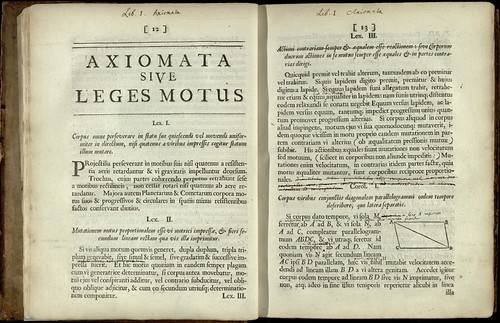 Isaac Newton, an English physicist and mathematician, publishes Philosophiae Naturalis Principia Mathematica where he formulates law of universal gravitation and stats laws of motion, forming the foundation of classical mechanics
 -
July 6, 1699Captain William Kidd, a Scottish pirate, is arrested in Boston
-
July 6, 1777British forces under General Burgoyne capture Fort Ticonderoga, on Lake Champlain, from the Americans
-
July 6, 1781In Virginia the Battle of Green Spring on the Jamestown Peninsula and becomes the last major engagement of the Revolutionary War prior to the Colonial's final victory at Yorktown
-
July 6, 1785US Congress decides that the country's monetary system would be based on a silver coin called a dollar, similar to that of the Spanish dollar and adopt the first nation decimal money system
-
July 6, 1788Bad harvests and harsh winters in France lead to bread riot in the poorer districts
-
July 6, 1809Napoleon beat Austria's archduke Charles at the Battle of Wagram, crushing the Fifth Coalition
-
July 6, 1836French General Thomas Robert Bugeaud defeats Abdelkader El Djezairi's forces beside the Sikkak River in Algeria
-
July 6, 1885French scientist Louis Pasteur successfully tests an anti-rabies vaccine on a boy bitten by an infected dog, owing to the fact that the death rate from rabies dropped to almost zero by 1888
-
July 6, 1892Homestead Strike, a major labor dispute between union steelworkers and the Carnegie Steel Company in Homestead, Pennsylvania, culminates in a battle between strikers and private security agents
-
July 6, 1964Nyasaland gains independence from Britain and is renamed in Malawi
-
July 6, 1967Biafran War, or Nigerian Civil War, erupts as Nigerian forces invade Biafra, seceded May 30
-
July 6, 1994Forrest Gump, romantic-comedy-drama film depicts several decades in the life of a slow-witted man, is released in the United States
-
July 6, 1995IBM completes its US$3.5 billion acquisition of Lotus Development, making it a wholly-owned subsidiary
Showing posts with label Italian Wars. Show all posts
Showing posts with label Italian Wars. Show all posts
Wednesday, July 5, 2017
July 6

Monday, April 10, 2017
April 11
-
April 11, 1034
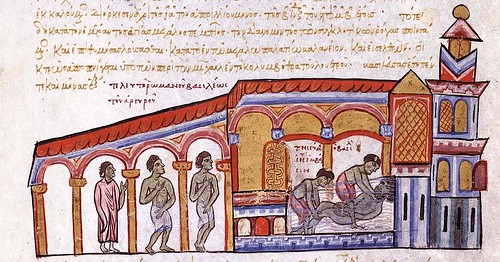 Romanos III Argyros, a Byzantine emperor, is drowned in a bath on his wife's orders
 -
April 11, 1241The army of Mongol leader Batu Khan beat forces of the Kingdom of Hungary at the Battle of Mohi, a part of Mongol invasion of Europe
-
April 11, 1471King Edward IV of England captures London from Henry VI in the War of the Roses
-
April 11, 1512The forces of the Holy League are heavily defeated by the French at the Battle of Ravenna, while Gaston de Foix, French pretender to Navarre throne, dies in battle
-
April 11, 1689William III and Mary II swear that they would obey the laws of Parliament and are crowned as joint rulers of Britain
-
April 11, 1713
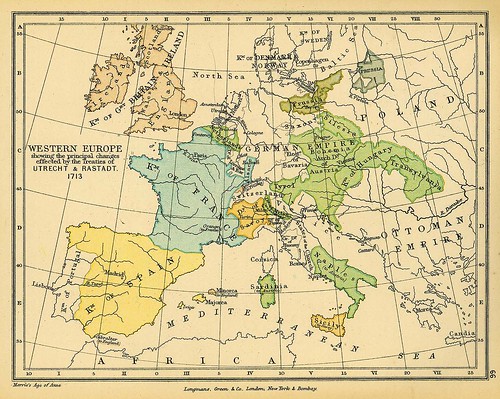 War of the Spanish Succession and French hegemony in Europe ends with Treaty of Utrecht, which cedes France Maritime provinces and the Spanish 2.5-square mile Gibraltar in perpetuity to Britain, and Kingdom of Naples to Austria
 -
April 11, 1741A Russian commission find regent Count Ernst Johann von Biron guilty of treason and sentenced him to death by quartering, but commute the sentence to banishment for life in Siberia
-
April 11, 1783After receiving a copy of the provisional treaty on 13 March, Congress proclaimed a formal end to hostilities with Great Britain
-
April 11, 1814
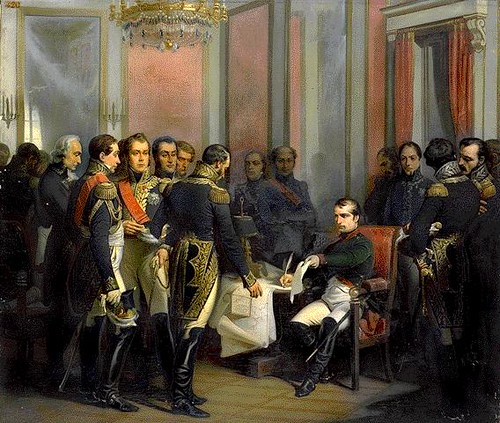 Napoleon Bonaparte, emperor of France, abdicates the throne, and, by the Treaty of Fontainebleau, is banished to the Mediterranean island of Elba with a pension from the French government
 -
April 11, 1848Hungary approve package of low, known as April Laws, making Kingdom of Hungary into a nation state
-
April 11, 1899The Treaty of Paris ending the Spanish-American War is declared in effect
-
April 11, 1909Tel Aviv is founded by the Jewish community on the outskirts of the ancient port city of Jaffa
-
April 11, 1917Marcel Duchamp, a French American painter and sculptor, submits for the exhibition of the Society of Independent Artists his famous work Fountain, a simple porcelain urinal signed "R.Mutt"
-
April 11, 1971Sheikh Mujibur Rahman, a preeminent Bengali nationalist leader of Bangladesh, becomes the first President of Bangladesh
-
April 11, 1976Steve Jobs finishes his first significant invention, Apple I
-
April 11, 1979Tanzanian troops take Kampala, the capital of Uganda and exile Idi Amin from Uganda
-
April 11, 1986Halley's Comet makes closest approach to Earth this trip, 63 million km
Sunday, April 9, 2017
April 10
-
April 10, 879
 Louis the Stammerer, King of France, dies and Louis III is crowned King of France
 -
April 10, 1516Jews are compelled to live in a specific area of Venice, the first ghetto
-
April 10, 1525
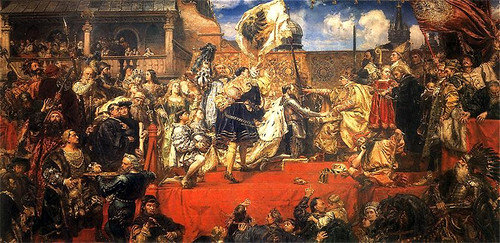 Albert of Prussia, a member of a branch of the House of Hohenzollern and the leader of the Teutonic Order, secularizes Order's remaining territories into the Duchy of Prussia and makes Prussia a Protestant state
 -
April 10, 1656Dutch fleet occupiers Colombo, Ceylon
-
April 10, 1710The world's first copyright legislation, Britain's Statute of Anne, becomes effective and limits term of copyright on books: 21 years for books already in print, 14 years for new books, and additional 14 years if author still alive at end of first term
-
April 10, 1790President George Washington signs into law the first United States Patent Act responsible for granting patents on "useful and important" inventions
-
April 10, 1814The Duke of Wellington leads 60,000 troops against 325,000 French troops at Toulouse and defeats them just days after Napoleon abdicated the throne
-
April 10, 1815The eruption of Mount Tambora, a stratovolcano on the island of Sumbawa in Indonesia, becomes one of the most powerful in recorded history and causes deaths of about 75,000 people and global climate anomalies during next year known as Year Without a Summer
-
April 10, 1849
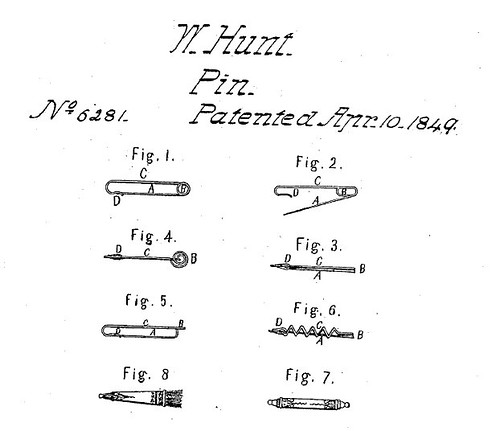 Walter Hunt, an American mechanic and inventor of new stove, paper collar, ice-breaking boat, and nail-making machine, patents the safety pin
 -
April 10, 1864Austrian Archduke Maximilian, the younger brother of Austria's Franz Joseph, becomes the French crowned emperor of Mexico
-
April 10, 1930Synthetic rubber first is produced by Sergei Vasilyevich Lebedev, a Soviet chemist
-
April 10, 1938Austria becomes a state of Germany as Austrian Anschluss referendum records a support of 99.7% of the voters
-
April 10, 1981Imprisoned Irish Republican Army hunger striker Bobby Sands elected to British Parliament by Fermanagh and South Tyrone by-election
-
April 10, 1989Intel announces the 25 MHz i486 microprocessor, which integrates the 386 processor and uses 1.2 million transistors, employing 1-micron technology
-
April 10, 1998Eighteen hours after the end of the talks deadline, the Belfast Agreement is signed between the Irish and British governments and most Northern Ireland political parties, bringing an end to The Troubles in Northern Ireland
-
April 10, 2006Romano Prodi, lead candidate of center-left political coalition The Olive Tree, narrowly defeats Silvio Berlusconi in the Italian parliamentary elections
Sunday, April 2, 2017
April 3
-
April 3, 1024
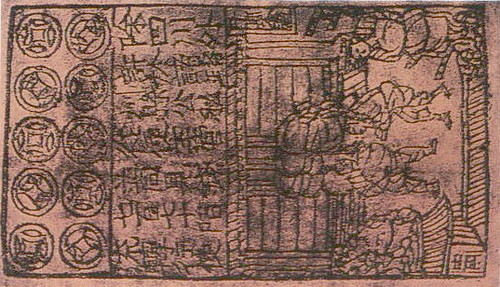 The Song Dynasty of China first prints paper money in Sichuan province, due to a shortage of copper for coinage
 -
April 3, 1043Edward the Confessor, the last king of the House of Wessex, is crowned king of England
-
April 3, 1367Anglo-Gascon army under Edward the Black Prince beat Franco-Castilian forces at the Battle of Najara, in Spain
-
April 3, 1559
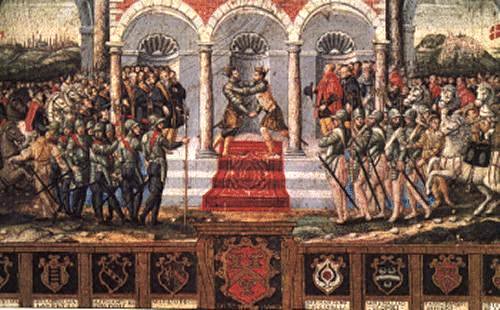 Philip II of Spain and Henry II of France sign the Peace of Cateau-Cambresis, ending a long series of wars between the Hapsburg and Valois dynasties, and between England and France
 -
April 3, 1657English Lord Protector Cromwell refused the crown, which are offered by English Humble Petition
-
April 3, 1796The first elephant is shipped to the US from Bengal, India, by Broadway showman Jacob Croninshield
-
April 3, 1860The Pony Express, a mail system in United States, which assemble 120 riders, 184 stations, and 400 horses, starts
-
April 3, 1897The Vienna Secession, a group of Austrian artists who had resigned from the Association of Austrian Artists, is founded by artists Gustav Klimt, Koloman Moser, Josef Hoffmann, Joseph Maria Olbrich, Max Kurzweil, and others
-
April 3, 1948US President Harry Truman signs Marshall Plan transferring US$5 billion aid to 16 European countries to help rebuild European economies after the end of World War II
-
April 3, 1973Martin Cooper, an engineer at Motorola company, demonstrates to the media the first mobile phone, Motorola DynaTAC, and makes the first portable cell phone call
-
April 3, 1975Bobby Fischer is stripped of world chess title for refusing to defend
-
April 3, 2000In the US Justice Department versus Microsoft anti-trust case, Judge Thomas Jackson rules that Microsoft acted illegally to protect its operating system monopoly, and used its monopoly position to attempt to monopolize the market for Web browser software
Subscribe to:
Posts (Atom)