-
July 27, 1214
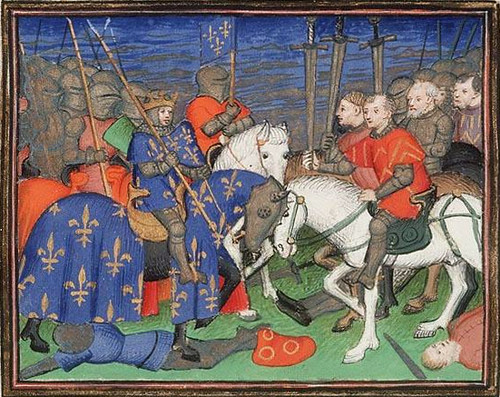 Philip II of France decisively defeats Emperor Otto IV at battle of Bouvines confirming French conquest of Normandy and other English territories
 -
July 27, 1245Pope Innocent IV pronounces the deposition of Holy Roman Emperor Frederick II at First Council of Lyons
-
July 27, 1299The Ottoman Empire is founded by leader Turkic tribe Osman I, who announces the independence of small principality from the Seljuk Sultanate
-
July 27, 1586Sir Walter Raleigh returns to England from colony of Virginia with the samples of tobacco
-
July 27, 1663British Parliament passes a second Navigation Act, requiring all goods bound for the colonies be sent in British ships from British ports
-
July 27, 1689Jacobite Scottish Highlanders defeat royal force at Killiecrankie during Jacobite Rising
-
July 27, 1694
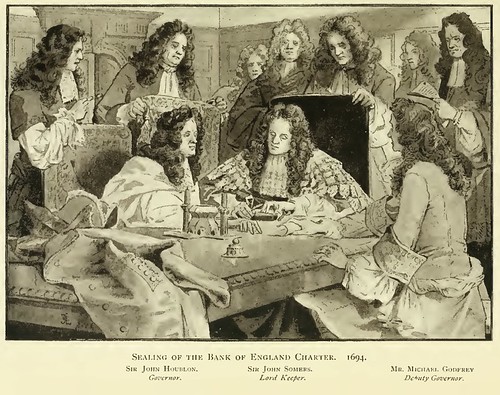 The Bank of England, one of the oldest central banks in the world, receives a royal charter as a commercial institution to provide war finance to the government
 -
July 27, 1789President Washington signs a measure establishing the Department of Foreign Affairs, forerunner of the Department of State and the first established executive department
-
July 27, 1794French revolutionary leader Maximilien Robespierre was overthrown and placed under arrest
-
July 27, 1866
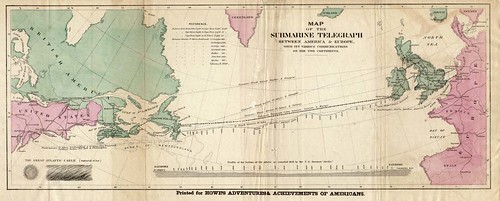 Successful transatlantic telegraph cable, laid by Massachusetts merchant and financier Cyrus West Field, follows an earlier attempt in 1858, allowing transatlantic telegraph communication
 -
July 27, 1880In the Battle of Maiwand, which ends with British defeat, an Afghan woman named Malalai carries the Afghan flag forward after the soldiers carrying the flag were killed by the British, becoming a heroine for her show of courage
-
July 27, 1890Dutch painter Vincent van Gogh fatally shoots himself in Auvers-sur-Oise, France
-
July 27, 1921
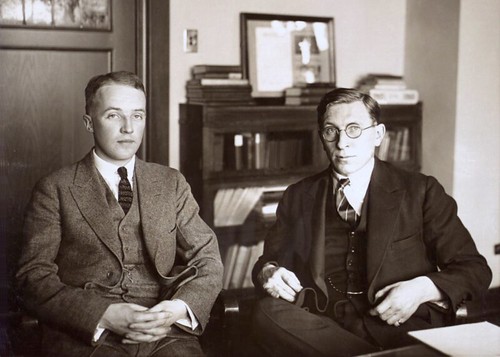 Researchers at the University of Toronto led by biochemist Frederick Banting announce the discovery of the hormone insulin, which enables an effective treatment for diabetes
 -
July 27, 1944United States regains possession of Guam from Japanese
-
July 27, 1953The United Nations Command, the North Korean People's Army, and the Chinese People's Volunteers, signed the Armistice Agreement to end the Korean War and established the Korean Demilitarized Zone, de facto a new border between the two nations
-
July 27, 1954The world's first nuclear power plant generates electricity by nuclear power, at Obninsk, Soviet Union
-
July 27, 1976In Tangshan, China, a magnitude 7.5 earthquake occurs and becomes, the second greatest earthquake in recorded history, with official casualty figure 255,000 deaths
-
July 27, 1990Belarus declares itself sovereign by issuing the Declaration of State Sovereignty of the Belarusian Soviet Socialist Republic
-
July 27, 1993Cuban athlete Javier Sotomayor makes jump of 2.45 meters and sets new world record in the high jump
-
July 27, 2002A Ukrainian Air Force Sukhoi Su-27 fighter crashes at an air show in Ukraine, killing 77 spectators and injuring more than 100 others and becomes the largest air show disaster in history
Showing posts with label Philip II of France. Show all posts
Showing posts with label Philip II of France. Show all posts
Wednesday, July 26, 2017
July 27

Sunday, May 21, 2017
May 22
-
May 22, 337
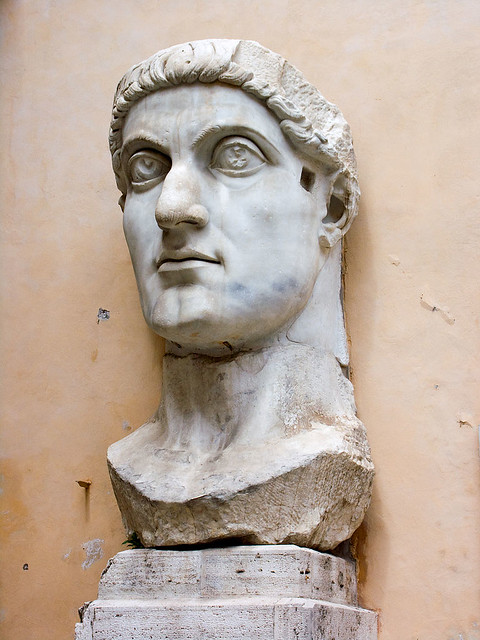 Emperor of Rome Constantine dies in villa Achyron near Nicomedia, so three his sons Constantine II, Constantius II and Constans, succeed
 -
May 22, 1200Philip II of France recognizes John's possession of the continental Angevin lands at the peace treaty of Le Goulet
-
May 22, 1246
 Henry Raspe, promoted by Archbishop of Cologne Konrad von Hochstaden, is elected antiking in opposition to Conrad IV of Germany by the Rhenish prelates in France
 -
May 22, 1370Jews are massacred and expelled from Brussels, Belgium
-
May 22, 1455King Henry VI is taken prisoner by the Yorkists, a cadet branch of the English royal House of Plantagenet, at the Battle of St. Albans, the first battle in the 30-year War of the Roses
-
May 22, 1526Pope Clement VII, France, Genoa, Venice, Florence and Milan form League of Cognac against Emperor Charles V
-
May 22, 1712Emperor Charles VI is crowned king of Hungary
-
May 22, 1762Trevi Fountain, one of the most famous fountains in the world, completed by Italian sculptor Pietro Bracci, is officially inaugurated by Pope Clement XIII
-
May 22, 1843The first wagon train with over 1,000 settlers and 1,000 head of cattle sets out from Missouri down the Oregon Trail, an east-west wheeled wagon route and emigrant trail connected the Missouri River to valleys in Oregon
-
May 22, 1860In Lebanon a small group of Maronites fire on a group of Druzes at the entrance to Beirut, killing one and wounding two, which sparks off a torrent of violence which swept through Lebanon
-
May 22, 1888Leroy Buffington, an architect from Minnesota, patents a system to build skyscrapers using load-bearing iron frames
-
May 22, 1939At the Reich Chancellory in Berlin, Italian Foreign Minister Count Ciano and German Foreign Minister Joachim von Ribbentrop sign a ten-year political and military alliance, dubbed the Pact of Steel
-
May 22, 1943Stalin disbands Communist International
-
May 22, 1957South Africa Government approves race separation in universities
-
May 22, 1960A 9.5-magnitude earthquake occurs off the coast of Chile, killing about 1700 and leaving 2 million homeless and becomes the largest earthquake recorded to date
-
May 22, 1973At Xerox PARC, Bob Metcalfe invents the Ethernet computer connectivity system, taking the name "Ethernet" based on a discredited physical theory of an existing "ether" in space allowing transmission of light rays from the sun to the Earth
-
May 22, 2001The Terraces of the Baha'i Faith, garden terraces around the Shrine of the Báb on Mount Carmel in Haifa, Israel officially open
-
May 22, 2012Tokyo Skytree, the tallest self-supporting tower in the world at 634 metres high, is opened to the public
-
May 22, 2014The Royal Thai Army overthrows the caretaker government of Niwatthamrong Boonsongpaisan after a failure to resolve the political unrest in Thailand
Thursday, April 27, 2017
April 28
-
April 28, 357
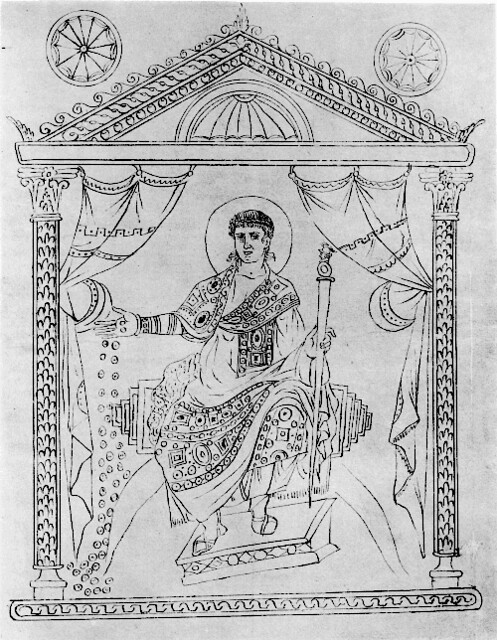 Roman Emperor Constantius II visits Rome for the first time and only time in his life
 -
April 28, 1202King Philip II of France throws out King of England John, which resulted in the collapse of most of the Angevin Empire and contributed to the subsequent growth in power of the Capetian dynasty during the 13th century
-
April 28, 1253Nichiren, a Buddhist monk, establishes a new sect of Buddhism, Nichiren Buddhism
-
March 30, 1282
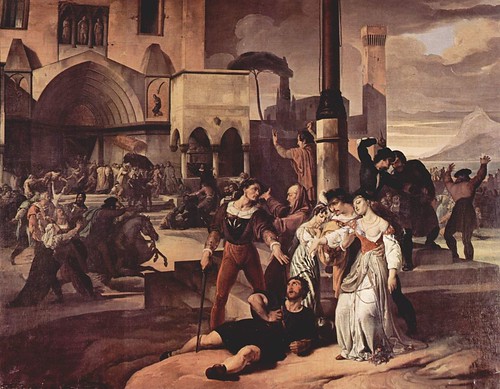 Inhabitants in Palermo massacres French occupation forces in Sicily after a Frenchman harassed a woman, beginning the War of the Sicilian Vespers
 -
April 28, 1376Good Parliament, the longest Parliament up until that time, begin to work
-
April 28, 1503Spain defeats France at the Battle of Cerignola, which considered to be the first battle in history won by gunpowder small arms (arquebus) and mark end of period of knighthood in Europe
-
April 28, 1628King Kristian IV of Denmark signs a three year alliance with Sweden. Both powers agree to come to the defense of Stralsund if attacked
-
April 28, 1738
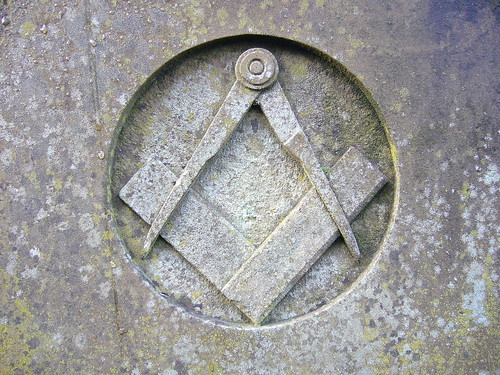 Pope Clement XII issues the Eminenti Apostolatus Specula prohibiting Catholics from becoming Freemasons, the first papal decree against the Freemasons
 -
April 28, 1760French forces besieging Quebec defeat the British in the Battle of Sainte-Foy
-
April 28, 1789Fletcher Christian, master's mate on board HMS Bounty, leads a mutiny on the ship as the crew of the British ship set Captain William Bligh and 18 sailors adrift in a launch in the South Pacific
-
April 28, 1818President Monroe proclaims naval disarmament on Great Lakes and Lake Champlain
-
April 28, 1819In India a British hunting party discovers the painted caves at Ajanta
-
April 28, 1914American engineer Willis Carrier patents air conditioner
-
April 28, 1925Netherlands and Great Britain return to gold standard
-
April 28, 1935Moscow Metro, the first underground railway system in the Soviet Union, opens
-
April 28, 1945Benito Mussolini is executed near Lake Como by Italian partisans while attempt to escape north
-
April 28, 1967Expo 67, the most attendees World Fair, opens in Montreal, Quebec, Canada
-
April 28, 1969Charles de Gaulle resigns as President of France after losing a referendum in which he proposed more decentralization
-
April 28, 1992The two remaining countries of the former Socialist Federal Republic of Yugoslavia - the Republic of Serbia and the Republic of Montenegro - form a new state, named the Federal Republic of Yugoslavia
-
April 28, 200430 St Mary Axe, commercial skyscraper, also known as The Gherkin, opens in London and becomes one of the most recognised examples of contemporary architecture
Subscribe to:
Posts (Atom)