-
July 7, 1307
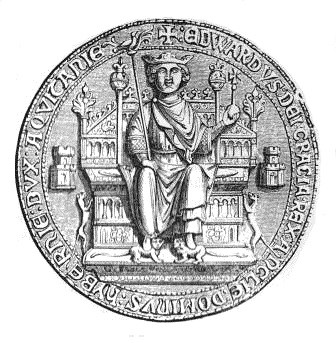 Edward I of England dies in Scotland, Edward II succeeds and withdraws English forces from Scotland
 -
July 7, 1438King Charles VII of France issues the Pragmatic Sanction of Bourges which limits the authority of the pope over the Church within France
-
July 7, 1797The US House of Representatives exercise its constitutional power of impeachment, and vote to charge Senator William Blount of Tennessee, who becomes the first US senator to be expelled by impeachment
-
July 7, 1807
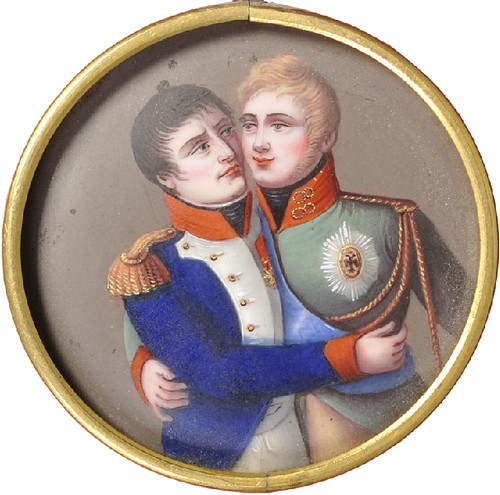 Napoleon I of France and Tsar Alexander I of Russia sign a treaty at Tilsit which ends war between their empires and isolates Britain from continent, marking high-water mark of Napoleon's empire
 -
July 7, 1846United States annexation of California is proclaimed at Monterey after Commodore John Sloat captures Monterey unopposed and claims California for the US
-
July 7, 1892Andrés Bonifacio establishes the revolutionary secret society Kataastaasan Kagalanggalang Katipunan, with aim being to liberate the Philippines from Spain
-
July 7, 1898
 President William McKinley signs the Newlands Resolution, officially annexing Hawaii to the United States
 -
July 7, 1927First disc-jockey presentation of a batch of music recordings, by Christopher Stone, for BBC radio
-
July 7, 1937Chinese and Japanese troops exchange fire in the vicinity of the Marco Polo bridge in Beijing, which marks the beginning of total war between the two countries, known as Second Sino-Japanese War
-
July 7, 1939The Rules of the Game, a French film called one of the greatest movie in the history of cinema, is released
-
July 7, 1978The Solomon Islands become independent from the United Kingdom
-
July 7, 1983Eleven-year-old Samantha Smith of Manchester, Maine, leaves for USSR, on invitation of Soviet leader Yuri Andropov in response on a letter about relations between the Soviet Union and the United States
-
July 7, 2005Four terror attacks, 3 on the London Underground and 1 on a bus, rock the transport network in London, killing 52 and injuring over 700
-
July 7, 2011The world's first artificial organ transplant is achieved, using an artificial windpipe coated with stem cells
Thursday, July 6, 2017
July 7

Wednesday, July 5, 2017
July 6
-
July 6, 1189
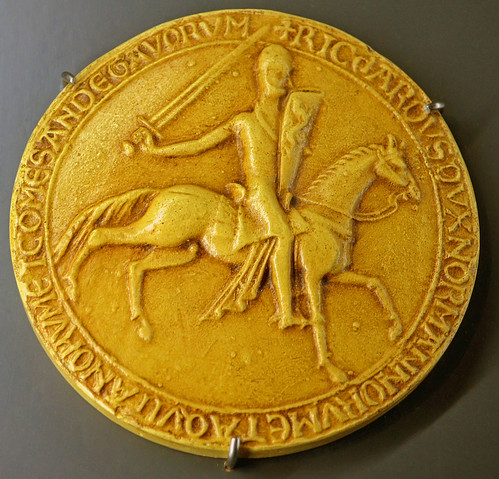 Richard I, known as Richard the Lionheart, ascends the throne of England after his father Henry II of England dies at age 56
 -
July 6, 1253Mindaugas, the ruler of Lithuania, is crowned in city of Novgorodok, modern-day Belarus, becoming the first and only King of Lithuania
-
July 6, 1415
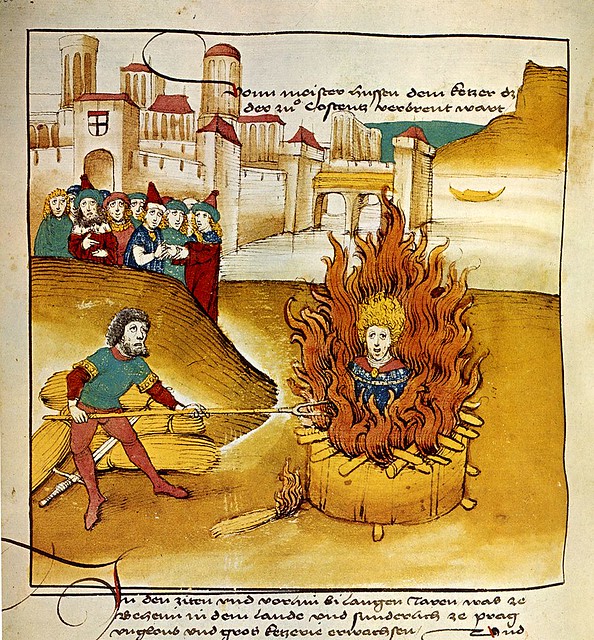 Jan Hus, Bohemian religious reformer who spoken out against Church corruption, is burned as a heretic at the stake at Constance, Germany
 -
July 6, 1495The Holy League beat French army and temporarily expel them from the Italian Peninsula in the Battle of Fornovo, the first battle of series of conflicts known as the Italian Wars
-
July 6, 1519Charles I of Spain is elected Holy Roman emperor as Charles V in Barcelona combining the crowns of Spain, Burgundy with the Netherlands, Austria and Germany
-
July 6, 1535Sir Thomas More is beheaded in England for refusing to renounce the Catholic church in favor of King Henry VIII's Church of England
-
July 6, 1553Edward VI Tudor, King of England, died of tuberculosis at the age of nine, making lady Jane Grey, an English noblewoman, becomes the Queen of England
-
July 6, 1685Royal army of James II defeat Rebel army of James Scott, the Duke of Monmouth, at the Battle of Sedgemoor, the last major battle to be fought on English soil
-
July 6, 1687
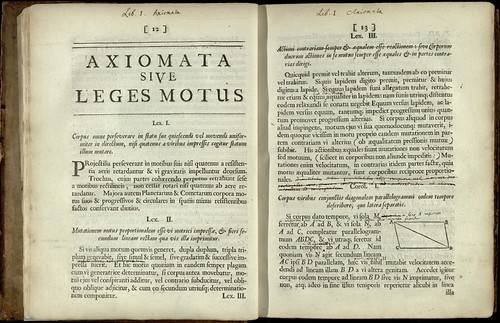 Isaac Newton, an English physicist and mathematician, publishes Philosophiae Naturalis Principia Mathematica where he formulates law of universal gravitation and stats laws of motion, forming the foundation of classical mechanics
 -
July 6, 1699Captain William Kidd, a Scottish pirate, is arrested in Boston
-
July 6, 1777British forces under General Burgoyne capture Fort Ticonderoga, on Lake Champlain, from the Americans
-
July 6, 1781In Virginia the Battle of Green Spring on the Jamestown Peninsula and becomes the last major engagement of the Revolutionary War prior to the Colonial's final victory at Yorktown
-
July 6, 1785US Congress decides that the country's monetary system would be based on a silver coin called a dollar, similar to that of the Spanish dollar and adopt the first nation decimal money system
-
July 6, 1788Bad harvests and harsh winters in France lead to bread riot in the poorer districts
-
July 6, 1809Napoleon beat Austria's archduke Charles at the Battle of Wagram, crushing the Fifth Coalition
-
July 6, 1836French General Thomas Robert Bugeaud defeats Abdelkader El Djezairi's forces beside the Sikkak River in Algeria
-
July 6, 1885French scientist Louis Pasteur successfully tests an anti-rabies vaccine on a boy bitten by an infected dog, owing to the fact that the death rate from rabies dropped to almost zero by 1888
-
July 6, 1892Homestead Strike, a major labor dispute between union steelworkers and the Carnegie Steel Company in Homestead, Pennsylvania, culminates in a battle between strikers and private security agents
-
July 6, 1964Nyasaland gains independence from Britain and is renamed in Malawi
-
July 6, 1967Biafran War, or Nigerian Civil War, erupts as Nigerian forces invade Biafra, seceded May 30
-
July 6, 1994Forrest Gump, romantic-comedy-drama film depicts several decades in the life of a slow-witted man, is released in the United States
-
July 6, 1995IBM completes its US$3.5 billion acquisition of Lotus Development, making it a wholly-owned subsidiary
Tuesday, July 4, 2017
July 5
-
July 5, 1811
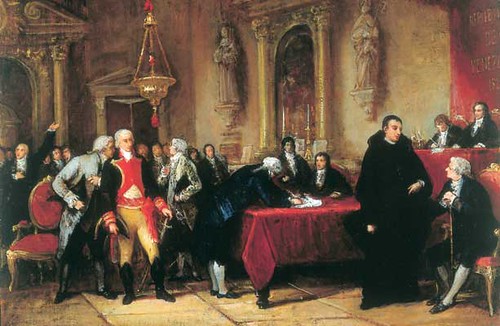 The congress of Venezuela declares the nation's independence from Spain making Venezuela the first to declare independence during Latin American wars of independence when most of the Latin American colonies free themselves from the Spanish and Portuguese Empires
 -
July 5, 1830
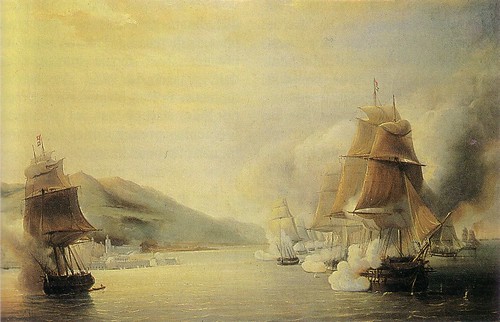 France starts a 40 year conquest of Algeria with a naval bombardment by a fleet under Admiral Duperré, and a landing by troops
 -
July 5, 1841Thomas Cook, an English entrepreneur, opens the first travel agency as he arranged for the rail company to charge one shilling per person for rail tickets and food for a group of 540 temperance campaigners from Leicester to a rally in Loughborough
-
July 5, 1865William Booth, a British Methodist preacher, founds the Salvation Army in east London to serve the poor and homeless
-
July 5, 1932António de Oliveira Salazar, a Portuguese professor and politician, becomes dictator of fascist Portugal
-
July 5, 1943German Central Army Group and Southern Army Group, about 900,000 troops, begin Operation Citadel, an attack around the Kursk salient in the Ukraine
-
July 5, 1945Winston Churchill is defeated in United Kingdom general election by Labour party, so Clement Attlee becomes the Prime Minister of the United Kingdom
-
July 5, 1946Louis Reard's bikini swimsuit design debuts at a Paris fashion show, modelled by Micheline Bernardi
-
July 5, 1962Algeria declare independence after end of Algerian war
-
July 5, 1975Cape Verde Island gains independence after 500 years of Portuguese rule
-
July 5, 1996
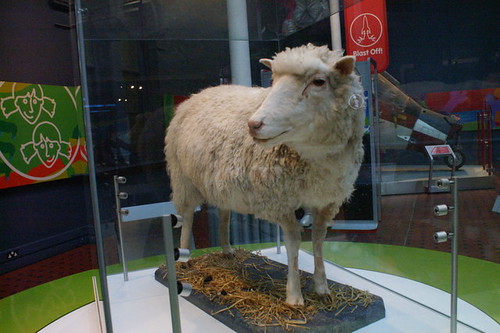 Dolly the sheep, the first mammal to have been successfully cloned, is born at the Roslin Institute in Scotland
 -
July 5, 2001Hannelore Kohl, the wife of the former chancellor, Helmut Kohl, commits suicide after she stayed in a completely darkened room in their home for 15 months due to a rare, incurable and increasingly painful allergy to light
Monday, July 3, 2017
July 4
-
July 4, 1054
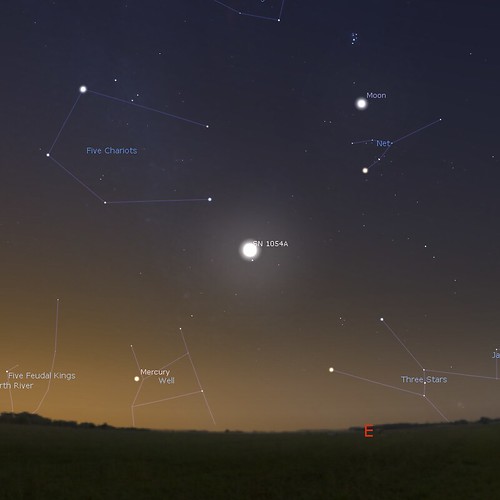 The Chinese and Arabian observers document a bright supernova, the remnants of which form the Crab Nebula
 -
July 4, 1187Army of Saladin defeat Crusader forces and kill the majority of the Crusaders in the Battle of Hattin, becoming the eminent military power in the Holy Land
-
July 4, 1415Angelo Correr becomes Pope Gregory XII
-
July 4, 1610The Polish Lithuanian Commonwealth army under Polish nobleman Stanisław Żółkiewski defeats combined Russian-Swedish forces at the Battle of Klushino near Smolensk and conquers Tsardom of Russia
-
July 4, 1653Barebone's Parliament, an assembly entirely nominated by Oliver Cromwell, goes into session in England
-
July 4, 1776In Philadelphia the Continental Congress, convention of thirteen British colonies, adopts the Declaration of Independence, proclaiming the independence of the United States of America from Great Britain and its king
-
July 4, 1779A French fleet occupies Grenada
-
July 4, 1817Construction on Erie Canal, connecting Lake Erie with the Hudson, begins with ground-breaking in Utica, New York, USA
-
July 4, 1828Ground-breaking ceremony for construction of the Baltimore and Ohio Railroad, the first US railway, is held
-
July 4, 1845American writer Henry David Thoreau begins his 26 month experiment in simple living in natural surroundings at Walden Pond, near Concord, Massachusetts
-
July 4, 1848The Cornerstone of the Washington Monument in Washington, D.C. is laid by President Polk
-
July 4, 1852Frederick Douglass, an African-American social reformer, delivers his speech "The Meaning of July Fourth for the Negro" for the Independence Day celebration in Rochester, New York
-
July 4, 1855American poet and journalist Walt Whitman publishes his book "Leaves of Grass"
-
July 4, 1868In Japan the last Tokugawa armies are defeated by Imperial "Kangun" troops at the Battle at Ueno
-
July 4, 1881Tuskegee University in Alabama, founded by former slave Booker T. Washington as a major center for African-American higher education, enrolls 30 students
-
July 4, 1883
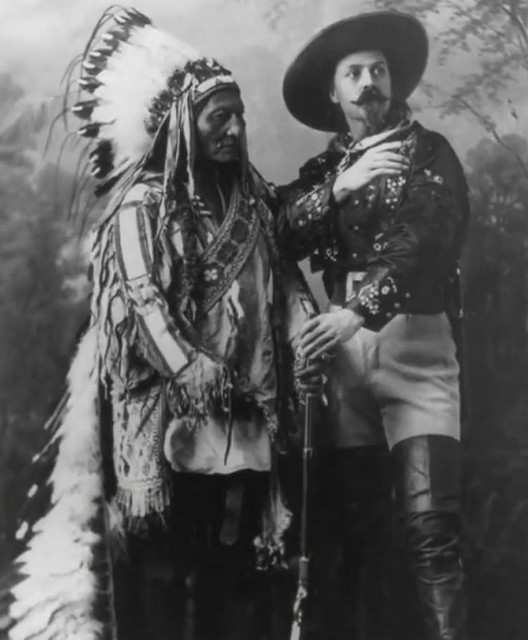 One of the first Wild West shows is performed in North Platte, Nebraska, and is organized by Buffalo Bill, who takes the show on the road the following year
 -
July 4, 1884The Statue of Liberty, 225-ton statue created by the French sculptor Frédéric Auguste Bartholdi, is presented to the United States in ceremonies at Paris as a gift from France in commemoration of 100 years of American independence
-
July 4, 1898The French liner "La Bourgogne" collides with bark Cromartyshire, and 560 people die
-
July 4, 1902President Theodore Roosevelt offers pardon and amnesty to all Filipinos who participated in the Philippine-American War marking the official end of the conflict
-
July 4, 1942Forces of Germany, Romania, and Italy end the Siege of Sevastopol, the last Soviet port in the Crimea on the Black Sea, and take control of the city after intense bombardment
-
July 4, 1946The Philippines gain independence from the United States
-
July 4, 1987German Klaus Barbie, "Butcher of Lyon" convicted by a French court to life imprisonment for crimes against humanity
-
July 4, 1997Mars Pathfinder, an American spacecraft carrying wheeled robotic Mars rover, lands on Mars
-
July 4, 2012
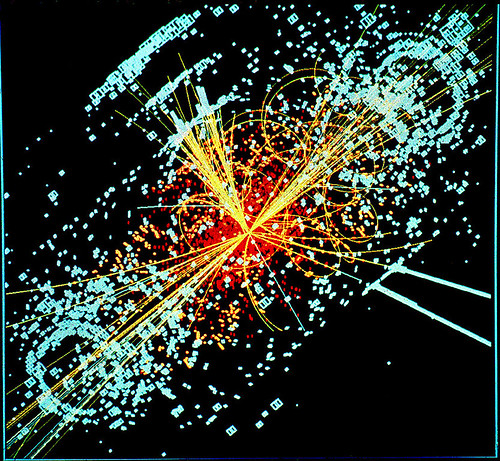 CERN announces the discovery of a new particle with properties consistent with the Higgs boson, an elementary particle in the Standard Model of particle physics, after experiments at the Large Hadron Collider
Sunday, July 2, 2017
July 3
-
July 3, 987
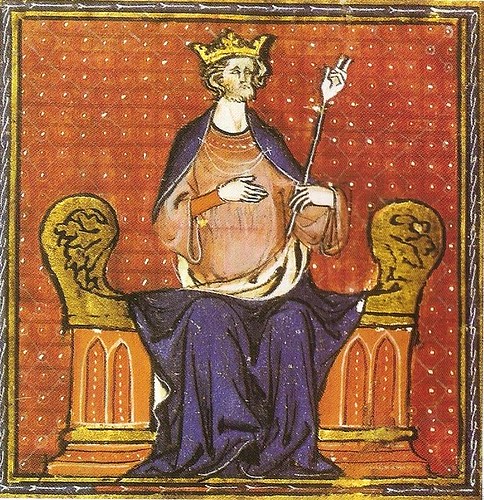 Hugh Capet, Duke of the Franks, elected King of Franks in Senlis, succeeds to the French Throne founding Capetian royal line in France
 -
July 3, 1608
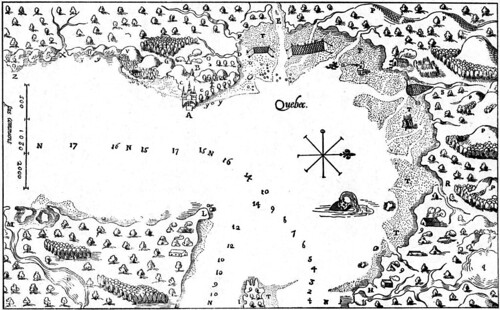 City of Quebec is founded by French explorer Samuel de Champlain as a trading post in New France, present-day Canada
 -
July 3, 1754
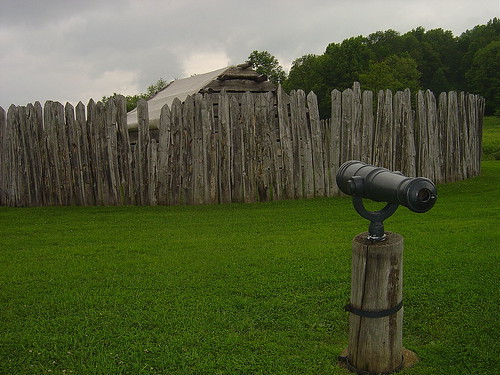 George Washington surrenders the small, circular Fort Necessity in southwestern Pennsylvania to the French, which marks the start of the French and Indian War between the French and their allies and the English and their allies in North America
 -
July 3, 1778The Wyoming Massacre occurs during the American Revolution in the Wyoming Valley of Pennsylvania as part of a British campaign against settlers in the frontier during the war, when 360 American settlers, including women and children, are killed
-
July 3, 1790In Paris, the Marquis de Condorcet proposes granting civil rights to women
-
July 3, 1844Ambassador Caleb Cushing successfully negotiates a commercial treaty with China that opens five Chinese ports to U.S. merchants and protects the rights of American citizens in China, the first treaty between China and the United States
-
July 3, 1863
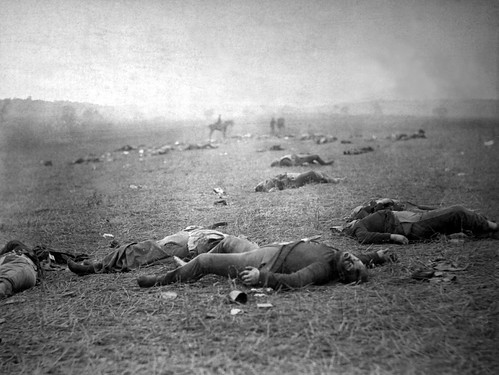 On the third day of the Battle of Gettysburg, Confederate General George Pickett leads a 15,000-man column a mile toward USA positions at Cemetery Ridge, after an hour-long cannon bombardment, however USA artillery and infantry survive, and devastate the attacking force
 -
July 3, 1886
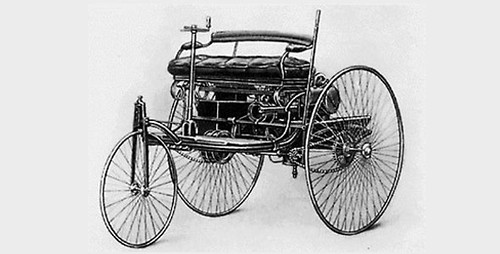 Karl Benz, a German engineer, officially unveils the Benz Patent Motorwagen, the first purpose-built automobile propelled by an internal combustion engine
 -
July 3, 1918Mehmed VI becomes last Sultan of the Ottoman Empire
-
July 3, 1944
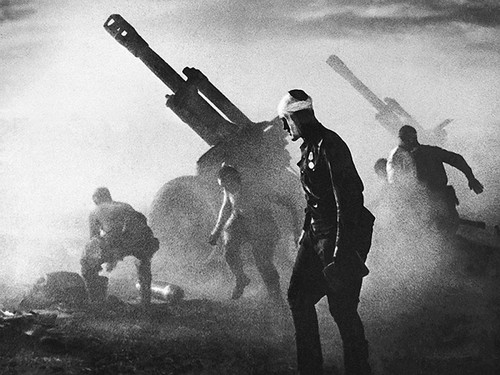 Soviet forces liberate Minsk from Germans and destroy much of the encircled forces of German Army Group Centre during Operation Bagration
 -
July 3, 1962Algerian War ends with the independence of Algeria after 132 years of French rule
-
July 3, 1988290 civilians are killed after the USS Vincennes shoots down Iranian Airbus Flight #655
-
July 3, 2013President of Egypt Mohamed Morsi is deposed by the military in a coup d'état amid mass protests, leading to widespread violence
Saturday, July 1, 2017
July 2
-
July 2, 311
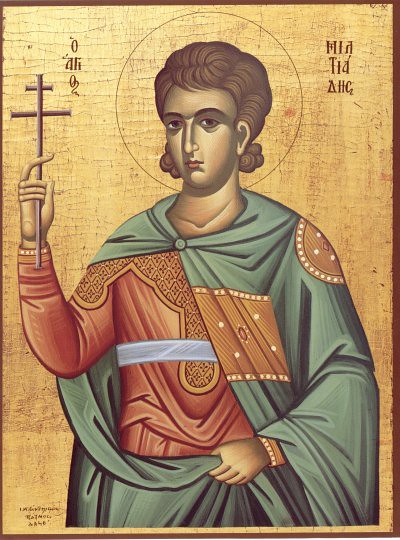 Saint Militiades begins his reign as Catholic Pope
 -
July 2, 1644The combined forces of the English Parliamentarians and the Scottish Covenanters crush the Royalists at the Battle of Marston Moor near York, England
-
July 2, 1737
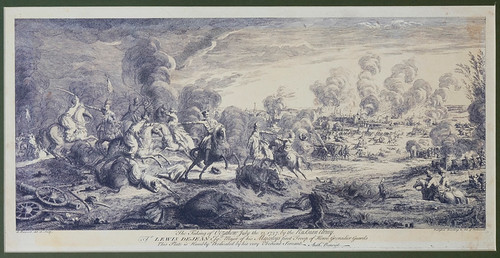 The Russian army, led by Burkhard Christoph von Münnich, capture by storm the Ottoman fortress of Ochakov during Russo–Turkish War of 1735–1739
 -
July 2, 1747Marshall Saxe leads the French forces to victory over an Anglo-Dutch force under the Duke of Cumberland at the Battle of Lauffeld
-
July 2, 1777Vermont becomes the first American territory to abolish slavery
-
July 2, 1822Denmark Vesey, the leader of large group of slaves, and five aides are hanged at Blake's Landing, Charleston, South Carolina after attempt to gain freedom by force
-
July 2, 1861Australian explorer Robert O'Hara Burke dies near Cooper's Creek and John King presses on to look for native Aborigines
-
July 2, 1872Jacob W. Davis of Reno, Nevada, sends Levi Strauss & Co. in San Francisco a sample of his work pants and a business proposal for Strauss to apply for a patent in exchange for a half share in the patent
-
July 2, 1881Less than four months after his inauguration, the 20th President of the United States James Garfield is fatally shot from behind in Washington, D.C., by Charles Guiteau, who wished to be appointed consul to France, at the Washington railroad station
-
July 2, 1890United States Congress passes the Sherman Antitrust Act against large companies, who co-operated to fix outputs and prices, which becomes the second antitrust law, after Canada's competition statute
-
July 2, 1893Fram, a ship used for exploration of the Arctic and Antarctic regions, leaves Bergen to be frozen into the pack ice and drift towards the pole
-
July 2, 1900Zeppelin LZ 1, made by German aircraft manufacturer Ferdinand von Zeppelin, becomes the first truly successful experimental rigid airship
-
July 2, 1937Amelia Earhart, an American author and the first female aviator to fly solo across the Atlantic Ocean, disappears over the central Pacific Ocean near Howland Island during a circumnavigational flight of the globe
-
July 2, 1961Writer Ernest Hemingway shoots himself to death in Ketchum, Idaho, United States
-
July 2, 1962
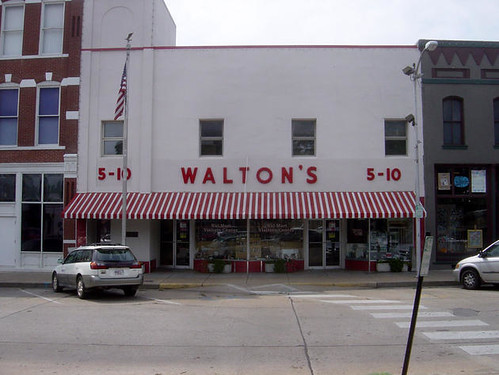 The first Wal-Mart, a large discount department store, opens in Rogers, Arkansas, United States
 -
July 2, 1964
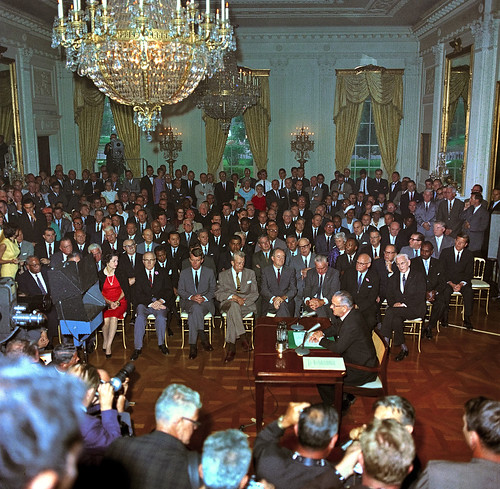 U.S. President Lyndon Johnson signs the Civil Rights Act of 1964, which prohibits racial discrimination in employment and education and outlaws racial segregation in public places such as schools, buses, parks and swimming pools
 -
July 2, 1969The International resort/casino, the world's largest hotel, with the world's largest casino, at 2,700 square meters, opens in Las Vegas Boulevard, Nevada
-
July 2, 1976North and South Vietnam reunite to form the Socialist Republic of Vietnam
-
July 2, 2000Vincente Fox, a candidate of the rightist National Action Party, is elected President of Mexico, ending 71 years of Institutional Revolutionary Party rule and becomes the first opposition President of Mexico
-
July 2, 2001The world's first self-contained artificial heart called AbioCor is implanted in Chicago School teacher Robert Tools
-
July 2, 2002Steve Fossett, an American businessman, becomes the first person to fly solo around the world in a balloon
July 1
-
July 1, 69
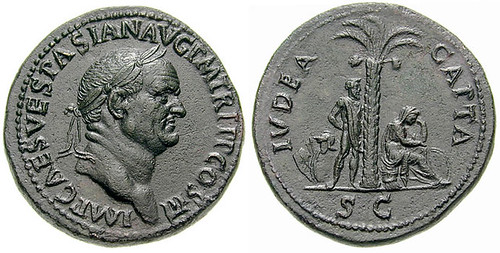 Roman general Vespasian is proclaimed emperor by the army in Egypt under Tiberius Julius Alexander, starting Flavian Dynasty
 -
July 1, 600Sutton Hoo helmet, one of the most important Anglo-Saxon artefacts, is left among other ceremonial artefacts in the ship-burial in the Anglo-Saxon Kingdom of East Anglia
-
July 1, 1390A French and Genoese armada sail out against Barbary pirates
-
July 1, 1569
 The Union of Lublin replaces the personal union of the Crown of the Kingdom of Poland and the Grand Duchy of Lithuania with an elective monarchy and creates the Polish–Lithuanian Commonwealth for protection against the growing power of Muscovite Russia
 -
July 1, 1596An English fleet under the Earl of Essex, Lord Howard of Nottingham and Francis Vere capture and sack Cadiz, Spain
-
July 1, 1634Gian Lorenzo Bernini, an Italian artist and a prominent architect, completes bronze St. Peter's Baldachin in St. Peter's Basilica, which becomes one of the earliest examples of Baroque sculpture
-
July 1, 1643Westminster Assembly, a synod composed of theologians and members of Parliament appointed to restructure the Church of England, begins
-
July 1, 1690Led by Marshall Luxembourg, the French defeat the forces of the Grand Alliance at Fleurus in the Netherlands
-
July 1, 1798
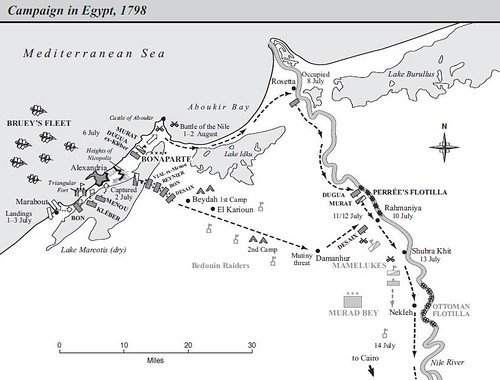 Shortly after disembarkment at Alexandria forces of Napoleon Bonaparte break into the city of Alexandria in Egypt and takes it
 -
July 1, 1823The United Provinces of Central America, a state consisting of Costa Rica, Guatemala, Honduras, Nicaragua and San Salvador, gains independence from Mexico
-
July 1, 1849Henry David Thoreau, an American author, publishes his essay Resistance to Civil Government, an argument for disobedience to an unjust state
-
July 1, 1850Rudolf Clausius, a German physicist, publishes the basic ideas of the second law of thermodynamics, stating that in a natural thermodynamic process, there is an increase in the sum of the entropies of the participating systems
-
July 1, 1858The works "On the Tendency of Species to form Varieties" by British naturalist Alfred Russel Wallace and "Extract from an unpublished Work on Species" by Charles Darwin, announce the theory of evolution by natural selection to the Linnean Society of London
-
July 1, 1862In Seven Days Battles Confederate General Robert E. Lee drove the invading Union Army of the Potomac, commanded by major general George B. McClellan
-
July 1, 1863The opening shot at the Battle of Gettysburg, the American Civil War's turning point, at 7:30 a.m. begins the first day's fighting at Gettysburg, in which Federal forces retreat through the town and dug in at Cemetery Ridge and Cemetery Hill
-
July 1, 1867Dominion of Canada is formed from three British colonies by Constitution Act, issued by Queen Victoria, making Canada a self-governing dominion of Great Britain
-
July 1, 1885Friedrich Nietzsche, a German philosopher, writes philosophical novel Thus Spoke Zarathustra, in which points to human as a transition between apes and the "Übermensch", or "overman"
-
July 1, 1898American troops take San Juan Hill and El Caney, Cuba, from the Spaniards
-
July 1, 1916British suffer over 50,000 casualties in the first day of the Battle of the Somme, one of humanity's bloodiest battles, fought by the armies of the British and French empires against the German Empire
-
July 1, 1944Bretton Woods Conference starts, establishing International Monetary Fund and World Bank
-
July 1, 1951Colombo Plan, a regional organization that embodies the concept of collective inter-governmental effort to strengthen economic and social development of member countries in the Asia-Pacific region, comes into effect
-
July 1, 1960Italian Somalia gains independence and unites with Somali Republic
-
July 1, 1962Burundi and Rwanda gain independence from Belgium
-
July 1, 1968United States, Britain, Soviet Union and 58 nations sign Nuclear Nonproliferation Treaty to prevent the spread of nuclear weapons and promote cooperation in the peaceful uses of nuclear energy
-
July 1, 1987The Single European Act, which establishes a single market, is passed by European countries
-
July 1, 1991The Warsaw Pact is officially dissolved at a meeting in Prague
-
July 1, 1996The Northern Territory in Australia legalises voluntary euthanasia
-
July 1, 1997The United Kingdom hands sovereignty of Hong Kong to the People's Republic of China due to lease on the territories expires
-
July 1, 2000The Oresund Bridge, a double-track railway and dual carriageway bridge-tunnel connecting Sweden and Denmark, opens for traffic and becomes the longest combined road and rail bridge in Europe
-
July 1, 2006The Qinghai-Tibet Railway launches a trial operation, connecting China proper and Tibet for the first time
-
July 1, 2047The People's Republic of China's obligation to run Hong Kong as a special administrative region per the Sino-British joint declaration expires
Subscribe to:
Posts (Atom)